




Summary
Adani Ports and Special Economic Zone has incorporated Paradip Mahanadi Terminal Limited to develop and operate two dry bulk berths at Paradip Port in Odisha. The subsidiary follows the award of a 30-year concession for an 18-million-tonne project, strengthening the company’s presence along India’s eastern seaboard.
New subsidiary to implement berth development
The Paradip dry bulk terminal project has moved a step forward with Adani Ports and Special Economic Zone Limited (APSEZ) establishing a wholly owned subsidiary for the development and operation of CQ-I and CQ-II berths at the Odisha gateway.
Paradip Mahanadi Terminal Limited was incorporated on 6 October 2026. APSEZ disclosed the development to the stock exchanges on the same day, following its earlier announcement concerning the project award.
The subsidiary has authorised and paid-up share capital of ₹5 lakh, divided into 50,000 equity shares of ₹10 each. APSEZ holds the entire equity. At the time of the disclosure, the new company had yet to commence business operations. Its incorporation establishes the corporate entity through which the berth project will be undertaken.
Thirty-year concession follows competitive bidding
APSEZ announced on 9 September that it had emerged as the highest bidder and received the Letter of Award from Paradip Port Authority. The project carries a 30-year concession and will be implemented under a public-private partnership on a build, operate and transfer basis.
The planned development includes mechanised cargo handling equipment, deep-draft berth infrastructure and substantial storage facilities. Coal, limestone and other dry bulk commodities are among the cargoes targeted by the project.
The berths are expected to provide 18 million metric tonnes of annual handling capacity. APSEZ said this would take its stated domestic capacity portfolio from 653 million tonnes to 671 million tonnes. Those figures represent handling capacity; they should be distinguished from the volume of cargo actually moved through the network.
Eastern network gains another industrial gateway
The Paradip concession extends APSEZ’s access to the mineral-rich industrial hinterland of eastern and central India. It complements the company’s existing presence at Haldia, Dhamra, Gopalpur and Gangavaram, which collectively represented 140 million tonnes of capacity when the award was announced.
APSEZ chief executive Ashwani Gupta identified access to industrial and mineral-producing regions as a central benefit of the concession. The addition also supports the company’s stated ambition to reach one billion tonnes of annual cargo throughput by 2030. That remains a growth target rather than an achieved operating milestone.
Earlier expansion in Odisha included Gopalpur Port. APSEZ completed that acquisition in 2024, adding another eastern coastal facility to its network. Gopalpur’s stated annual capacity was 20 million tonnes, with cargoes including iron ore, coal, limestone, ilmenite and alumina. Its dedicated railway connection and access to National Highway 16 link the port with industrial customers inland.
Paradip’s cargo base provides wider context
The new berth project comes against an established record of substantial cargo movement at Paradip. In financial year 2024–25, the port handled 150.41 million tonnes, retaining first place among India’s major ports by cargo throughput for the second consecutive year.
Coastal cargo accounted for 63.71 million tonnes, or 42.36% of the total. Rail-borne cargo reached 81.01 million tonnes, while the port handled 22,818 rakes during the year. These figures illustrate the importance of landside transport alongside berth capacity in supporting the gateway’s industrial role.
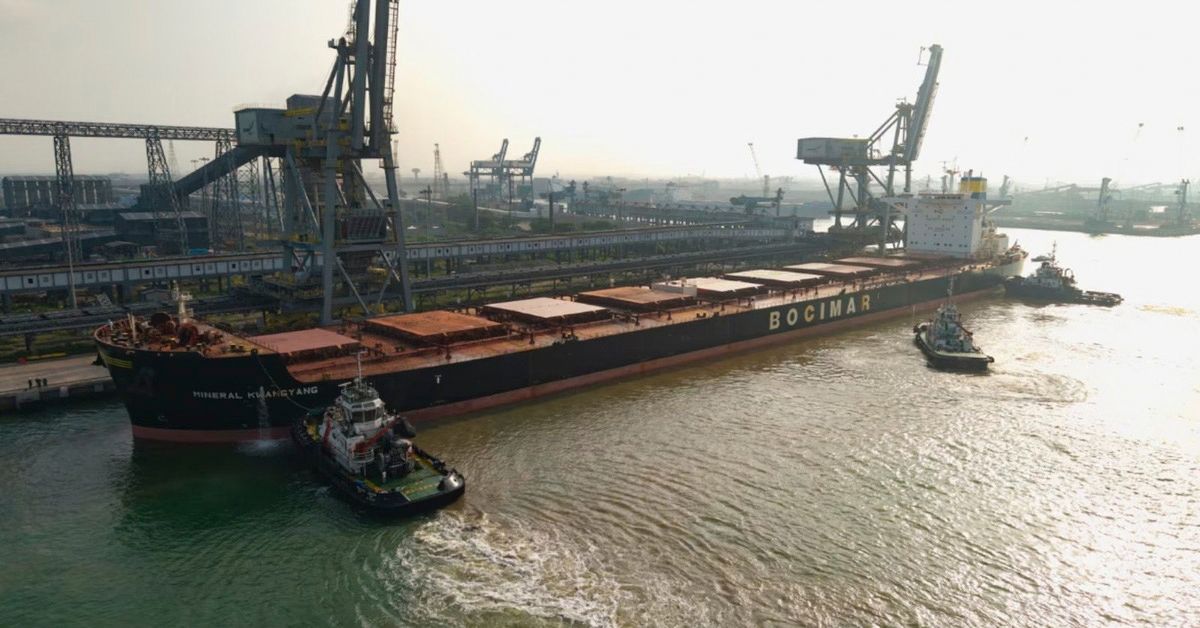
Paradip also demonstrated enhanced vessel-handling capability on 6 September 2026, when it berthed the Capesize bulk carrier Mineral Kwangyang at Western Dock-1 with a draft of 16.5 metres.
The vessel carried 152,702 tonnes of coking coal from Hay Point in Australia. This was a separate milestone at Western Dock-1, rather than evidence that APSEZ’s CQ-I and CQ-II development had entered service.
Development stage remains distinct from operations
The latest corporate announcement confirms incorporation of the project subsidiary. It does not establish a commissioning date or confirm that commercial operations at the upgraded berths have started.
For cargo owners, the project’s intended significance lies in additional mechanised handling and storage capacity at an established bulk gateway. Its operational contribution will depend on completion of the planned facilities and their subsequent commissioning.
FAQs
What is Paradip Mahanadi Terminal Limited?
It is APSEZ’s wholly owned subsidiary, incorporated to develop and operate two dry bulk berths at Paradip Port.
Which berths are covered by the project?
The concession covers CQ-I and CQ-II.
How much capacity is planned?
The project is expected to provide 18 million tonnes of annual dry bulk handling capacity.
How long is the concession?
It is a 30-year concession under the build, operate and transfer model.
Have operations begun?
The incorporation disclosure stated that the subsidiary had yet to commence business operations. It did not announce a commissioning date.
 Join our WhatsApp channel for more updates:
 Subscribe to our YouTube channel for more updates: