
Summary
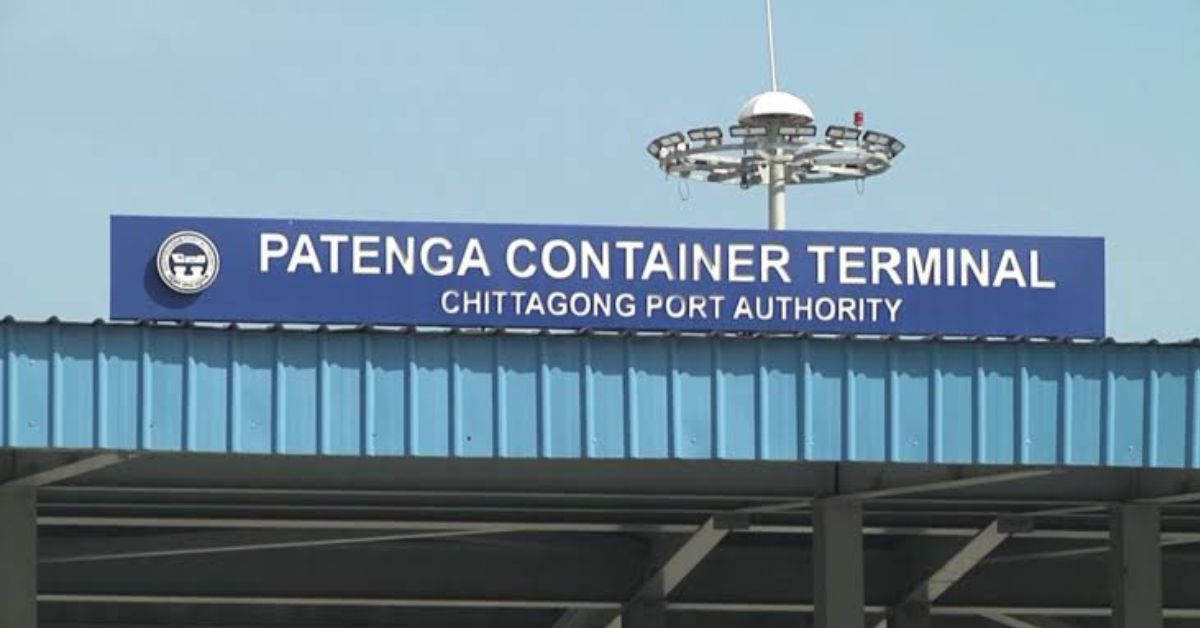
Patenga Container Terminal in Chattogram has reported vessel-handling productivity of up to 122 TEUs per hour while servicing CMA CGM’s Amoureux. The performance surpassed its September benchmark and follows the introduction of shore-based cranes, highlighting progress in equipment deployment and operations at the RSGT Bangladesh-managed facility.
Amoureux call establishes new benchmark
Patenga Container Terminal achieved the reported record during operations involving Amoureux on 18 October 2026.
Operator RSGT Bangladesh recorded a peak handling rate of 72 container moves, equivalent to 122 twenty-foot equivalent units, per hour. Across the vessel operation, it handled 1,524 containers representing 2,571 TEUs over 21 hours.
The figures describe vessel-handling performance during a particular call. They provide an indication of operational capability, while sustained productivity will need to be assessed across subsequent vessel operations.
Container moves and TEUs show different gains
The latest benchmark compares with 58 moves and 82 TEUs per hour recorded in September.
Calculated from those figures, the improvement amounts to approximately 24.1% in container moves per hour and 48.8% in TEUs per hour.
The difference between the percentages reflects the measures being used. A container move counts a handling movement, while TEUs express container capacity in twenty-foot equivalents. A 40-foot container represents two TEUs, so changes in the mix of container sizes can affect the relationship between the two indicators.
Both measures are useful when assessing terminal performance. They should be considered alongside the duration of operations, equipment deployment and the characteristics of each vessel call.
Shore cranes support operational change
The record follows the start of ship-to-shore crane operations at Patenga in August 2026.
RSGT Bangladesh invested approximately US$30 million in four cranes manufactured by Sany Marine Heavy Industry. The equipment enables the terminal to transfer containers directly between ships and the quay using shore-based machinery.
An earlier milestone came on 10 September, when Patenga handled CMA CGM’s Wanen using the newly commissioned equipment. That operation established the previous benchmark and marked the terminal’s first handling of a gearless vessel with the new cranes.
Gearless container ships depend on terminal equipment because they do not carry their own cargo-handling cranes. The deployment therefore widened the terminal’s operating capability beyond reliance on vessel-mounted gear.
Higher productivity can improve berth use
For shipping lines, faster loading and unloading can shorten the working portion of a port call and support more predictable schedules.
For terminal operators, completing a vessel’s cargo exchange efficiently can release berth space for the next arrival. The commercial benefit becomes stronger when improvements are maintained across successive calls rather than confined to individual records.
Overall vessel turnaround also includes activities beyond container handling. Berth availability, marine movements and other operational requirements influence the time a ship spends in port.
Similarly, cargo owners experience performance through the wider supply chain, including clearance, yard availability and inland delivery. Faster vessel handling is one component of that process.
Concession provides a longer-term framework
Patenga’s operational development sits within a 22-year concession signed between the Chittagong Port Authority and RSGT Bangladesh in December 2023.
The arrangement brought an international terminal operator into Bangladesh’s container sector, with responsibilities covering equipment and terminal operations under a public-private partnership.
Bangladesh’s Public Private Partnership Authority identified efficiency improvements and private investment as objectives of the agreement. The current equipment deployment and productivity results provide operating milestones against that longer-term framework.
Capacity utilisation remains an important measure
Patenga handled approximately 154,564 TEUs in 2025. That historical throughput provides a separate measure from the hourly productivity reported during the October vessel call.
Annual traffic depends on shipping services, cargo demand and the number of vessel calls, as well as handling efficiency. Higher productivity can improve the terminal’s service proposition, but additional throughput requires cargo and shipping-line commitments.
RSGT Bangladesh Chief Operating Officer Nabil Youssef said the company would continue improving operational standards and supporting Bangladesh’s position in international maritime trade.
The next test will be whether Patenga can repeat the performance consistently as its operating activity develops.
FAQs
What productivity record did Patenga report?
A peak rate of 72 container moves, equivalent to 122 TEUs, per hour.
Which vessel was involved?
CMA CGM’s Amoureux, handled on 18 October 2026.
How much cargo was handled during the operation?
The terminal handled 1,524 containers, equivalent to 2,571 TEUs, over 21 hours.
What was the previous benchmark?
It was 58 moves and 82 TEUs per hour, recorded in September 2026.
Who operates Patenga Container Terminal?
RSGT Bangladesh operates it under a 22-year concession with the Chittagong Port Authority.
 Join our WhatsApp channel for more updates:
 Subscribe to our YouTube channel for more updates: