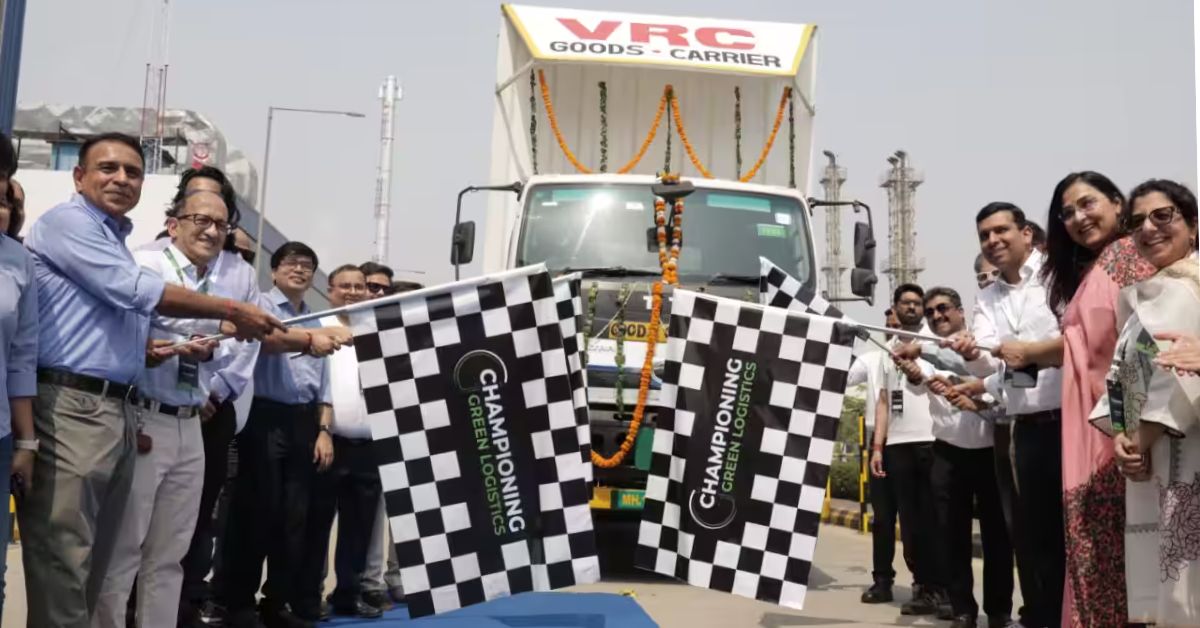

PepsiCo India has expanded its electric freight operations to three manufacturing locations, increasing its fleet from eight to 15 trucks. The deployment now covers Kosi in Uttar Pradesh, Guwahati in Assam and Pune in Maharashtra, with an estimated annual operating distance of approximately 900,000 kilometres, according to a November 2026 company update.
The expansion builds on a programme launched at Kosi in March 2026 and forms part of the company’s efforts to reduce the environmental impact of its logistics network.
How much has the electric freight programme expanded?
The fleet of 32-foot electric trucks has grown by seven vehicles from its initial deployment. Estimated annual electric freight distance has increased from 480,000 kilometres to approximately 900,000 kilometres.
These figures represent annual operating estimates, rather than confirmation that the vehicles have already completed that distance. The update did not provide a plant-wise allocation of the 15 trucks, investment costs or measured emissions savings.
PepsiCo India has also reported electrifying more than 950 distributor-linked three- and four-wheelers across its markets, extending the programme beyond plant freight to last-mile delivery.
Where did the electric truck deployment begin?
The initial project centred on the Kosi–Pataudi route, connecting Uttar Pradesh and Haryana. Announced in March 2026, the electric vehicle (EV) corridor used eight 32-foot, single-axle trucks converted to electric propulsion.
Kalyani Powertrain, a subsidiary of Bharat Forge, supported the conversion programme. PepsiCo described the corridor as a model combining vehicle customisation, route optimisation and charging infrastructure to support electric linehaul operations.
Transport partners involved in the initial deployment included Vayudoot Road Carriers and New Trishul Transport Services. The Kosi–Pataudi route spans approximately 115 kilometres, providing a defined operating corridor for the converted vehicles.
At launch, PepsiCo also reported more than 400 electric distributor-linked vehicles and over 80 compressed natural gas vehicles deployed through logistics partners in the National Capital Region. The initiatives addressed different stages of distribution, from longer freight movements to urban deliveries.
What role do logistics partners and charging facilities play?
Rinkesh Satija, Vice President, Supply Chain Operations, India and South Asia, PepsiCo India, said the transition required collaboration among technology providers, logistics operators and distributors to address practical operating challenges.
In an October account of the company’s supply-chain initiatives, Satija reported the deployment of two electric vehicles in Assam alongside a dedicated charging station at the facility. That deployment was expected to support approximately 120,000 electric kilometres annually. This was an earlier operational update and should not be added separately to the latest fleet total.
The progression from a single corridor to multiple plant locations broadens the operating experience available to PepsiCo and its transport partners, although the latest announcement does not disclose vehicle utilisation, charging times or cost-per-kilometre results.
How does this fit India’s electric freight transition?
India introduced dedicated electric-truck incentives in July 2025 under the PM Electric Drive Revolution in Innovative Vehicle Enhancement, or PM E-DRIVE, scheme.
The launch framework offered incentives of up to ₹9.6 lakh per eligible truck, depending on gross vehicle weight, and envisaged supporting approximately 5,600 vehicles. It identified logistics, ports, steel and cement among the relevant sectors, while requiring specified warranties and the scrapping of an older truck.
PepsiCo’s announcement does not establish whether its vehicles received support under that scheme. Its reported progress is a larger operational electric fleet across three plants, supported by an expanding network of electric distributor vehicles.
 Join our WhatsApp channel for more updates:
 Subscribe to our YouTube channel for more updates: