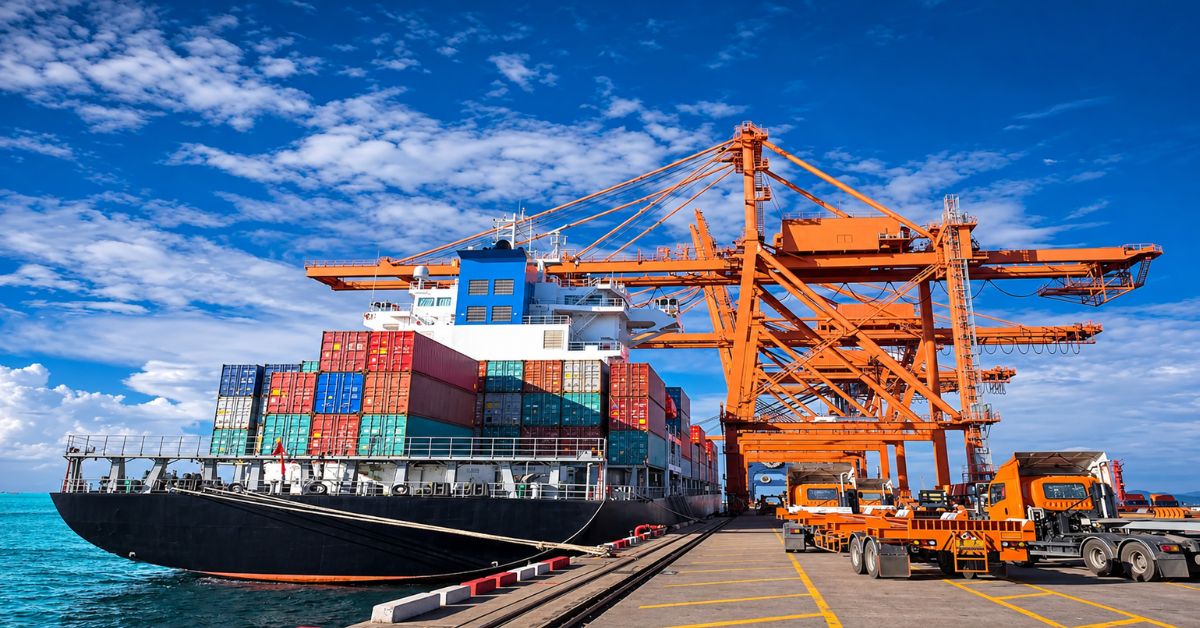

Gujarat Pipavav Port Limited handled 192,000 twenty-foot equivalent units (TEUs) in the July–September 2026 quarter, up from 164,000 a year earlier. Higher revenue from containers and vehicle handling helped lift operating revenue by 13.4% to ₹339.15 crore. Consolidated net profit fell 5% to ₹152.69 crore from ₹160.73 crore, with an insurance recovery in the previous year affecting the comparison.
The board approved the unaudited results on 4 November and declared an interim dividend of ₹3 per share for the 2026–27 financial year. Compared with the preceding quarter, both revenue and profit increased. Operating revenue rose 2.2% from ₹331.77 crore, while net profit increased 3.2% from ₹147.90 crore.
Why did profit fall despite higher port revenue?
The September 2025 quarter included an exceptional insurance recovery. In its investor presentation, the company said quarterly net profit rose 18% year on year when it excluded that recovery from the comparison. The reported 5% decline therefore masks an improvement in earnings from port operations.
Earnings before interest, tax, depreciation and amortisation (EBITDA) reached ₹211.82 crore, up from ₹177.84 crore a year earlier. The EBITDA margin widened to 62.5% from 59.4% as revenue grew faster than expenses. On a reported basis, consolidated profit before tax was ₹203.83 crore, compared with ₹214.70 crore a year earlier. Basic earnings per share fell to ₹3.16 from ₹3.32.
How did the cargo mix change at Pipavav?
Container throughput rose by 28,000 TEUs year on year and by 24,000 TEUs from the June quarter. Roll-on/roll-off traffic, which includes vehicles driven on and off ships, also increased year on year. The port handled 58,000 units, compared with 56,000 a year earlier, although volumes eased from 65,000 in the preceding quarter.
Bulk cargo followed a different pattern. Dry bulk throughput fell to 940,000 tonnes from 1.05 million tonnes a year earlier, while liquid cargo declined to 320,000 tonnes from 380,000 tonnes. Both recovered from the June quarter, when Pipavav handled 520,000 tonnes of dry bulk and 220,000 tonnes of liquid cargo. Management said the conflict in the Middle East had affected both trades.
More containers moved by rail on fewer trains
Pipavav handled 116,000 TEUs by rail during the quarter, up from 111,000 TEUs a year earlier. Train calls fell from 461 to 452 over the same period. Based on the company’s rounded volume figures, the port handled approximately 257 TEUs per train, compared with 241 a year earlier.
The quarterly gain in rail traffic only partly offset a slower start to the financial year. Across April–September, the port handled 204,000 TEUs by rail, down from 210,000 TEUs a year earlier. Total container throughput over those six months rose from 328,000 to 360,000 TEUs.
When will shareholders receive the interim dividend?
The company fixed 12 November 2026 as the record date for the ₹3 interim dividend and expects to pay eligible shareholders by 25 November. The payment follows a final dividend of ₹5 per share for 2025–26, which the company paid on 16 September.
 Join our WhatsApp channel for more updates:
 Subscribe to our YouTube channel for more updates: