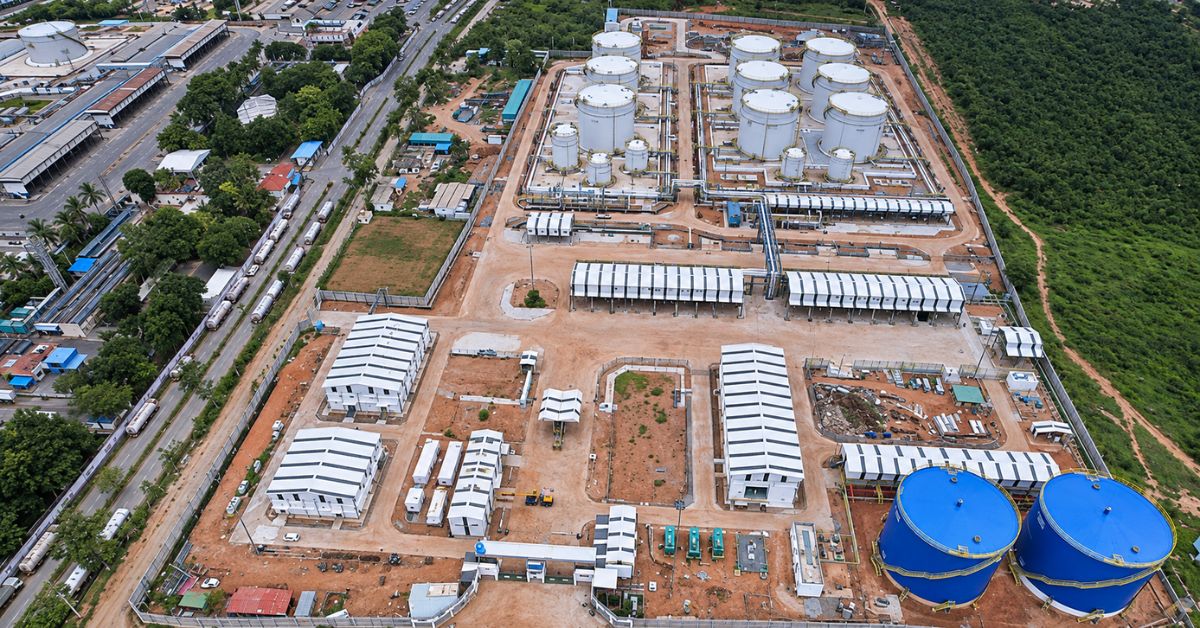

Prime Minister Narendra Modi is scheduled to dedicate Mangalore Refinery and Petrochemicals Limited’s (MRPL) ₹330-crore Devangonthi Marketing Terminal in Bengaluru on 13 November 2026. The terminal receives fuel by pipeline from MRPL’s Mangaluru refinery and provides 77,000 kilolitres of storage for distribution to Bengaluru airport, fuel retailers and industrial customers.
How does the Devangonthi terminal receive and distribute fuel?
The terminal occupies 20 acres in eastern Bengaluru and receives finished petroleum products through the 363-km Petronet Mangalore–Hassan–Bangalore Pipeline. It handles petrol, diesel and aviation turbine fuel (ATF). Its customers include Bengaluru airport, MRPL’s HiQ retail outlets, other oil marketing companies and industrial consumers.
The facility has 10 automated truck-loading bays and digital control systems. The pipeline carries fuel from the coastal refinery to Bengaluru, where the terminal provides storage and loading capacity for onward distribution by road. MRPL developed the facility primarily to support the expansion of its retail and industrial fuel business in Karnataka.
When did MRPL commission the Devangonthi terminal?
MRPL completed mechanical work on the terminal in May 2024 and commissioned it in August that year, according to its annual report. The company subsequently confirmed that diesel tanker loading had begun. The November 2026 ceremony is the formal dedication of the operating facility.
MRPL, a subsidiary of Oil and Natural Gas Corporation Limited (ONGC), built the terminal to serve customers closer to Bengaluru while drawing supplies from its existing refinery and pipeline network. The company expects the project to support distribution in neighbouring markets and generate more than 280 direct and indirect jobs.
How could pipeline transport reduce fuel logistics emissions?
MRPL estimates that shifting long-distance fuel movements from road to pipeline, particularly across the Western Ghats, could avoid around 40,000 tonnes of carbon dioxide emissions annually. The estimate relates to the transport of fuel between the refinery and the Bengaluru terminal. Tank trucks remain part of the distribution network, with the automated bays handling loading for onward deliveries.
The terminal also has dedicated storage and blending facilities for ethanol and biodiesel. Ethanol can be blended with petrol and biodiesel with diesel at Devangonthi before the fuels are despatched.
What other petroleum infrastructure is on the programme?
The Prime Minister’s Karnataka programme also includes the scheduled dedication of a separate underground liquefied petroleum gas (LPG) storage cavern in Mangaluru. Built at a cost of more than ₹850 crore, the cavern can store 80,000 tonnes of LPG. The project includes a 9.4-km pipeline connecting New Mangalore Port to the main terminal.
FAQs
What is the storage capacity of MRPL’s Devangonthi terminal?
The terminal can store 77,000 kilolitres of petroleum products. It handles petrol, diesel and aviation turbine fuel.
Which pipeline supplies fuel to Devangonthi?
The 363-km Petronet Mangalore–Hassan–Bangalore Pipeline carries finished petroleum products from MRPL’s Mangaluru refinery to the terminal.
Does the Devangonthi terminal supply Bengaluru airport?
Yes. Bengaluru airport is among the customers served by the terminal, which handles aviation turbine fuel alongside petrol and diesel.
 Join our WhatsApp channel for more updates:
 Subscribe to our YouTube channel for more updates: