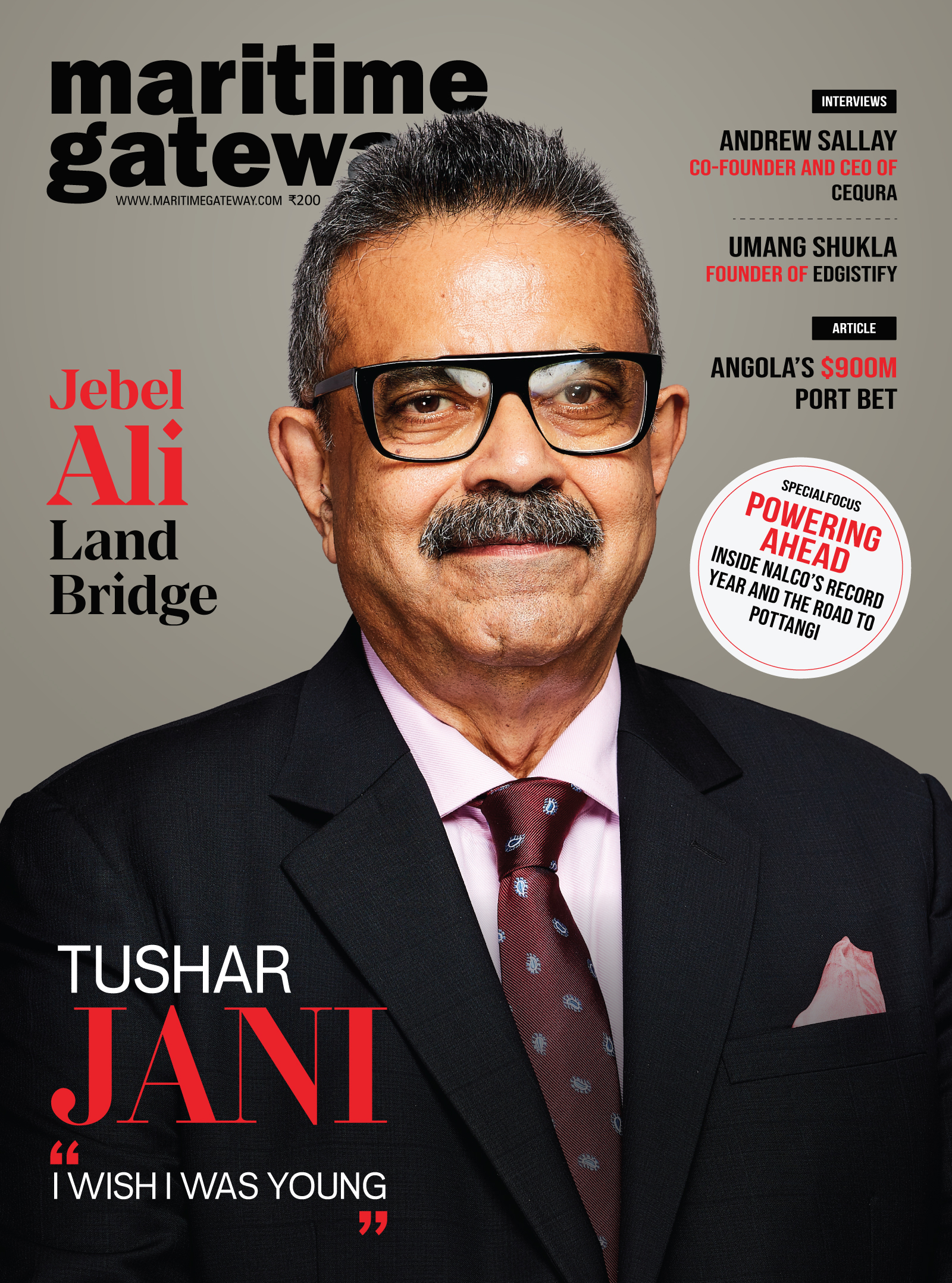





CMD Brijendra Pratap Singh on NALCO’s highest-ever production year, the fifth stream alumina refinery, securing raw material through Pottangi, and why he wants aluminium declared a strategic sector for rail priority
In conversation with Brijendra Pratap Singh, Chairman & Managing Director, NALCO
NALCO has posted its highest-ever production and sales numbers across virtually every parameter in FY 2025-26. Four decades into the company’s journey, what does this milestone mean to you personally, and what do you attribute it to beyond the favourable commodity cycle?
This milestone is personally very fulfilling and a matter of great pride for me. After four decades, NALCO achieving highest-ever production and sales across virtually all parameters reflects the maturity and strength of the organisation.
Beyond the favourable commodity cycle, I attribute this success to our sustained focus on operational excellence, improved techno-economic parameters, and the unwavering commitment of our employees and partners. Record performance in bauxite, alumina, aluminium, and coal production, along with efficient CAPEX utilisation, has strengthened our integrated operations and long-term competitiveness.
This is the outcome of years of collective effort and strategic initiatives.
Net profit for the first nine months of FY26 rose 26 percent to Rs 4,098 crore. How much of this growth is structural, driven by operational improvements, and how much is a function of elevated global aluminium prices that may not persist?
Higher volume of production and sales with improved techno-economic parameters contributed to the structural growth in net profit. Though elevated global aluminium prices contributed to the rise in the metal segment, reduction in alumina prices significantly affected the bottom line. With commissioning of the 5th stream alumina refinery, we expect the growth momentum will continue in future.
The fifth stream alumina refinery expansion at Damanjodi is being commissioned, with full commercial volumes expected by June 2026. Are you on schedule, and what is the single biggest execution challenge you faced in getting there?
Pre-commissioning activities for the 5th Stream Alumina Refinery have already started from June 2026.
The single biggest challenge during execution was managing multiple external disruptions simultaneously. Local agitations during boundary wall construction, impact of the COVID pandemic, and extended monsoon conditions adversely affected the project initially. In addition, global geopolitical developments — particularly the Russia-Ukraine conflict and the Middle East crisis — led to sharp escalation in fuel prices, logistics costs, and delays in procurement of critical equipment.
However, through proactive coordination with all stakeholders, effective contingency planning, and continuous monitoring at the highest level, NALCO is steadily progressing towards commissioning.
The Pottangi bauxite mine is described as critical for raw material security. What is the status of that project?
All statutory clearances required for the operationalisation of Pottangi Bauxite Mines have been obtained, and land acquisition for associated facilities including the Overland Conveyor and Water Intake Facility are in an advanced stage.
An MDO (Mine Developer and Operator) has been appointed for operation and maintenance of the mines for a period of 25 years, and site mobilisation activities are currently under progress.
Operations are expected to commence during the current financial year.
Aluminium smelting is one of the most energy-intensive industrial processes. NALCO achieved its highest-ever net power generation at 6,953 million units, largely from captive thermal capacity. What is your honest timeline for transitioning a meaningful share of that power to renewable sources, and what does it cost?
While captive thermal capacity has been the backbone of our energy security, we are fully committed to a structured transition toward renewable sources.
On the renewable energy front, our installed wind capacity is 198.4 MW, and another 15 MW of wind capacity is expected within the next year. Our present rooftop solar capacity is around 1 MW, and another 7 MW will be commissioned during this financial year. Another 20-25 MW of solar capacity will be added at the available vacant spaces of NALCO within the next two years.
We are also procuring and using 150 MW of green power during solar hours (8 am to 4 pm) to reduce our fossil fuel generation as a green initiative. This transition will be done in a phased manner, balancing operational reliability with sustainability goals.
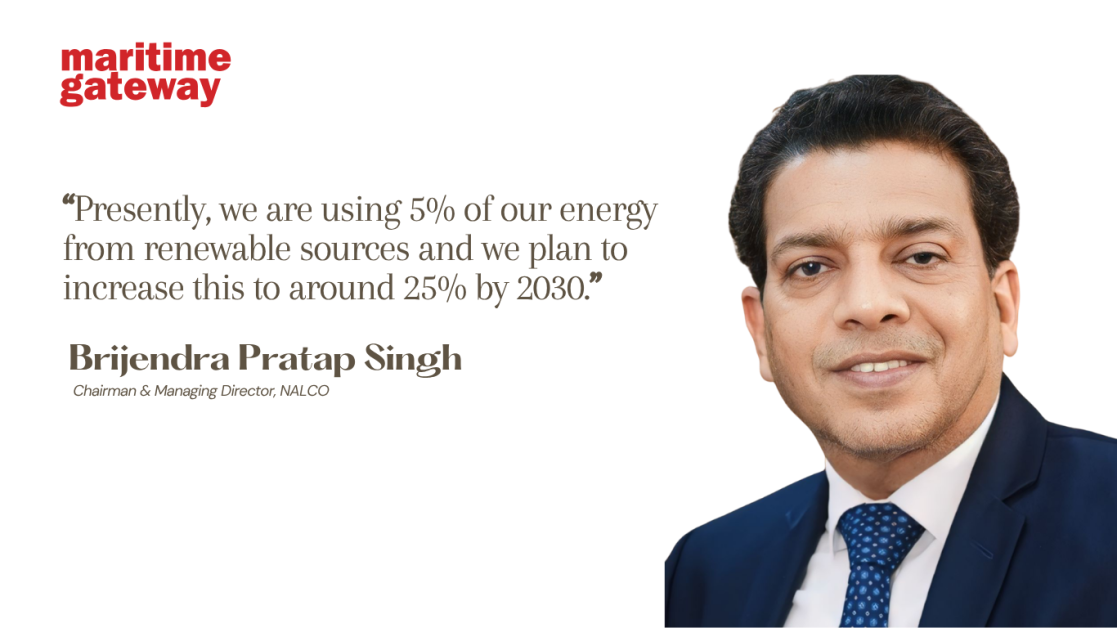
“Presently, we are using 5% of our energy from renewable sources and we plan to increase this to around 25% by 2030.”
The cost is quite significant. Overall, the per-unit generation cost of renewable power will be around Rs 1-1.5 more than the thermal power generation cost.
NALCO’s integrated model depends on moving bauxite from mines in Odisha’s Eastern Ghats to the Damanjodi refinery. What is the current annual tonnage being moved on that corridor, and how does the fifth stream expansion change the logistics equation in terms of volumes, fleet size, and infrastructure?
NALCO is currently moving approximately 77 lakh MT of bauxite annually on this corridor.
With the commissioning and full ramp-up of the 5th Stream Alumina Refinery (1.0 MTPA capacity), the annual bauxite requirement is expected to increase significantly to around 112 lakh MT. This will necessitate scaling up of fleet size, further optimisation of the existing cable belt system, strengthening of road infrastructure, and development of supporting logistics for the additional volumes from Pottangi Mines.
The Pottangi mine adds 3.5 MTPA of bauxite mining capacity. What is the evacuation plan for Pottangi, and is the road and rail infrastructure in that corridor ready to handle those volumes from day one of commercial operations?
The long-term evacuation plan for Pottangi Bauxite Mines is through an 18.5 km Overland Conveyor system connecting Pottangi Mines to the Alumina Refinery at Damanjodi.
However, due to delays in the acquisition of private land involved in the Conveyor Corridor Project, it is planned to have an interim evacuation arrangement through an alternate road connecting the mines to NH-26 for the initial period of 3-4 years of operation. Forest diversion for the said alternate road has been completed and tree felling permission obtained. Construction of the road is expected to commence shortly.
So, while the permanent conveyor infrastructure is under implementation, the company has already put in place an interim evacuation strategy to ensure operational readiness during the initial phase of commercial production.
Coal is critical to NALCO’s captive power operations, and you achieved record coal production of 40 lakh tonnes this year. What proportion of your coal requirement is met from captive mines versus procured externally, and how do you manage the logistics of coal supply to ensure uninterrupted power generation?
In FY 2025-26, NALCO’s Captive Power Plant required 7.2 million tonnes of coal to generate 6,953 MU of net power. From captive mines, 4.1 million tonnes of coal was consumed, whereas from MCL, 3.1 million tonnes was consumed. As far as coal receipt is concerned, 4.0 and 3.0 million tonnes were realised from captive mines and MCL linkage, respectively. Coal supply from captive mines during the year was in road mode. For MCL coal, all three modes — MGR, rail and road — were utilised to ensure steady supply and uninterrupted power generation.
Alumina produced at Damanjodi needs to be transported to the smelter at Angul, a distance of roughly 200 kilometres. What mode of transport is used for that movement today, what are the pain points, and is there a case for a dedicated pipeline or slurry system at the volumes you will be handling post expansion?
The Damanjodi to Angul distance by rail is roughly 673 km. Currently we are using rail mode to transport alumina from Damanjodi to Angul in our captive BTAP rakes. The main pain point is transit time from Damanjodi to Angul, which is 10-12 days. At times we are also facing problems with allotment of power and crew to draw out empty rakes.
Transportation of alumina through a pipeline or slurry system is not considered feasible, as calcined alumina is a fine and hygroscopic material. Accordingly, a dedicated pipeline has not been considered for this corridor. To cater to the increased transportation requirement following the expansion, we have procured four additional captive BTAP rakes, which will adequately handle the projected alumina movement between Damanjodi and Angul.
NALCO is a significant exporter of alumina. Which ports handle your export volumes today, and how dependent are you on Visakhapatnam and Paradip? Are port congestion and berth availability a constraint on your ability to scale exports as the fifth stream comes onstream?
NALCO exports calcined alumina from Visakhapatnam Port on an FOB Visakhapatnam spout-trimmed basis. NALCO has established mechanised storage (silos), conveyors (up to 2,200 TPH ship loading for alumina), and ship handling (loading and unloading) facilities for exporting alumina in bulk and importing caustic soda. Additionally, WQ5 (West Quay 5) berth at Visakhapatnam Port (VPT/VPA) is a captive/dedicated berth for NALCO, and as per berth occupancy statistics from VPT, it is approximately 60 percent occupied, indicating spare capacity. Moreover, due to the FOB nature of the shipments, pre-berthing and priority berthing is handled by the overseas buyer’s agents. Furthermore, the installation of the new ship loader has enabled NALCO to handle calcined alumina exports efficiently for Handymax/Panamax-class vessels at WQ5 (draft ~11.5 m).
The Strait of Hormuz disruption has affected global shipping lanes and freight rates. Has that impacted the economics of your alumina and metal exports, particularly to Middle Eastern and Asian buyers, and have you had to reroute any shipments?
NALCO exports alumina on an FOB basis through tendering. Due to disruptions in the Strait of Hormuz, Middle Eastern traders and buyers have reduced their participation in NALCO tenders. However, a few other buyers who have destined their cargoes to the Middle East have alternate arrangements in place for smooth passage of their vessels. Alternatively, a few consignments have also gone to China and Russia. However, since our sales are on an FOB basis, none of the customers have reported any instances of rerouting of NALCO’s alumina export consignments or vessels destined for the Middle East to some other destination.
Domestic metal sales have hit a record 4.61 lakh tonnes. How does NALCO move finished metal to domestic customers today, what is the modal split between rail and road, and where are the biggest bottlenecks in that distribution network?
Domestic metal is being sold from the smelter (ex-plant) and stockyards (ex-SY). Customers directly lift material from the smelter through trucks and trailers via road transportation.
Material to different stockyards is sent through both rail and road. In FY 2025-26, approximately 37 percent of material was sent through rail and 63 percent through road. The inherent bottleneck in distribution through the use of Indian Railways’ BOXN rakes remains the availability of rakes across circuits, due to priority given to coal transportation for IPPs. Because of this, there is delay in stock transfer of metal to stockyards, delay in material availability at stockyards, and an increase in logistics cost due to resorting to transportation through road.
“The aluminium sector needs to be categorised as a ‘strategic sector’ to enable priority allocation of rakes by Indian Railways. The lack of such priority continues to be a perennial bottleneck.”
Indian Railways is critical to large-scale bulk material movement. How would you rate your current relationship with Railways in terms of wagon availability, rake turnaround times, and priority allocation, and what single improvement to the rail logistics framework would most benefit NALCO’s operations?
Our current relationship with Railways in terms of wagon availability, rake turnaround times, and priority allocation is very good.
Early completion of doubling of the KK and KR lines would benefit NALCO’s operations and logistics through evacuation of alumina for captive consumption and exports.
 Join our WhatsApp channel for more updates:
 Subscribe to our YouTube channel for more updates: