
Summary
PSA Ameya Container Freight Station (CFS) provides specialised handling services for oversized, over-dimensional and out-of-gauge (OOG) cargo, including industrial machinery, commercial vehicles and equipment used in solar and wind-energy projects. Its services cover cargo assessment, stuffing, lashing, securing, storage and transport coordination, with handling arrangements determined by individual shipment requirements. Operating within the logistics ecosystems of Jawaharlal Nehru Port (JNPA) and Mundra, PSA Ameya’s wider CFS operations also include warehousing, Customs clearance and transportation for import and export cargo.
Article
PSA Ameya develops cargo-specific handling arrangements
PSA Ameya Container Freight Station supports the movement of oversized and complex cargo through handling arrangements designed around the dimensions, weight and logistical requirements of individual consignments. Its specialised cargo portfolio includes industrial machinery, commercial vehicles and equipment used in renewable-energy projects, particularly solar and wind installations.
These shipments often require arrangements beyond conventional container-handling procedures. Cargo dimensions, weight distribution, lifting requirements and securing methods influence how goods are positioned, loaded and transferred during transportation.
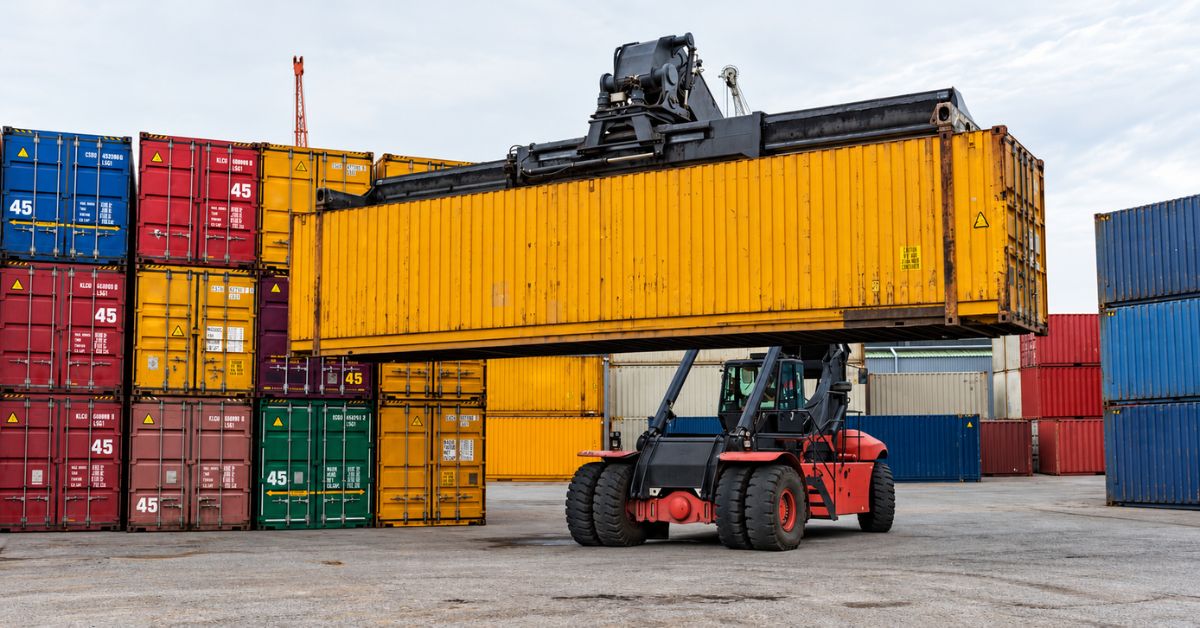
The facility’s specialised handling operations cover over-dimensional cargo (ODC) and out-of-gauge (OOG) shipments that exceed the standard dimensional limits of conventional transport equipment. Each consignment requires an assessment to determine suitable handling methods and the equipment needed for its movement.
Stuffing, lashing and securing services
PSA Ameya’s published specialised-services portfolio includes oversized-cargo handling, stuffing, lashing and securing, supported by trained personnel and dedicated storage facilities.
These activities form part of the cargo preparation process. Loading arrangements must account for the dimensions and weight of the consignment while ensuring that appropriate securing equipment can be applied. The selection of handling equipment and securing methods depends on the cargo’s characteristics and transportation requirements.
The company also identifies container-transport coordination among its wider logistics capabilities. These include GPS-enabled trailers and a round-the-clock helpline supporting transport operations.
For oversized consignments, coordination between cargo preparation, transport providers and receiving terminals remains important to ensure that the selected equipment and movement arrangements are suitable for the shipment.
OOG shipments require accurate cargo measurements
Out-of-gauge cargo refers to shipments that exceed the standard dimensional limits of the transport equipment used to carry them. Depending on their configuration, consignments may be classified as overheight, overwidth or overlength cargo.
Flat-rack and open-top containers are commonly used for certain shipments that cannot be accommodated within conventional enclosed containers. Larger or more complex cargo movements may require alternative transport and handling arrangements.
Accurate cargo measurements are essential during planning. These should account for the complete space occupied by the shipment, including any securing equipment that affects its overall dimensions. The information is used to determine equipment suitability and support vessel-stowage planning.
Weight is another important consideration. Heavy cargo and OOG cargo are not necessarily the same. A shipment may remain within the dimensional limits of its transport equipment while exceeding its permissible weight, while another may exceed dimensional limits without being exceptionally heavy. Both factors must be evaluated before transportation.
CFS operations support port-linked cargo movements
PSA Ameya operates within the logistics ecosystems serving Jawaharlal Nehru Port and Mundra, two major gateways for India’s international trade.
Its broader container freight station services include stuffing and de-stuffing, warehousing, Customs clearance and transportation for import and export cargo. These activities support cargo preparation and documentation before shipments move to the marine terminal.
For specialised consignments, coordination between the CFS, cargo owner, transporter, shipping line and terminal is necessary to align physical handling arrangements with the requirements of the onward journey.
PSA Ameya’s operations in Maharashtra and Gujarat place its services within established western Indian port and logistics markets. The handling requirements for individual shipments, however, depend on cargo specifications, equipment availability and the operational conditions of the relevant transport and terminal facilities.
CTU Code provides guidance for cargo packing and securing
The international transport of oversized and complex cargo also involves established guidance on safe cargo preparation.
The International Maritime Organization (IMO), International Labour Organization (ILO) and United Nations Economic Commission for Europe (UNECE) developed the Code of Practice for Packing of Cargo Transport Units, commonly known as the CTU Code.
The non-mandatory code provides guidance on packing and securing cargo transport units used in maritime and land-based transportation. It is intended for organisations and personnel responsible for preparing cargo transport units, as well as those involved in training workers in cargo-packing activities.
The guidelines address cargo preparation as part of the wider transport chain, taking into account the conditions shipments may encounter during handling and transportation. They provide an international reference for cargo owners, logistics providers and other stakeholders involved in preparing goods for movement.
Coordination remains central to specialised cargo movements
For machinery manufacturers, equipment suppliers and renewable-energy project developers, transporting oversized cargo involves more than arranging physical movement. Cargo readiness, packaging, transport availability, terminal acceptance and vessel schedules must be coordinated throughout the logistics process.
Changes in cargo dimensions, packaging or securing requirements can affect equipment selection and handling arrangements, potentially requiring the original plan to be reassessed.
PSA Ameya’s specialised cargo-handling services bring together consignment-specific preparation and its wider CFS operations. The execution of these movements depends on aligning cargo specifications with the requirements of transport providers, shipping lines and receiving terminals.
As project-related shipments involving industrial machinery and renewable-energy equipment move through India’s port logistics network, the coordination of specialised cargo preparation and transportation remains an important part of the supply chain.
FAQs
What is PSA Ameya’s specialised cargo-handling service?
PSA Ameya provides handling arrangements for oversized, over-dimensional and out-of-gauge cargo, including industrial machinery, commercial vehicles and solar- and wind-energy equipment.
What is the difference between ODC and OOG cargo?
ODC refers to over-dimensional cargo, which exceeds standard cargo dimensions. OOG refers to out-of-gauge cargo that exceeds the dimensional limits of conventional transport equipment. Both terms are used in specialised cargo logistics.
What specialised cargo services does PSA Ameya provide?
Its published services include oversized-cargo handling, stuffing, lashing, securing and dedicated storage, supported by trained personnel.
Which port logistics markets does PSA Ameya serve?
PSA Ameya operates within the logistics ecosystems serving Jawaharlal Nehru Port in Maharashtra and Mundra Port in Gujarat.
What is the CTU Code?
The CTU Code is an international, non-mandatory code developed by the IMO, ILO and UNECE. It provides guidance on the safe packing and securing of cargo transport units used in maritime and land transportation.
Has PSA Ameya announced any new cargo-handling capacity?
The available information does not specify a new capacity addition, investment, equipment installation or quantified increase in cargo-handling capacity.
 Join our WhatsApp channel for more updates:
 Subscribe to our YouTube channel for more updates: