
Summary
Defence Minister Rajnath Singh has reaffirmed India’s commitment to protecting commercial shipping and strengthening maritime cooperation with ASEAN. Addressing regional defence ministers in the Philippines, he emphasised freedom of navigation, international law and sustained operational cooperation to safeguard sea routes linking the Indian Ocean and the wider Indo-Pacific.
Commercial shipping protection takes centre stage
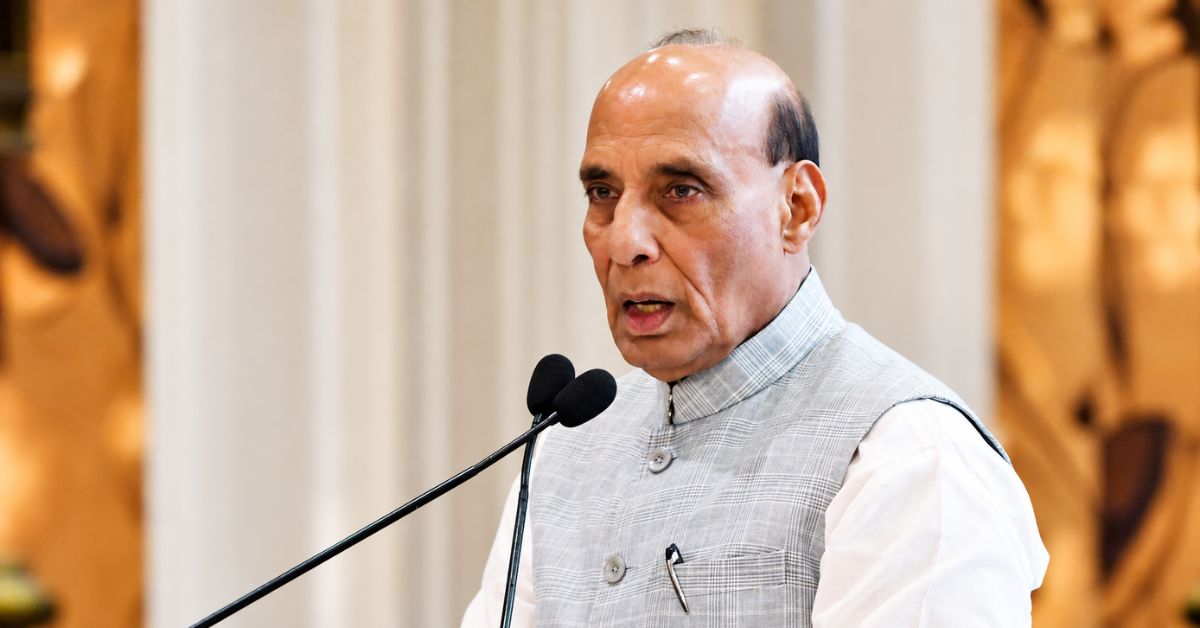
India–ASEAN maritime security cooperation featured prominently in Defence Minister Rajnath Singh’s address to the 13th ASEAN Defence Ministers’ Meeting-Plus in Cebu, Philippines, on 29 October 2026.
Singh said India would continue protecting merchant shipping irrespective of flag or nationality. He pointed to the Indian Navy’s continuous deployment in the Gulf of Aden since 2008 and its experience escorting commercial vessels and responding to hijackings.
He also reaffirmed support for the United Nations Convention on the Law of the Sea, freedom of navigation and overflight. These principles, he said, protect the collective interests of countries dependent on open sea lanes.
Regional forum connects ASEAN with major partners
The Cebu gathering brought together ASEAN countries and eight dialogue partners: India, Australia, China, Japan, New Zealand, Russia, South Korea and the United States.
The Philippines chairs ADMM-Plus in 2026. The mechanism provides a platform for defence cooperation between Southeast Asian countries and their partners, combining ministerial dialogue with practical working-level engagement.
India became an ASEAN dialogue partner in 1992. The first ADMM-Plus meeting took place in Hanoi in October 2010, and ministers have met annually since 2017.
India also co-chairs the forum’s Experts’ Working Group on Counter-Terrorism with Malaysia for the 2024–2027 cycle. This places its maritime engagement within a broader framework addressing regional security through cooperation between defence establishments.
Recent naval exercise provides operational background
The ministerial meeting followed the second ASEAN–India Maritime Exercise, which began at Subic Bay in the Philippines on 28 September.
Indian Naval Ships Sahyadri and Kulish participated alongside maritime forces from ASEAN countries. The programme combined professional exchanges ashore with coordinated activities at sea.
During the harbour phase, participants conducted expert discussions, planning sessions and a tabletop exercise before moving into operational training.
The sea phase included humanitarian assistance and disaster relief, boarding and search procedures, and replenishment at sea. Helicopter activities covered cross-deck landings, vertical replenishment and casualty evacuation.
These activities offered practical opportunities to improve coordination between forces that may need to work together during emergencies. Familiarity with procedures, communications and operating practices is particularly relevant when vessels from different countries respond to the same incident.
Philippines partnership adds another layer
India’s cooperation with the host country has also developed through dedicated bilateral arrangements.
The two countries’ strategic partnership declaration identifies maritime domain awareness, coastal surveillance, shipbuilding and maritime connectivity among areas for closer engagement.
It also covers cooperation between their navies and coast guards in search and rescue, pollution control, humanitarian assistance and disaster relief.
These priorities extend maritime cooperation beyond naval deployments. They connect security with the ability to monitor activity at sea, assist vessels in distress and manage incidents affecting coastal communities and marine environments.
The declaration also supports institutionalised maritime dialogue, providing a separate channel for discussing operational and policy issues alongside wider defence consultations.
Coast guard coordination supports maritime safety
An earlier operational step came in December 2025, when the Indian and Philippine coast guards held their first annual bilateral meeting in Manila.
Conducted under their August 2023 cooperation agreement, the meeting reviewed ship visits, professional exchanges and joint activities. Both sides agreed to strengthen interoperability and operational coordination.
Such arrangements provide continuity between high-level meetings, allowing agencies to review progress and identify practical requirements for future cooperation.
For shipping companies and cargo owners, the commercial relevance lies in the reliability of maritime routes and the availability of coordinated assistance when incidents occur.
Stronger institutional relationships and exercises can support that response capability. Their practical value depends on maintaining information exchange, trained personnel and procedures that participating agencies can use together at sea.
The Cebu discussions therefore sit within an expanding network of regional exercises, bilateral agreements and professional exchanges linking India with Southeast Asia.
FAQs
Where did Rajnath Singh address the meeting?
At the 13th ADMM-Plus in Cebu, Philippines, on 29 October 2026.
What was his main maritime message?
India remains committed to protecting commercial shipping and supporting open, secure sea routes.
Which Indian ships joined the recent ASEAN exercise?
INS Sahyadri and INS Kulish participated in AIME 2026.
What did the exercise cover?
Activities included disaster response, boarding procedures, replenishment, helicopter operations and casualty evacuation.
How does maritime cooperation benefit trade?
Coordinated monitoring, emergency assistance and security operations can help protect vessels, crews and cargo movements.
 Join our WhatsApp channel for more updates:
 Subscribe to our YouTube channel for more updates: