




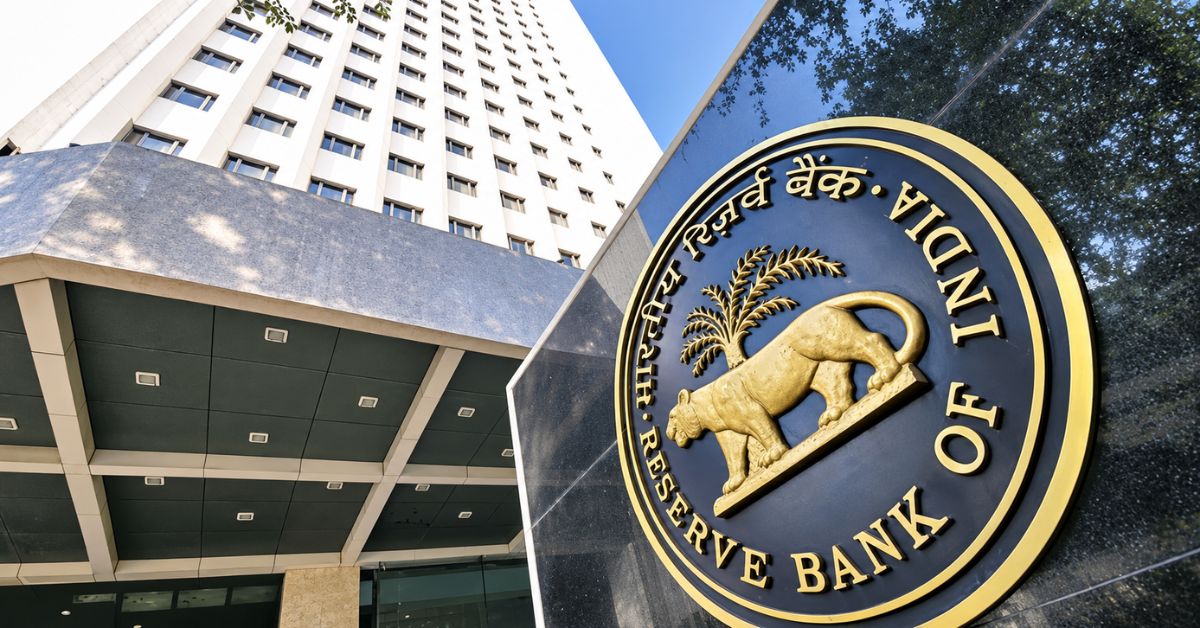

The Reserve Bank of India (RBI) has simplified foreign exchange reporting for service exporters and importers, introducing a deemed declaration mechanism for resident individuals and a ₹10 lakh threshold for specified business transactions.
The changes were issued through the Foreign Exchange Management (Export and Import of Goods and Services) (Second Amendment) Regulations, 2026, dated 2 November. They take effect retrospectively from 1 October 2026, when the revised framework governing goods and services trade became operational.
What changes for individual service exporters?
A resident individual exporting services will be treated as having submitted the Export Declaration Form (EDF) when they provide the required payment information to their Authorised Dealer (AD) for crediting the export proceeds to their account.
The amendment defines a resident individual as a natural person resident in India. This provision does not specify a monetary ceiling for the deemed submission facility.
The change links declaration compliance to information supplied during the payment-crediting process. Individuals must still furnish the required information to their authorised dealer; the provision establishes when that information satisfies the EDF requirement.
How does the ₹10 lakh export threshold apply?
Service exporters other than resident individuals can use the same deemed submission mechanism when the inward remittance for the service does not exceed ₹10 lakh, or its equivalent in foreign currency.
For these exporters, eligibility depends on the value of the inward remittance. Receipts above the threshold remain outside this particular relaxation.
The distinction is relevant to businesses receiving overseas payments: the amendment treats resident individuals separately from other exporters, rather than applying a single monetary limit to every service provider. The required payment details must be provided to the authorised dealer in both cases.
Which service imports require IDPMS reporting?
The RBI has also amended Regulation 18, narrowing the circumstances in which authorised dealers must enter service imports in the Import Data Processing and Monitoring System (IDPMS).
The revised provision applies where the importer is someone other than a resident individual and the invoice or contract value exceeds ₹10 lakh, or its foreign-currency equivalent. Banks must enter the details within five working days of receiving the information furnished by the importer.
Both conditions must be met. Service imports by resident individuals, and those by other importers with an invoice or contract value of ₹10 lakh or less, fall outside this specific reporting requirement.
Why do the export and import tests differ?
The two thresholds use different measures. For service exports by persons other than resident individuals, the amendment refers to the inward remittance. For service imports, it refers to the invoice or contract value.
An amount of exactly ₹10 lakh therefore qualifies for the export deemed submission facility, while an import invoice or contract of exactly ₹10 lakh does not cross the revised IDPMS reporting threshold. These distinctions are important when businesses and banks classify transactions under the amended provisions.
How does the amendment fit the wider trade framework?
The principal regulations were issued on 13 January 2026 and replaced the earlier framework governing exports of goods and services. They brought exports and imports within a consolidated regulatory instrument effective from 1 October 2026.
An initial amendment followed in September, before the November changes clarified the treatment of resident individuals and smaller service transactions. For maritime and logistics businesses undertaking cross-border service transactions, the relevant distinction is the exporter’s or importer’s status and the applicable value test. These changes concern specified reporting obligations, rather than a general exemption from foreign exchange compliance.
 Join our WhatsApp channel for more updates:
 Subscribe to our YouTube channel for more updates: