
South Korea’s Samsung Heavy Industries (SHI) is exploring vessel manufacturing opportunities in India, including possible participation in Odisha’s proposed Kendrapara shipbuilding cluster, as its main South Korean yard faces a substantial order backlog.
The company’s Geoje shipyard is reportedly booked for the next three years, with an executive putting its annual production capacity at approximately 60 vessels. India is among the locations being evaluated for expanding production. However, SHI has not announced a confirmed investment, selected site or construction timetable for a new Indian facility.
What shipbuilding projects is Samsung pursuing in India?
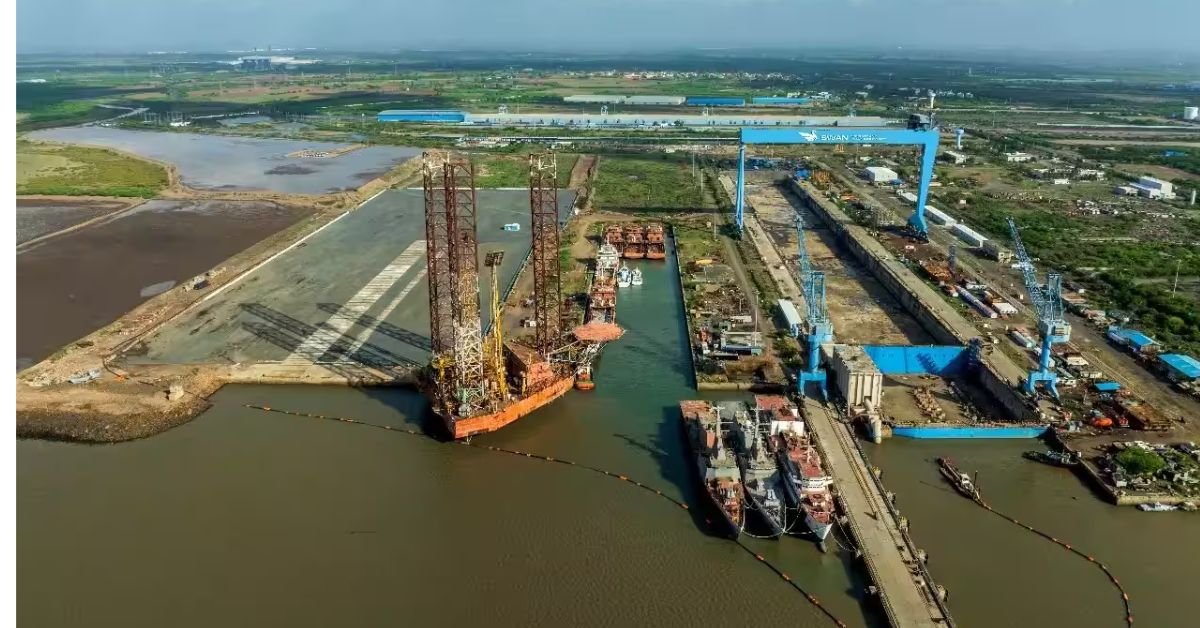
SHI’s existing Indian collaboration is with Swan Defence and Heavy Industries (SDHI), which operates the Pipavav shipyard in Gujarat.
According to SDHI, the companies have jointly submitted an expression of interest for a Shipping Corporation of India (SCI) programme covering eight very large gas carriers (VLGCs), each with a cargo capacity of 88,000 cubic metres.
They are also pursuing a joint bid for four dual-fuel-ready medium-range product tankers. These activities remain at the proposal and bidding stages, with the update providing no confirmation of contract awards.
The vessel programmes give the partnership specific commercial opportunities to pursue alongside SHI’s broader assessment of manufacturing options in India.
What does the Swan–Samsung agreement cover?
The companies announced their strategic memorandum of understanding (MoU) in September 2025. It provides for joint exploration of commercial shipbuilding and heavy engineering projects in Indian and international markets.
The agreement covers tankers, gas carriers, container ships and other specialised vessels. Its technical scope includes next-generation vessel designs, green technologies and digital shipbuilding methods.
The partners also identified production-design improvements and local sourcing of materials as areas for reducing costs and improving project execution. The arrangement therefore extends beyond individual vessel bids to the engineering and procurement processes needed to support construction.
SHI’s own announcement placed the Indian partnership within its wider international expansion strategy, following cooperation arrangements in China and the United States. It highlighted Swan’s ability to accommodate very large crude carriers and offshore structures.
What infrastructure does Pipavav offer?
SDHI’s shipyard has a dry dock measuring 662 metres by 65 metres, with a stated capacity of 400,000 deadweight tonnes. Its annual steel fabrication capacity is 144,000 tonnes.
The facility also includes a dedicated offshore yard measuring 750 metres by 265 metres for fabrication, erection and load-out of platforms, offshore structures and heavy engineering modules weighing up to 10,000 tonnes.
These facilities form the existing industrial base for the collaboration, separate from any potential SHI investment in a new shipbuilding cluster elsewhere in India.
How does the proposal fit India’s shipbuilding investment drive?
SHI participated in the India Shipbuilding Investment Conclave in New Delhi on 16 November 2026, where Union Minister of Ports, Shipping and Waterways Sarbananda Sonowal presented opportunities across five proposed coastal clusters.
The locations comprise Dugarajapatnam in Andhra Pradesh, Kuchhadi in Gujarat, Dighi in Maharashtra, Kendrapara in Odisha and Thoothukudi in Tamil Nadu. The government projected an investment opportunity of nearly $10 billion across these developments.
Executives from 30 international shipyards attended the conclave, alongside shipping companies, equipment suppliers and financiers. The ministry said site visits had been arranged for 10 international delegations.
The initiative supports India’s targets of entering the world’s top 10 shipbuilding nations by 2030 and the top five by 2047. For SHI, the immediate distinction remains between its established cooperation with Swan and an exploratory assessment of additional manufacturing investment.
 Join our WhatsApp channel for more updates:
 Subscribe to our YouTube channel for more updates: