



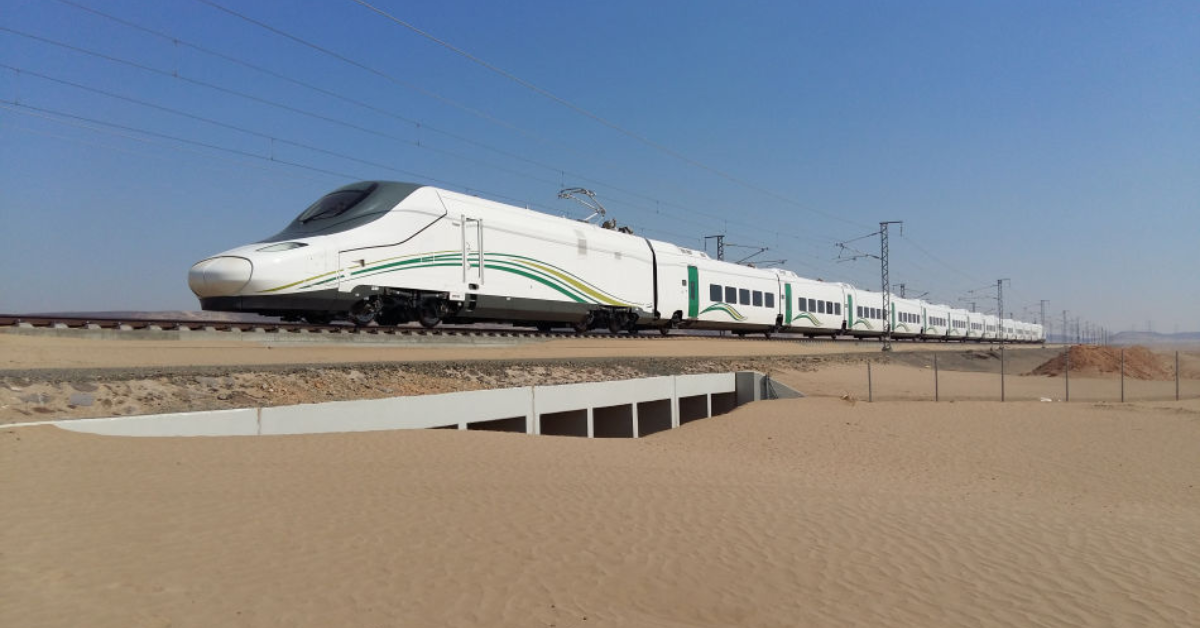

Saudi Arabia has launched five new rail logistics routes, a strategic move to streamline trade and position the Kingdom as a pivotal global logistics hub. Announced by Saudi Arabia Railways (SAR), these corridors link major Arabian Gulf ports with inland dry ports, industrial zones, and key economic centers like Riyadh, dramatically cutting cargo transit times and transport expenses.
The initiative, unveiled as part of the National Transport and Logistics Strategy, integrates maritime arrivals with efficient rail networks, reducing dependence on road haulage. High-volume commodities such as petrochemicals, minerals, and consumer goods will benefit most, with rail offering reliable, weather-resistant movement across the Kingdom’s vast terrain. SAR officials highlighted that the routes extend connectivity to northern borders and Red Sea ports, fostering seamless East-West trade flows.
While exact route details remain under wraps, industry analysis points to alignments with existing infrastructure like the Saudi Landbridge project. This 1,500+ km network already bridges Gulf ports such as Dammam and Jubail to Red Sea gateways like Jeddah, slashing sea voyage times to Europe and Africa. The new lines likely prioritize high-traffic lanes: Dammam-Riyadh for eastern industrial exports; Jubail to central hubs for chemicals; and extensions toward Jordan for overland exports. Enhanced multimodal hubs at ports will enable quick ship-to-train transfers, targeting 30-50% reductions in door-to-door logistics costs.
This expansion aligns squarely with Vision 2030, Saudi Arabia’s blueprint to diversify beyond oil through world-class infrastructure. The Kingdom has poured billions into rail, ports, and airports, aiming for a top-10 Logistics Performance Index ranking by decade’s end. Freight rail capacity has surged 25% since 2023, with electrified lines and automated signaling boosting speeds to 120 km/h for cargo. By shifting 20% more volume from trucks to trains, SAR anticipates lower emissions—rail is 80% greener per tonne-km—and decongested highways, easing burdens on the 40 million annual pilgrims and commuters.
Global trade implications are profound, especially for India and South Asia. As Red Sea disruptions linger from Houthi conflicts, Saudi’s rail pivot offers resilient alternatives to Suez Canal routes. Indian exporters of textiles, pharmaceuticals, and agri-products could tap faster GCC access via enhanced GCC Rail connectivity, potentially linking Bahrain, Kuwait, Oman, Qatar, and UAE. Mundra and JNPA ports, already handling 15% of India-Saudi trade (valued at $52 billion in FY25), stand to gain from reciprocal efficiencies. “This fortifies Saudi as a trade bridge, benefiting Indian shippers eyeing Middle East re-exports,” noted a Dubai-based logistics analyst.
Challenges ahead include integrating with neighboring networks and scaling for mega-freight like 100 TEU containers. SAR plans capacity doublings by 2028 via private partnerships, with digital platforms for real-time tracking. A Riyadh summit next quarter will showcase the routes to international stakeholders.
For regional commerce, the message is unequivocal: Saudi’s rail revolution promises quicker, cheaper supply chains, cementing its role in a multipolar trade landscape amid 3.2% global growth forecasts for 2026.
 Join our WhatsApp channel for more updates:
 Subscribe to our YouTube channel for more updates: