
Summary
Kochi Corporation plans to deploy Sethu Sagar-3 on the Fort Kochi–Vypeen route in the week beginning 26 October, following repeated service disruptions. A temporary six-month operating agreement with KSINC will enable its introduction while the corporation pursues a longer-term management arrangement and maintenance of the existing vessels.
Temporary agreement brings forward deployment
Sethu Sagar-3 is expected to enter service under an interim arrangement with Kerala Shipping and Inland Navigation Corporation, which operates the route’s two existing Ro-Ro vessels.
Mayor V. K. Minimol said recent disruptions had prompted the corporation to revise its earlier plan to wait for a special purpose vehicle involving Kochi Metro Rail Limited.
The decision follows an engine-pipeline failure affecting Sethu Sagar-1, leaving only one vessel operating during the disruption. Vehicle queues reportedly extended close to a kilometre.
The deployment remains a planned start rather than a confirmed commencement of passenger and vehicle services.
New vessel will allow maintenance to proceed
Once the additional ferry begins operating, Sethu Sagar-1 will be withdrawn for dry-docking. Sethu Sagar-2 is expected to undergo maintenance after the first vessel returns.
The corporation has earmarked ₹5.5 crore for maintenance of the two vessels and plans an open tender for work on the second ferry.
This sequence is intended to address maintenance requirements while retaining service capacity on the crossing. The immediate benefit of introducing the third vessel will therefore include providing cover for repair work.
June launch preceded the operating decision
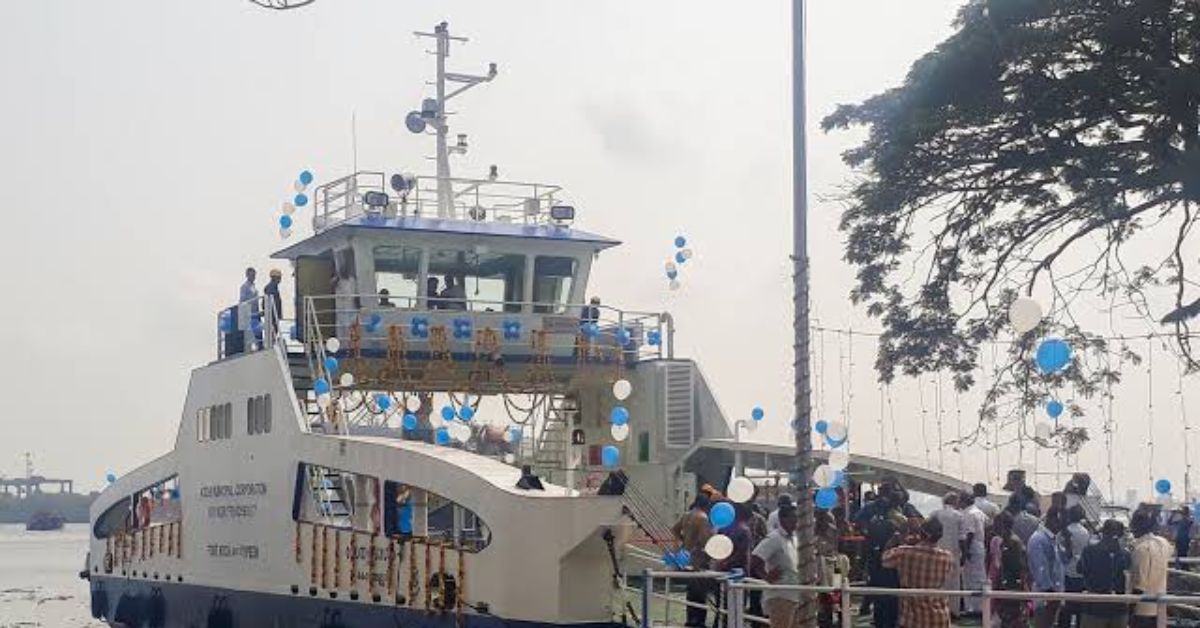
The vessel was launched on 22 June 2026, several months before the latest deployment announcement. Cochin Shipyard identified it as the third double-ended Ro-Ro ferry built for Kochi Corporation.
The launch marked a construction milestone. Preparing a vessel for regular service also involves the subsequent completion, approval and operational arrangements needed for deployment. facebook.com
At the June unveiling, the project cost was reported at approximately ₹18 crore. The design was described as accommodating trucks, cars and passengers, supporting the route’s combination of commuter and vehicle traffic.
Cochin Shipyard officials said the design incorporated improvements informed by operating experience with the existing ferries. At that stage, officials had anticipated commencing service in July, subject to remaining work, statutory clearance and trials.
The October announcement consequently represents a revised operating timetable following the earlier expectation.
Operating structure has remained under discussion
Questions over the route’s management predate the current disruption.
In May, representatives of the Vypeen–Fort Kochi Passengers Association sought clarity on the proposed operating framework before the third vessel entered service. They also raised concerns about irregular schedules and cancelled trips.
The mayor said the corporation would prioritise discussions on an SPV and had asked KSINC for a detailed income and expenditure statement.
Jetty access was another issue raised during those discussions. The association reported difficulty accommodating passenger boats when a Ro-Ro vessel was berthed at Vypeen, prompting consideration of improved facilities.
These earlier concerns show that the service’s challenges extend beyond the number of vessels available. Berthing arrangements, maintenance planning, scheduling and financial management all influence operating reliability.
Financial viability remains part of the debate
The corporation has been examining alternative management arrangements amid concerns about the service’s financial performance.
KSINC, in earlier comments, identified rising fuel prices, maintenance expenditure and unchanged fares as pressures on operations. Those concerns provide a different perspective on the difficulties facing the route and underline the need to assess both service delivery and operating costs. newindianexpress.com
A replacement management structure would need to establish clear responsibilities for maintenance, staffing, expenditure and service standards. The temporary agreement offers a route to deploying the new asset while those longer-term decisions continue.
Reliability will determine the practical benefit
For users, the most important outcome will be dependable crossings and shorter, more predictable waits.
An additional vessel provides flexibility, but the maintenance sequence means fleet availability will change as the older ferries are withdrawn and returned. Clear information on schedules and interruptions will remain important throughout that period.
For the corporation, the next milestone is the actual start of Sethu Sagar-3 services, followed by progress on dry-docking and the proposed operating framework. Together, these steps will determine whether the new ferry translates into a more stable Fort Kochi–Vypeen connection.
FAQs
When is Sethu Sagar-3 expected to begin service?
The corporation’s 21 October announcement indicated the following week, beginning 26 October 2026.
Which route will it serve?
The Fort Kochi–Vypeen crossing.
Who will operate it initially?
KSINC, under a proposed temporary six-month agreement.
Why is the third vessel needed?
It will support service continuity and allow the existing vessels to undergo maintenance sequentially.
Who built the ferry?
Cochin Shipyard built it for Kochi Corporation.
 Join our WhatsApp channel for more updates:
 Subscribe to our YouTube channel for more updates: