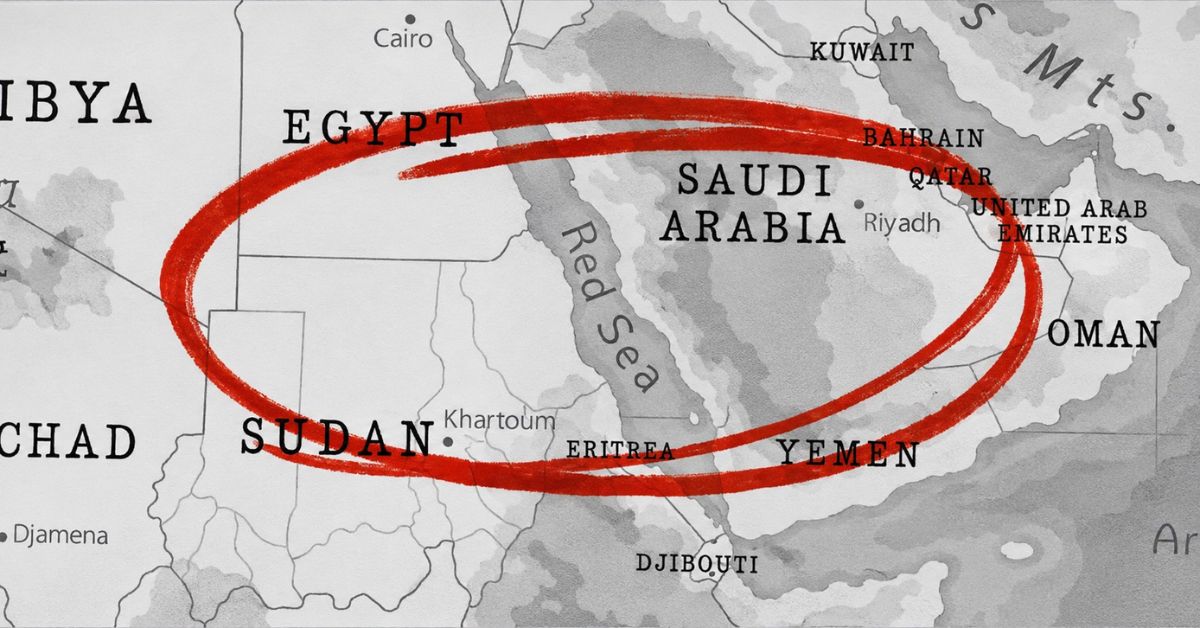

Some shipping operators are reportedly seeking assurances from Yemen’s Houthis before sending vessels through the Red Sea and Bab el-Mandeb Strait, highlighting the pressure on companies navigating the contested corridor. Reports published on 6 November describe email exchanges with a Houthi-run office, including a September transit by the Chinese container ship Zhong Cheng Chang Ling.
The exchanges do not constitute internationally recognised clearance. Maritime security guidance continues to distinguish between the group’s claims of authority and the established reporting and risk-assessment arrangements available to commercial vessels.
What is the Houthi communication channel?
The Humanitarian Operations Coordination Center (HOCC), established by the Houthis in early 2024, communicates the group’s shipping restrictions and handles requests for transit assurances. Some operators reportedly sought additional reassurance after the group announced restrictions on Saudi-linked shipping in July 2026.
On its own website, the HOCC describes the arrangement as voluntary and free for vessels outside its declared restrictions. It claims that decisions on completed requests may take up to 24 hours.
The website also sets out demands concerning vessel identification and communications during transit. These statements represent the group’s own position, rather than independent verification that compliance makes a voyage safe.
Do the assurances carry recognised authority?
Marine insurer Skuld states that the HOCC has no internationally recognised authority to impose transit conditions. The insurer has documented the organisation’s practice of emailing owners and managers with warnings that vessels have been placed on its prohibited list.
Such messages have referred to ships’ previous or planned Israeli port calls. Skuld cautions that these threats must be assessed within the wider regional security situation.
A separate advisory from Yemen’s Maritime Affairs Authority in Aden, circulated by shipping-services provider GAC, urges vessels not to engage with the HOCC. It identifies potential legal, sanctions and security risks and directs operators towards recognised maritime reporting bodies.
These include United Kingdom Maritime Trade Operations (UKMTO) and the Maritime Security Centre Indian Ocean (MSCIO), alongside compliance with flag-state and marine-insurance guidance.
Why is a claimed exemption insufficient?
The Joint Maritime Information Center (JMIC) has warned that Houthi targeting does not follow a consistent or predictable method.
In an advisory dated 14 August 2025, JMIC noted that attacks had involved vessels without relevant associations, ships with only indirect connections and cases apparently involving outdated ownership or operating information.
The advisory recommends examining multiple layers of vessel affiliation and combining maritime intelligence with security assessments and established protective practices. Its findings underline why a statement about ownership, flag or trading history cannot by itself establish that a vessel is outside the threat environment.
Why does the Red Sea route remain commercially important?
The Red Sea connects Asian and Indian Ocean shipping with the Suez Canal and Mediterranean markets. Diversions around southern Africa increase voyage distances and the time vessels spend completing each service rotation.
The International Monetary Fund documented the early scale of the disruption in March 2024. Trade through the Suez Canal fell by approximately 50% year on year during the first two months of that year, while traffic around the Cape of Good Hope rose by an estimated 74%. Those figures describe the initial disruption, rather than current traffic levels.
An October 2026 analysis by the Federal Reserve Bank of St. Louis explained that longer voyages can reduce effective shipping capacity even without queues building outside ports. Ships remain occupied for longer, affecting how much cargo a fleet can carry over a given period.
That commercial pressure helps explain operators’ interest in the shorter corridor. However, an email assurance from the armed group does not resolve the underlying security uncertainty or replace an independently assessed voyage plan.
 Join our WhatsApp channel for more updates:
 Subscribe to our YouTube channel for more updates: