




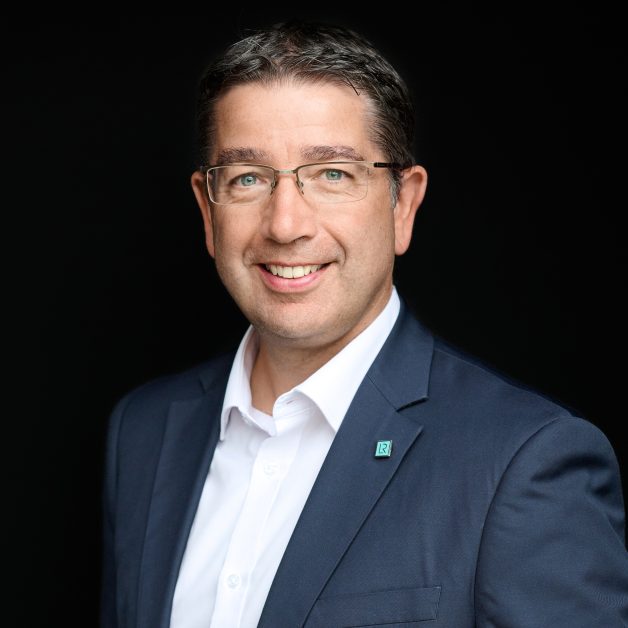

In a wide-ranging interview with Ramprasad, Editor-in-Chief of Maritime Gateway, Lloyd’s Register CEO Nick Brown explains why owners are hedging on alternative fuels, why he still wants surveyors on board in a digital world, and why nuclear is likely to arrive first through point-to-point “pink corridors”.
You said at the ANTWERPEN delivery that change comes through execution, not debate. What did LR learn from classing the world’s first ammonia dual-fuel gas carrier that is now feeding back into your rules?
The progress on ammonia probably started back in 2018, at the Global Maritime Forum in Hong Kong, where LR was one of the knowledge partners. I sat down with the CEO of MISC, which had just taken delivery of some of the very first LNG dual-fuel Aframax tankers. That was when the IMO had come out with its first 2050 strategy. Customers kept asking me, “Nick, what should we put in the engine room? Should we build LNG dual-fuel ships, or wait for something like ammonia?”
I said I didn’t know the answer. But I suggested we work with MISC, which had just taken its first LNG dual-fuel vessels, and study how easy it would be to convert an LNG-fuelled vessel to ammonia. I suspected ammonia would take a long time to become available, and we can’t wait forever. People need to order ships. The industry was hesitating, waiting for the IMO to give the answer before ordering.
So in 2018 we started what was called the Castor initiative, without focusing on a particular end destination. The ambition was to find out what it would take to produce a deep-sea cargo vessel that can run on a near-zero or zero-carbon fuel. We worked with Samsung shipyard, an engine maker, the Singapore flag, Yara as fuel producer and Total as charterer. Jurong Port was involved too. In a transition we shouldn’t focus only on the ship. Where does the fuel come from? How do we get it on board? How do we certify its life cycle? What happens in an emergency, such as a fire?
Since then a lot has happened. The Net-Zero Framework stuttered and caused delays. But the technical work to produce an ammonia-capable ship, which we saw with Antwerpen, has made excellent progress. That covers confidence in managing ammonia slip, crew training requirements and bunkering arrangements.
What we learned, as with the first LNG dual-fuel vessels, is that you can’t write prescriptive rules from day one. You need a risk-based approach that brings in industry experience and experience from outside the industry in handling a new fuel. We are now starting to do that with nuclear, which is the next topic. As experience builds, we will see the CMB.TECH Newcastlemax ammonia-fuelled ships being built in China, and shortly after that MISC’s or AET’s ammonia-fuelled Aframaxes. Then you can write a prescriptive rule. Our aim, as with other fuels today, is to move towards more prescriptive, standardised rules in the medium term.
Ammonia’s toxicity makes it a very different risk from LNG or methanol. How is class approaching crew safety, leak detection and emergency response, and where are the unresolved gaps?
The main issue with ammonia is toxicity. We work through IACS, because we don’t want one classification society taking a different approach to minimum toxicity standards from another. We have a common approach to tolerance levels, such as parts per million of ammonia in the engine room. We are also working on concepts like safe havens, with extra ventilation and fire protection for the crew to go to if there is a leak.
We have to recognise that crew could be joining an ammonia dual-fuel ship, and port workers could be going on board too. So sensors and leak detection have to be reliable. We can’t rely on a new regime with a completely new level of crew just for ammonia dual-fuel vessels. We are looking at sensing and leak detection, vibration tolerance and ventilation, which is just as important. We also model how an ammonia cloud would disperse in an emergency and how best to contain it, perhaps with a water curtain. Class isn’t working alone. We are working with flag administrations like the MPA in Singapore on bunkering studies.
Most of your recent approvals, from the Oshima Ultramax to the MARIC tanker, are “multi-fuel ready” rather than committed to one fuel. Is fuel-readiness becoming the default newbuild strategy, and what does “ready” really guarantee an owner at resale?
There are at least five different levels of readiness, and at LR we have defined them. The first is a paperwork exercise with no hardware built in. It is a study of where a secondary fuel tank would go and what arrangements would be needed, but nothing is installed.
Beyond that, you can do things that are cheap and cost-effective at newbuild stage, such as strengthening the main deck so it can carry a future fuel tank. Then you can make the main engine, auxiliary engine or boiler dual-fuel capable. A further level covers the ventilation requirements.
Today the majority of alternative-fuel-ready ships are at the lower levels of readiness, not the higher ones. Technologies like engines will keep developing. So the market generally does not invest in methanol- or ammonia-capable ships unless it is certain that charterers are demanding that readiness, and that methanol or biogas will be available in the quantities needed and be affordable.
Your orderbook analysis shows 1,259 LNG-capable, 385 methanol-capable vessels but only 53 hydrogen-capable, 45 ammonia-capable. Is class moving faster than fuel supply and bunkering infrastructure, and who should close that gap?
It is not just class. The ships and the technology are moving faster than the fuel. We always have this chicken-and-egg situation. But all the dual-fuel ships we talk about can operate on heavy fuel oil, so the owner is hedging. Owners and builders want to be able to run on LNG, methanol or ammonia, but they are not certain the market, the fuel and the port infrastructure will be ready. They always have the option of continuing on heavy fuel oil.
The number of final investment decisions for producing blue, green or biofuels does not seem to be progressing quite as fast. As a result, in the last six to 12 months we have probably seen more orders for conventional-fuel ships, because of concern that the fuel is not becoming available fast enough.
With several class societies issuing AiPs for similar designs, is there a risk of divergent standards on new fuels? What role should IACS play, given your time as its first elected Chair?
I speak on behalf of Lloyd’s Register, but I think this is fairly representative of IACS members. Our role is to focus on the safety and reliability of the design and the equipment: the systems and the crew training standards on board. We take a solution-agnostic approach. It has never been LR’s job to say the future is LNG or ammonia. We want to keep all the doors open and work with first movers who want to examine a specific fuel or propulsion system, and see what we can do to make it technically safe.
That is what we have done with Exmar and CMB.TECH, and what we will soon be doing with MISC on ammonia. We did similar projects with LNG and methanol. The biggest trend now is nuclear. Small modular reactors, or fourth-generation reactors, could be a land-based source of clean electricity. They could also be a port-based source for cold ironing and shore power, and potentially power floating offshore fuel production units, such as a nuclear-powered FPSO making pink hydrogen, pink ammonia or pink methanol.
How far are we from “digital class”, where a vessel demonstrates compliance continuously through data rather than periodic physical surveys? What still has to change among flag states before that becomes routine?
We are getting very close for machinery, particularly big equipment like the main engine and generators, which carry a lot of sensors. Because of Starlink we can either live-stream or regularly receive data from engines, boilers, turbochargers and generators.
But a ship is a system. On a bridge you can find 20 different OEMs supplying control, navigation and sensor equipment. The hull structure, ballast tanks, cargo area and pipework are largely not sensored. You can sense overall strain in certain areas with strain gauges, but you will never replicate a surveyor looking at a hatch cover or a chain locker. So digital class is moving faster for individual equipment, but it is some way away for an entire ship.
As we embrace these technologies we must maintain trust with all stakeholders. The flag is one. Port state control is another, as are the terminals and OCIMF, and charterer requirements from a BP, a Shell or an Exxon, or RightShip. All of these parties need to build confidence in data streaming and sensors on board, and that will take time. Personally, I still believe we need to send surveyors on board. Even in a world of digital class there will always be a need for human interaction to spot things that have no sensors. I hope we aren’t building a world with no human interface and no human surveys and inspections.
More connectivity means more cyber exposure. How is LR balancing the push for connected ships with cyber resilience requirements?
Our main focus is the safety of the asset. As connectivity grows between shore and critical equipment like engines, rudders and steering gear, the biggest risk is someone hacking into the ship and taking control of that equipment. That risk is growing as we see AI. In recent weeks you will have seen the CEOs of some of the biggest AI companies warning about these risks. AI does not believe in rules; it sometimes writes its own. Even with AI inside a sandbox, we are starting to see examples of it breaking out. So we have to be careful not to create more vulnerability, when digitalisation is meant to create efficiency and resilience.
When an AI model inside a digital twin recommends a maintenance or safety action, who is accountable if it is wrong: the owner, the software vendor or class? How do you certify a system that keeps learning?
It is a good question, and there isn’t clarity on the answer yet. Today we don’t certify AI, just as we don’t certify a shipyard. We certify the product of the shipyard or of an equipment manufacturer. Without a constant presence you can’t maintain confidence in that certification. So we are moving into a new realm, with big questions not just for class but for the insurance sector: how do we keep monitoring something that is constantly learning, and how do we allocate risk?
Class surveyors today do not watch every welder or every weld. We sample, and we build confidence in the controls, qualifications, training and processes in place. Those samples give us enough confidence in the whole asset. I think we will have to take a similar approach with new digital technologies.
Nuclear propulsion has moved from a fringe idea to a boardroom topic for LR. Realistically, when could we see a commercial merchant ship with an SMR, and which vessel segment goes first?
I’ll take the second question first. We believe nuclear will initially need a point-to-point, liner-type arrangement. That is mainly not because of the technology or the regulation, but because of societal acceptance. Different countries in Europe, and in Asia, have very different levels of acceptance of nuclear. So I believe we will have “pink corridors”, where a specific port, or even a specific state, is willing to work with another international port or government to look at the benefits of a nuclear liner trade. That takes multiple years and stability between states, which is becoming harder with the geopolitical situation.
At SMM Hamburg we announced what we believe to be the world’s first pink corridor, between the UK and the US, with Maersk involved.
I also don’t necessarily see ships as the first mover. SMRs have a big role on land, and on floating and fixed offshore installations. Confidence is growing because data centres and AI have huge energy needs, and that energy is expected to be clean and 100% reliable. Take a 30-megawatt SMR: you could put 10 in a compound next to a data centre and get reliable power for 25 or 30 years, perhaps more reliable than the grid, gas turbines or diesel generators. The fuel also lasts about 25 years. So in a situation like the Strait of Hormuz today, you don’t get that disruption in the price of power.
On timing, I expect the first SMRs that are attractive to the maritime sector, ports and data centres to be licensed in the early 2030s. We are taking part in ATLAS, the IAEA initiative on licensing atomic technology at sea, launched in Washington last month. The IAEA is the body that licenses nuclear facilities internationally, and the IMO regulates shipping internationally. We need to bring the two together to consider the practical, societal, commercial and technical aspects of SMR-powered vessels.
If you asked me, commercial viability is the biggest barrier. The business case is not only buying the engine but buying 25 years of fuel at the same time. That creates a need for new business models, a bit like aviation: buying power by the hour, or leasing the reactor. Cargo interests such as Amazon, for example, could show more interest in that kind of modular arrangement.
LR is now the technical support unit to Director General of Maritime Administration in India. What are the two or three priorities you think India must get right in the next five years to become a credible green shipping and shipbuilding nation, and how would you measure success?
It is hard to narrow down, because India’s potential is huge. India is already one of the most successful nations at providing talent: seafarers, engineers and captains. It has also been very successful in third-party ship management.
In shipbuilding, India has made good progress but still focuses mainly on smaller vessels, where I think it has a competitive advantage, and on naval vessels. To truly compete with Japan, South Korea or China would need a long-term, I would say multi-decade, government commitment. It is very hard for any shipbuilding nation to scale beyond what India has done without clear, long-term government support.
A shipbuilding nation is also more than shipyards. There is a huge supply chain behind them: steel, equipment, components, skills and connectivity, and the ability to attract factories that build components and equipment under licence. There is a massive opportunity, and we are very happy to be working with DG Shipping on it. It should be looked at holistically, as a chance for the Indian economy to compete, export more and build national supply-chain resilience. With COVID, and now the conflicts involving Russia and Ukraine and across the Middle East, resilience in energy and food is making many governments ask whether they are a strong enough maritime nation to support their people, growth and economy.
 Join our WhatsApp channel for more updates:
 Subscribe to our YouTube channel for more updates:



