



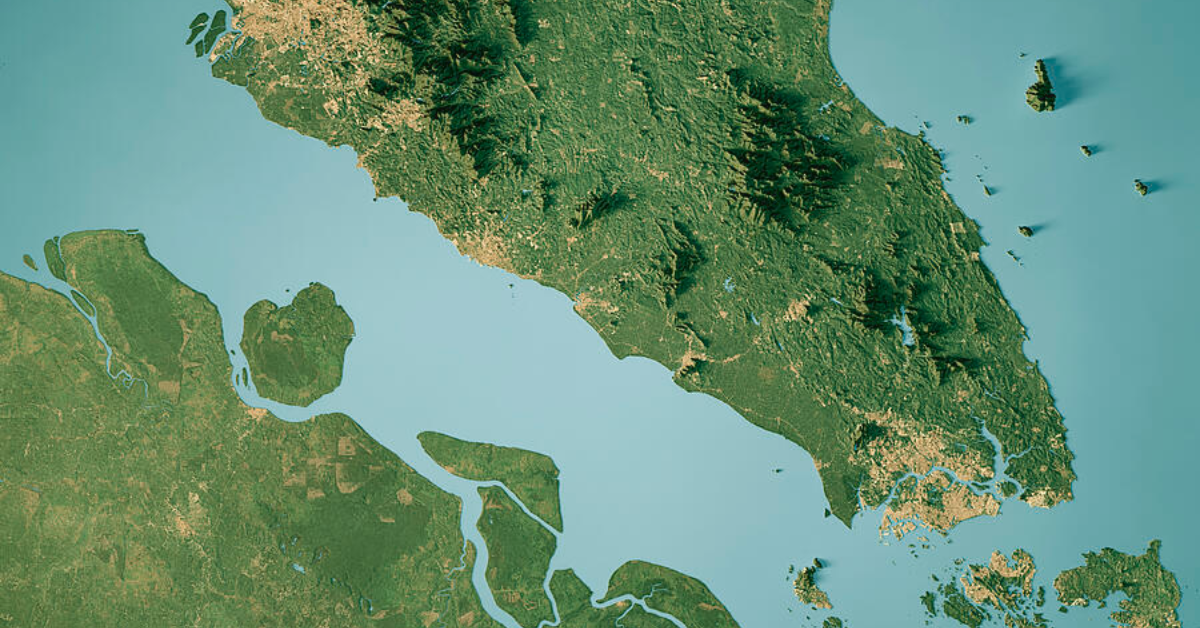

Singapore and Indonesia have reaffirmed that the Strait of Malacca will remain open, safe and accessible to all vessels, underscoring its role as a critical maritime artery for global trade and energy flows. The pledge followed talks between Singapore’s Prime Minister Lawrence Wong and Indonesia’s President Prabowo Subianto at the annual Leaders’ Retreat in Jakarta on July 6.
The Strait of Malacca links the Indian Ocean with the South China Sea and carries a significant share of worldwide cargo and oil shipments, making it one of the most strategically important sea lanes in the world. In 2025, the passage handled more than 102,500 vessel transits, representing around 22% of global maritime trade and moving approximately 23.2 million barrels of oil per day.
Littoral States Stress Freedom Of Navigation
President Prabowo highlighted that Indonesia and Singapore, as neighbouring coastal states along the strait, share a common interest in maintaining it as a free passage for all parties. He noted that Indonesia will continue its coordination with Malaysia and Thailand to ensure the waterway remains open, safe and accessible in line with the United Nations Convention on the Law of the Sea (UNCLOS).
Prime Minister Wong linked maritime security in the Strait of Malacca to wider global developments, pointing out that recent disruptions in the Strait of Hormuz have reinforced the need to keep major trade routes functioning and secure. He said Singapore and Indonesia are “strategically aligned” as littoral states, with a shared interest in protecting navigational rights, freedoms and sea lines of communication.
Legal Framework And Global Supply Chains
Analysts have drawn attention to the differing governance regimes of the Strait of Malacca and the Strait of Hormuz, noting that Malacca operates under UNCLOS as an international strait with guaranteed transit passage. This framework ensures that no single country can block, restrict or impose tolls on shipping traffic, giving global supply chains a high degree of continuity and predictability.
Concerns surfaced earlier in the year when an Indonesian official mentioned the idea of charging ships to transit the strait, but the government quickly walked back the remarks and reiterated its support for freedom of navigation. At the Leaders’ Retreat, Singapore and Indonesia also agreed to work with other littoral states to keep the straits safe, open and accessible, while concluding 26 agreements and memorandums of understanding across multiple sectors.
 Join our WhatsApp channel for more updates:
 Subscribe to our YouTube channel for more updates: