
Summary
Tripura’s Sonamura–Daudkandi waterway has yet to develop into a dependable commercial corridor six years after its inaugural cargo movement. However, official records show subsequent terminal construction and agreements on channel improvements, making the central issue the gap between infrastructure development and sustained freight operations.
Regular commercial movement remains the missing link
The Sonamura–Daudkandi waterway remains short of the regular commercial activity envisaged when the cross-border route was inaugurated in September 2020.
A fresh assessment of the link has highlighted the absence of demonstrable, sustained cargo operations following the inaugural shipment. The corridor was intended to provide Tripura with an additional trade connection through Bangladesh and an alternative transport option for suitable cargo.
However, describing the project as having made no progress since 2020 would overlook documented developments. Official records confirm that a permanent terminal was subsequently completed and that the two countries agreed on channel improvements.
The unresolved question is how these steps translate into a reliable freight service.
Cement shipment demonstrated the route in 2020
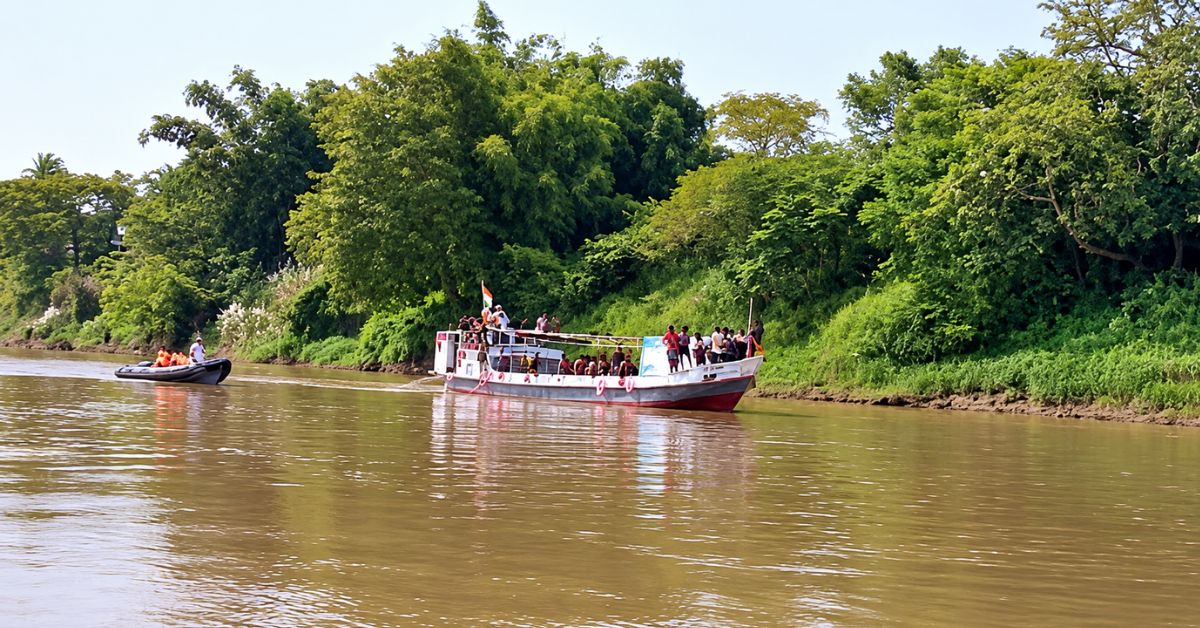
The inaugural trial took place between 3 and 5 September 2020, when a Bangladeshi vessel carried approximately 50 tonnes of cement from Daudkandi to Sonamura.
The shipment travelled around 93 kilometres along the Meghna–Gomati river route. It was received in Tripura in the presence of then Chief Minister Biplab Kumar Deb and India’s High Commissioner to Bangladesh, Riva Ganguly Das.
The movement demonstrated that cargo could reach Tripura through the waterway under the conditions prevailing during the trial. It also generated expectations of stronger links between businesses on both sides of the border.
A successful demonstration, however, establishes neither year-round navigability nor the commercial conditions needed for repeated sailings.
Permanent terminal completed after inauguration
Infrastructure development continued beyond the initial cargo movement.
The Inland Waterways Authority of India identifies Sonamura’s reinforced-concrete cargo terminal as completed and inaugurated on 20 February 2024.
The facility provides infrastructure for loading and unloading on the Indo-Bangladesh Protocol corridor. Its completion is an important distinction from the earlier trial, which took place before the permanent terminal was inaugurated.
Terminal readiness is nevertheless only one element of a functional route. Safe vessel access, navigable channels and coordinated cargo handling are also necessary.
The Sonamura facility should therefore be recognised as completed infrastructure without treating that status as evidence of an established scheduled service.
Channel improvement requires bilateral follow-through
A parliamentary reply dated 16 December 2025 provides a clearer picture of the outstanding development process.
Shipping Minister Sarbananda Sonowal said India and Bangladesh had agreed on channel improvement at the December 2023 meeting of the standing committee governing inland water transit and trade.
A joint survey had been conducted, but India had not received a formal proposal from Bangladesh as of that parliamentary response.
The agreed development arrangement assigned 80% of the cost to India and 20% to Bangladesh. The reply also recorded navigability improvement work on certain Gomati stretches within Tripura.
These are historical status points. They establish the agreed framework and pending action at that date, rather than confirming the position of every proposal in October 2026.
Navigability determines usable carrying capacity
The practical importance of channel conditions extends beyond whether a vessel can complete an occasional voyage.
IWAI explains that least available depth influences permissible vessel draught, safe carrying capacity, voyage planning and seasonal operating feasibility.
Depth information is established through hydrographic surveys and related monitoring. For an operator, dependable information helps determine which vessel can be deployed and how much cargo it can safely carry.
Consequently, a terminal and an agreed protocol route require continuing navigational support to become a commercially usable transport chain.
Commercial case needs operating evidence
For Tripura’s traders, the corridor’s potential lies in offering another route for cargo movement. Its attractiveness will depend on the complete cost and reliability of the journey, including handling and onward delivery.
The latest account does not provide a verified series of annual cargo volumes, regular sailing schedules or a confirmed commercial restart date.
The next meaningful milestones are therefore operational: dependable navigation conditions, clear cross-border arrangements and repeat cargo commitments.
The distinction matters for evaluating the project. Infrastructure has advanced since 2020; sustained commercial use remains the outcome against which the corridor’s success must be assessed.
FAQs
What does the route connect?
Sonamura in Tripura with Daudkandi in Bangladesh through the Gomati river corridor.
When did the first cargo movement occur?
The inaugural cement shipment travelled between 3 and 5 September 2020.
Has infrastructure progressed since then?
Yes. IWAI records the permanent Sonamura terminal as completed and inaugurated in February 2024.
What channel improvement arrangement was agreed?
India and Bangladesh agreed on development with an 80:20 cost-sharing ratio, respectively.
Is there a confirmed date for regular services?
The available information does not establish a verified commencement date for sustained commercial operations.
 Join our WhatsApp channel for more updates:
 Subscribe to our YouTube channel for more updates: