


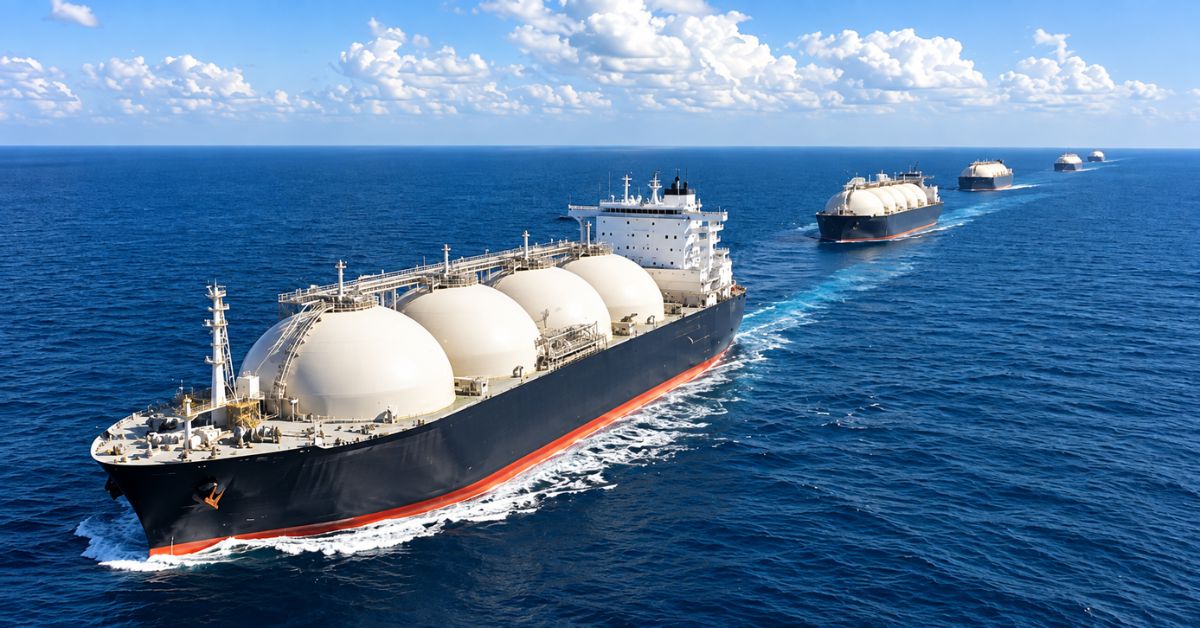

South Korean shipping companies SK Shipping and H-Line Shipping will swap vessels and long-term contracts in a deal that will make SK Shipping Asia’s largest liquefied natural gas carrier operator, their owner Hahn & Co said.
What does the asset swap involve?
Under the arrangement, SK Shipping will receive 16 LNG vessels and related long-term contracts from H-Line Shipping in exchange for 12 tankers, long-term contracts and approximately $300 million in cash, according to Hahn & Co.
What will SK Shipping’s fleet look like after the transaction?
Following the swap, SK Shipping will operate 32 LNG carriers and 14 liquefied petroleum gas vessels, positioning it as the third-largest LNG carrier operator globally, while becoming the largest such operator in Asia.
What changes are planned for both companies post-transaction?
Hahn & Co plans to rebrand SK Shipping as K-LNG following the deal, while H-Line Shipping will pivot to become a tanker and bulk shipping-focused operator once the asset swap is complete, creating two more specialised entities out of the current diversified fleets.
Why is this restructuring being pursued?
Hahn & Co said the reshuffle would improve scale and operating efficiencies at both companies, positioning the newly rebranded K-LNG to benefit from growing global LNG demand while allowing H-Line Shipping to sharpen its focus on tanker and dry bulk operations.
What is the ownership background behind this deal?
Both SK Shipping and H-Line Shipping are controlled by South Korean private equity firm Hahn & Co, which acquired a controlling stake in SK Shipping in 2018 and created H-Line Shipping in 2014 through the acquisition of Hanjin Shipping’s long-term dry bulk business.
What does this mean for the global LNG shipping market?
The transaction reflects continued consolidation and specialisation within Asia’s shipping sector, as private equity-backed maritime groups reposition their fleets to capture growth in LNG transport demand while streamlining exposure to other cargo segments through targeted asset swaps.
 Join our WhatsApp channel for more updates:
 Subscribe to our YouTube channel for more updates: