




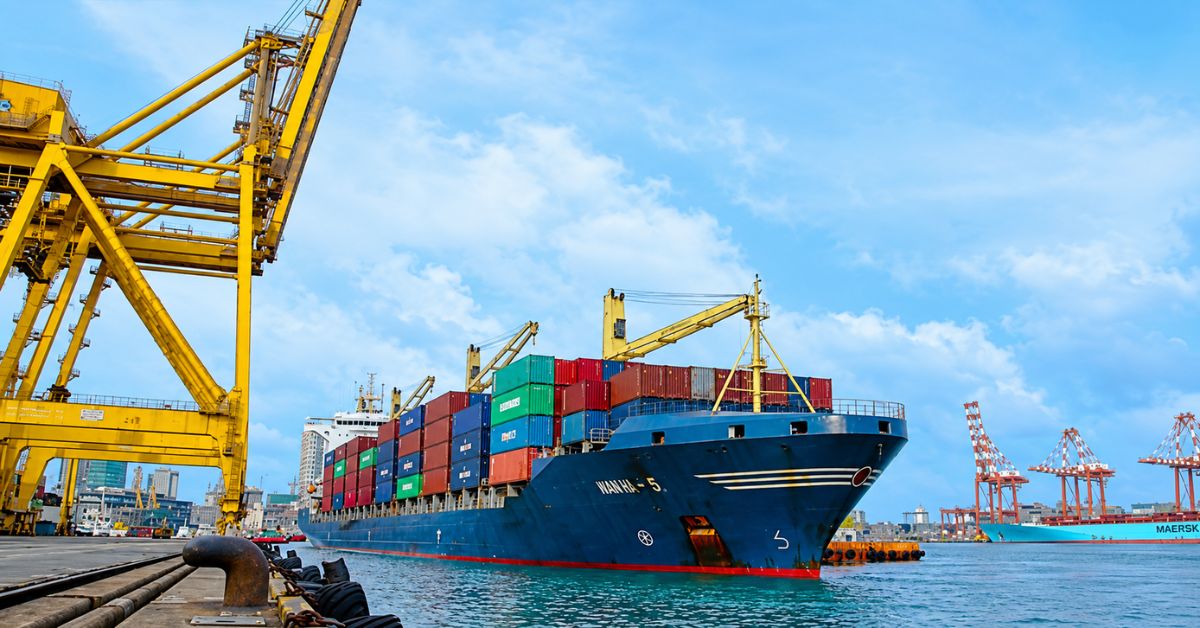

Summary
Sri Lanka’s merchandise exports rose 21% year on year to a record US$1.377 billion in September 2026, supported by strong petroleum and machinery earnings. The performance lifted nine-month goods exports to US$10.75 billion, although the broader export picture remained uneven across industries and overseas markets.
Industrial exports drive the monthly record
Sri Lanka merchandise exports reached their highest monthly value in September, exceeding the previous peak of US$1.302 billion recorded in July 2025. The latest Central Bank figures put the increase above that earlier record at approximately US$75 million, or 5.8%.
Industrial export earnings grew 27.7% compared with September 2025. Petroleum products generated US$149.9 million, an increase of 130%, while machinery and mechanical appliances earned US$70 million, up 72%.
Together, these two categories contributed almost US$220 million, equivalent to approximately 16% of September’s merchandise export earnings. Their performance gave the monthly total a substantial boost beyond Sri Lanka’s established agricultural and garment exports.
For January–September, merchandise export earnings increased 5.4% to US$10.754 billion. The difference between September’s sharp rise and the more moderate cumulative increase shows that the latest monthly performance was stronger than the year’s overall growth trend.
Broader export figures show mixed performance
A separate Export Development Board assessment, published on 26 October, estimated combined merchandise and services exports at US$13.61 billion for the first nine months, up 5.04%.
That release placed goods exports at US$10.762 billion and services at US$2.851 billion. Its merchandise estimate differs slightly from the subsequent Central Bank figure; the two statistical releases should therefore be read separately.
The sector breakdown showed electrical and electronic component exports rising 61.05% during January–September. However, apparel and textile earnings declined 5.68%, while tea earnings fell 6.83%.
India strengthened its position as Sri Lanka’s second-largest export destination, with nine-month shipments increasing 12.3% to US$889.84 million. The figures indicate that diversification into additional products and regional markets is helping offset weakness in some traditional export categories.
Logistics services add another source of earnings
The export performance also has a direct maritime and logistics dimension.
Transport and logistics service exports were estimated at US$167.9 million in September, representing growth of 23.32% from a year earlier. These earnings are recorded within services and are separate from the merchandise figures underpinning the monthly goods-export record.
For shipping companies and logistics providers, the distinction matters. Export earnings measure the value of transactions, while demand for vessel space, warehousing and cargo handling also depends on shipment quantities, commodity characteristics and routing.
A rise in petroleum export value, for example, cannot by itself establish an equivalent increase in container traffic. Similarly, machinery exports may generate different handling requirements from apparel, tea or other established cargo streams.
The commercial opportunity consequently depends on the composition of growth as well as its headline value. A wider range of export products can support demand for more varied transport and logistics services.
Export strategy places emphasis on port efficiency
Earlier government discussions have already identified maritime connectivity as an important part of the country’s export ambitions.
At a meeting on 15 September, the Ministry of Ports and Civil Aviation and the Export Development Board reviewed implementation of the National Export Development Plan 2026–2030.
Priorities included improving port infrastructure and services, facilitating trade, strengthening cargo connectivity and making export movements more efficient. The discussions also addressed Sri Lanka’s development as a regional maritime and logistics hub.
The plan, developed with Asian Development Bank technical assistance, targets US$36 billion in annual exports by 2030. Officials emphasised coordination between ministries, port institutions and other implementing agencies to translate the strategy into measurable outcomes.
September’s record provides a stronger starting point for those ambitions. Sustaining the improvement will require repeat export orders across a broader industrial base, alongside efficient access to overseas markets.
For the maritime sector, the key question is how consistently higher export earnings translate into cargo movements, demand for shipping services and commercially viable investment in supporting infrastructure.
FAQs
How much did Sri Lanka export in September 2026?
Merchandise exports reached US$1.377 billion in the Central Bank figures, up 21% year on year.
Which sectors drove the increase?
Petroleum products and machinery were major contributors, alongside broader industrial export growth.
What were merchandise exports for January–September?
The Central Bank figures placed earnings at US$10.754 billion, an increase of 5.4%.
Does the record include services exports?
The US$1.377 billion monthly record covers merchandise. Services are reported separately.
What is Sri Lanka’s longer-term export target?
The National Export Development Plan targets annual exports of US$36 billion by 2030.
 Join our WhatsApp channel for more updates:
 Subscribe to our YouTube channel for more updates:




