




US strikes and Iranian missiles turn the world’s most critical oil and shipping chokepoint into a war zone, rattling global trade.
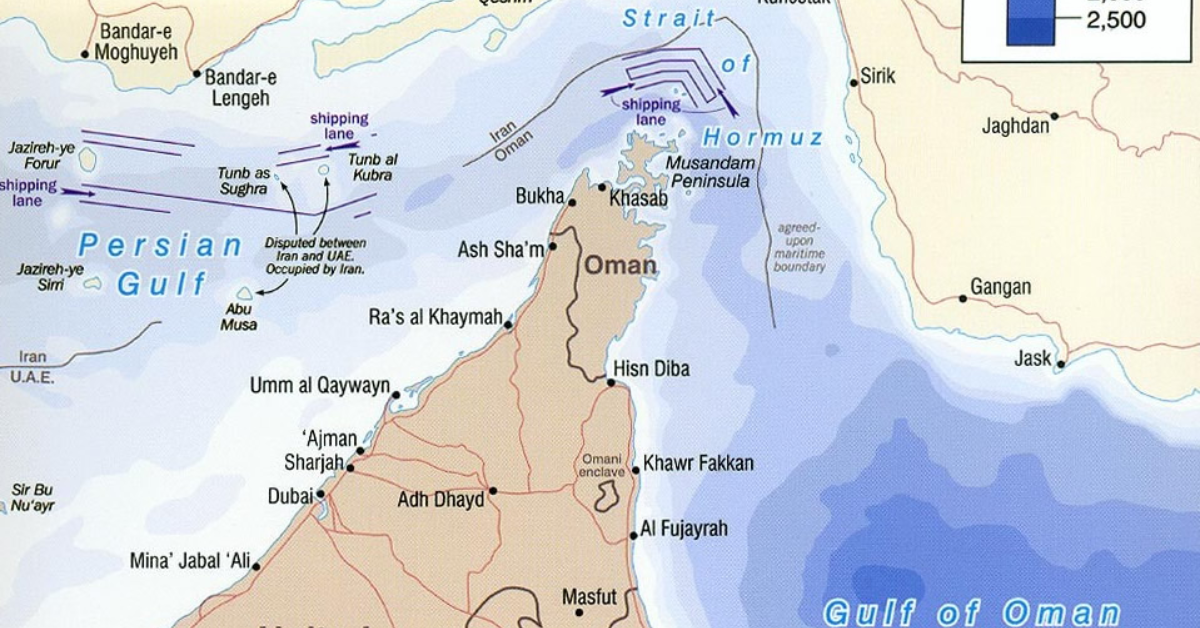
The Strait of Hormuz, the 33-nautical-mile funnel through which roughly a fifth of the world’s oil and a substantial share of its LNG pass every day, has spent the past week as the epicenter of an escalating military confrontation between the United States and Iran. What began in late February as a bruising exchange of strikes between US-Israeli forces and Iran has now spilled directly onto commercial shipping lanes, forcing insurers, shipowners and cargo interests to confront the possibility of a prolonged closure of the waterway.
On the night of July 6-7, Iran’s Islamic Revolutionary Guard Corps Navy fired at least two missiles at commercial vessels transiting the strait. Two ships sustained significant damage; mercifully, no lives were lost in that particular strike. Days later, on July 11, the confrontation sharpened further: US Central Command said the IRGC “blatantly attacked” a Cyprus-flagged container ship crossing the strait, disabling it and leaving one crew member missing. Washington responded with its third round of strikes in a week, hitting close to 140 Iranian military targets it described as holding Tehran “accountable” for the attack on shipping.
Tehran, for its part, declared the Strait of Hormuz closed, with Iranian officials posting on social media that passage was “currently not possible” and that a warning shot had been fired at a vessel attempting to use what Iran called an unauthorised route. The US has firmly rejected the claim of a closure. Centcom said Iran “does not control the Strait of Hormuz” and that the waterway remained legally open to international traffic, with several vessels continuing to transit under naval escort.
The dispute over whether Hormuz is open, closed, or something dangerously in between is not academic. Roughly 17-21 million barrels of oil a day, along with a large share of the world’s seaborne LNG, normally pass through the strait, most of it from Saudi Arabia, Iraq, the UAE, Kuwait and Qatar. A sustained disruption would ripple through energy markets, freight rates and insurance premiums well beyond the Gulf. War-risk premiums for vessels transiting the strait have climbed sharply, and several major charterers have paused fresh bookings through the waterway pending clarity.
For India, which sources a significant share of its crude and LPG from the Gulf, the standoff is being watched closely in New Delhi. The Ministry of External Affairs has repeatedly called for restraint and de-escalation from both sides, while continuing to coordinate evacuation and support logistics for Indian nationals aboard affected vessels (see accompanying report on the attack on a vessel off Oman).
Diplomatically, the attacks land at a delicate moment. Mediators, reportedly including Qatari and Omani interlocutors, have been working to bring Washington and Tehran back to the negotiating table, with the status of Hormuz understood to be one of the toughest sticking points in the talks. Iran effectively restricted shipping through the strait after the US-Israeli strikes began in February, using the threat of closure as leverage; the events of the past week suggest that leverage has now turned kinetic.
Shipping lines are adapting in real time. Some carriers are re-routing tankers around the Cape of Good Hope or holding vessels at anchor outside the strait until naval escorts are arranged; others are pressing ahead under close coordination with the US Navy’s Fifth Fleet and allied maritime security forces patrolling the Gulf of Oman. War-risk insurers, meanwhile, have added the strait to a growing list of high-risk transit zones that already includes the Red Sea and Bab-el-Mandeb.
With both sides trading strikes even as ceasefire talks continue, the maritime industry is bracing for a few volatile weeks. Much will depend on whether the current round of diplomacy can secure a durable de-escalation before further attacks on shipping, deliberate or incidental, force a wider rerouting of Gulf energy and container trade.
 Join our WhatsApp channel for more updates:
 Subscribe to our YouTube channel for more updates: