




Tata Motors reported an 83 percent year-on-year jump in Q1 net profit, driven by robust commercial vehicle demand, even as the company continues to advance its hydrogen truck trials and considers further price hikes across its CV portfolio.
How did Tata Motors’ commercial vehicle business perform in Q1?
Total CV volumes rose 26 percent to 108,700 units during the quarter, with domestic volumes also up 26 percent. Exports grew 35 percent, supported by strong growth in Indonesia and several markets across sub-Saharan Africa. Girish Wagh said the company is seeing genuine demand for heavy commercial vehicles, led by large fleet operators replacing ageing vehicles, with the replacement cycle continuing into July as fleet owners seek better fuel economy, lower maintenance costs and improved total cost of ownership from newer trucks.
What is driving underlying CV demand?
According to company management, underlying demand remains robust, supported by improving freight rates, rising E-way bill volumes and improving transporter profitability, all of which are accelerating replacement demand. The company is also increasingly tracking retail registrations through the government’s Vahan platform alongside wholesale volumes, to ensure growth is not being driven by inventory accumulation at dealerships. The demand environment is being further supported by infrastructure and mining activity, alongside e-commerce, FMCG and courier and parcel segments.
What progress has Tata Motors made on hydrogen truck trials?
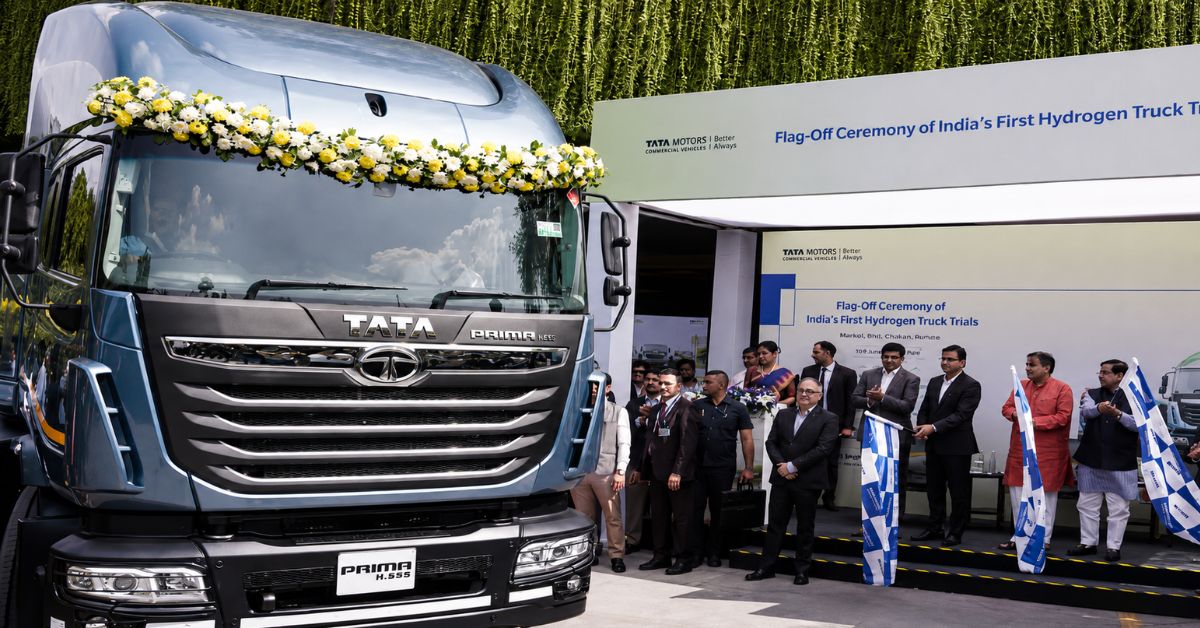
Tata Motors continues work on hydrogen-powered commercial vehicles under the government’s National Green Hydrogen Mission, participating in pilot projects involving hydrogen trucks operating on three routes, with Indian Oil Corporation generating green hydrogen for the trials. Wagh said the pilots are intended to generate operating data before the technology can be considered for wider commercial deployment. Separately, Tata Motors has announced deployment of 40 green hydrogen powered heavy-duty trucks at V.O. Chidambaranar Port under an initial agreement with the port authority, beginning with trials of a hydrogen-powered prime mover followed by phased deployment of hydrogen internal combustion engine prime movers over the next two years, marking a step toward decarbonising port logistics operations.
What policy concerns has the company flagged?
Tata Motors has sought government intervention on import duties for certain electric vehicles, arguing that low duties on imported electric tractors could undermine local engineering and the development of a domestic EV supply chain.
What does this mean for Tata Motors’ broader commercial vehicle strategy?
The company’s CV business has entered a structurally stronger phase, marked by ten consecutive quarters of double-digit EBITDA margins, with strong domestic and export demand, continued price hike considerations, and parallel investment in hydrogen mobility positioning Tata Motors at the centre of India’s shift toward cleaner, more efficient freight transportation, including high-emission segments like port logistics.
 Join our WhatsApp channel for more updates:
 Subscribe to our YouTube channel for more updates: