



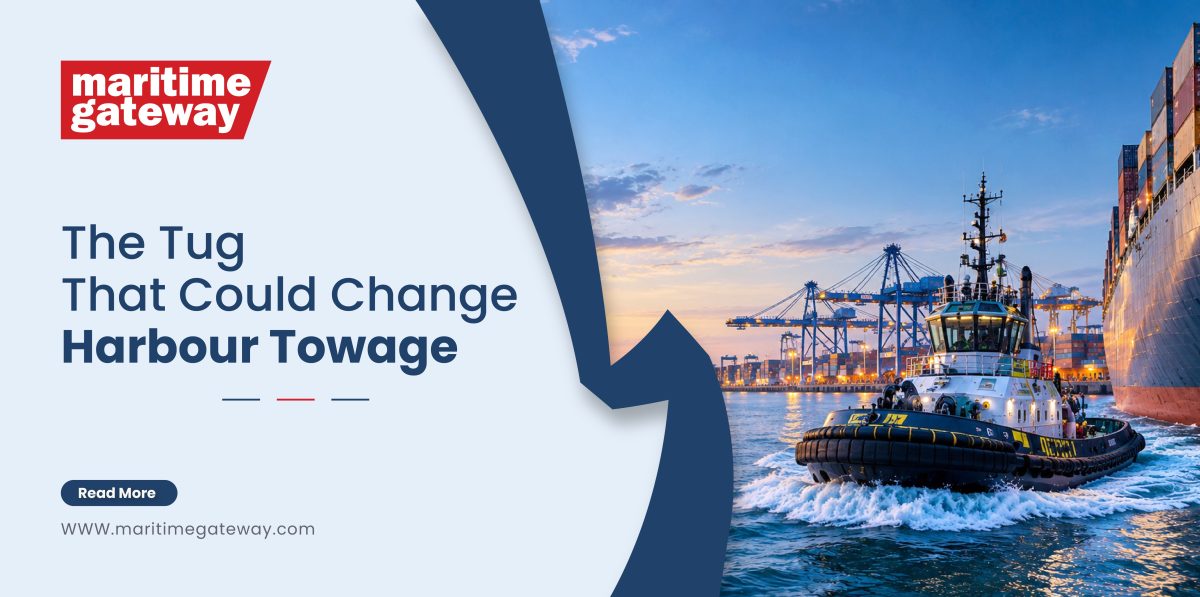

Svitzer’s Deniz Kirdar True on why the world’s most advanced electric tug is taking shape in an Indian shipyard, what it will take for Indian ports to plug in, and why zero-emission harbour towage will soon be unremarkable.
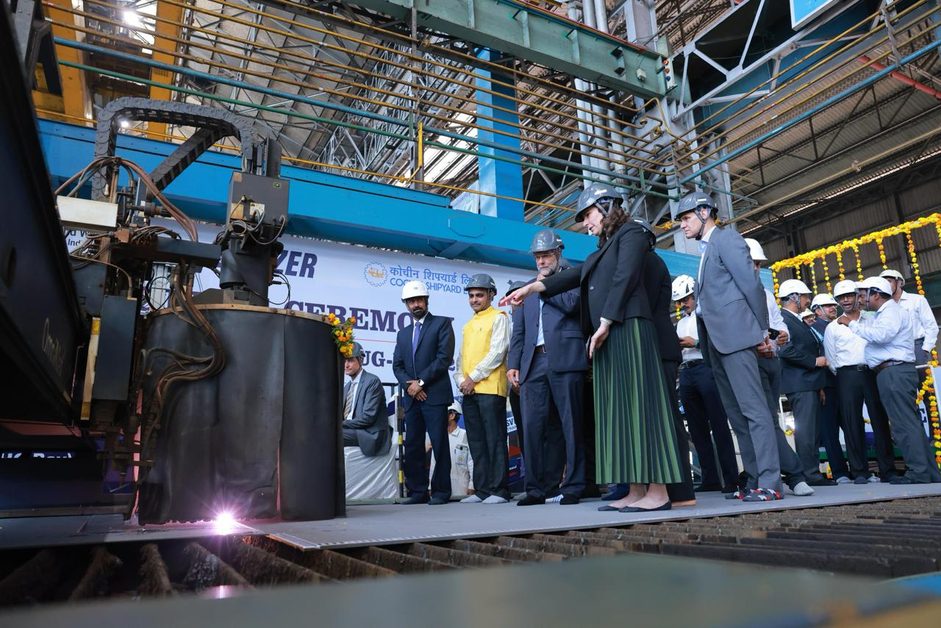
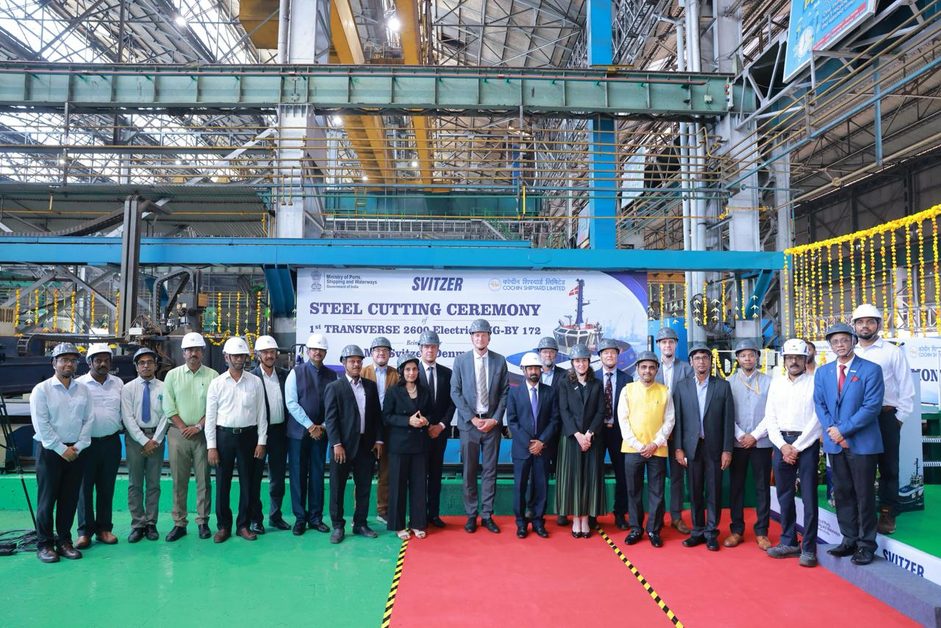
Svitzer, the towage arm of A.P. Moller-Maersk, marked the steel-cutting ceremony for a series of four next-generation battery-electric TRAnsverse 2600e harbour tugs on September 2 in Kochi, in partnership with Cochin Shipyard Limited (CSL). The vessels form part of an eight-tug global fleet renewal programme, with a second batch under a fresh contract with Swan Defence and Heavy Industries in Gujarat.
What makes this project strategically important for India’s maritime sector, and how does it align with your long-term plans in the region?
The steel cutting matters for a straightforward reason: the most advanced green tug being built today is being built in India.
Svitzer selected Cochin Shipyard following a competitive evaluation of leading shipyards worldwide, assessing capability, quality, price, yard availability and delivery experience. Indian yards were chosen on merit, and we have now done so twice — the second contract being with Swan Defence and Heavy Industries in Gujarat. Between them, eight Svitzer tugs will soon be under construction in India.
For India’s maritime sector, the significance is that the capability being developed here does not leave. Expertise in electric propulsion, high-specification construction and the associated skills is being built at Cochin, and stays at Cochin.
For Svitzer, this is not a one-off procurement decision. We already operate in India, at Pipavav, and our intention is to hold a long-term position in the Indian port sector.
What operational advantages do you expect the TRAnsverse 2600e to deliver in Indian ports compared with conventional diesel tugs, in terms of efficiency, emissions and total cost of ownership?
One clarification first: these four vessels are being built in India for Svitzer’s global fleet renewal programme. That said, we would very much like to see TRAnsverse tugs working in Indian ports and terminals, and we believe the case for them here is a strong one.
On operations, the TRAnsverse was designed to remove constraints rather than simply to pull harder. It delivers faster and more predictable vessel movements, which protects berth productivity and turnaround times, and it can work at any position around the ship without repositioning. The practical result is that a port can do more with the berths, channels and pilots it already has, without a proportional increase in fleet size or new infrastructure.
On emissions, when charged from green power sources, these vessels produce zero direct emissions during harbour operations.
On total cost of ownership, the honest answer is that it depends on the port. A battery-electric tug may cost more to build than a conventional one, and less to run. Where the balance falls depends on the duty cycle, the number of assists, the cost and availability of power, and the charging arrangement at the berth. We would rather work that calculation through with an individual port than publish a single figure that fits none of them.
What we can say with confidence is that this is proven equipment. More than 3,000 commercial towage jobs have been completed with the TRAnsverse class, and Svitzer has 18 vessels of the design under construction worldwide.
How does Svitzer see the role of international maritime players in accelerating India’s transition to low- and zero-emission vessels, and what capabilities or partnerships are most critical?
International operators bring demand, operating experience, technology requirements and international standards. Indian shipyards bring industrial capability, skilled people, infrastructure and delivery.
Capability transfers through difficult work, which is why Svitzer is doing exactly that — placing its most advanced design in India.
Export contracts matter for a second reason. They give a yard the reference credentials that open the next contract, and the one after that. India’s shipbuilding ambitions will not be met on domestic demand alone.
As for the partnerships that count most, we would name three: shipyards prepared to take on new technology rather than repeat established designs; ports and terminals willing to plan vessels and shore-side infrastructure together; and equipment and service providers building a presence close to where the vessels will work.
How does Svitzer balance electrification, alternative fuels and hybrid solutions across different port contexts, and what criteria guide the recommendation?
The questions that matter are how many assists a day, over what distances, with what idle time in between, and what power is available at the berth. A tug working intensively over short distances and returning to a fixed berth is a strong candidate for full electrification. One working longer distances, or operating where reliable shore power is not yet available, is better served by a hybrid or biofuel-capable configuration.
The TRAnsverse platform was built for precisely this variation. The same design is available in battery-electric, hybrid and conventional diesel configurations that are biofuel drop-in ready, which means the propulsion decision does not require a change of vessel design.
We would not presume to recommend a single pathway to Indian port authorities in the abstract. The right answer is specific to each port, and it is a conversation we are glad to have.
What ecosystem enablers should Indian ports and policymakers prioritise to scale electric harbour operations, and where are the biggest near-term bottlenecks?
Charging infrastructure at the berth is the clearest near-term bottleneck. An electric tug performs to the standard of the power available to it, and adoption will move at the speed that infrastructure is installed. Vessel planning and shore-side planning need to happen together rather than in sequence.
The second enabler is commercial structure. Green tugs carry a higher capital cost, and the arrangements around them determine whether that cost is sustainable for both the operator and the port.
The third is lifecycle support. Battery systems require monitoring, maintenance and eventual replacement, which means service capability, spares and technical competence located close to the ports where the vessels work. Crews also require training specific to electric propulsion.
The Green Tug Transition Programme has already done the most difficult part, by setting clear direction. Certainty is what allows industry to commit capital.
How does Svitzer envision the evolution of next-generation tug technology in India over the next 5–10 years, and what opportunities exist for Indian yards to become global hubs for advanced, low-emission workboats?
Over the next five to ten years, we expect electric propulsion to become normal in harbour towage rather than exceptional. We expect vessels and charging infrastructure to be planned together. And we expect tugs to be judged on what they do for a port, not only on bollard pull.
Indian yards already build for international customers, and Cochin’s order book includes commercial export vessels alongside complex defence and commercial work. What a programme like this one adds is the demonstration that Indian shipyards can build advanced, low-emission vessels for an international fleet.
We would also like to see these tugs, or their successors, working in Indian ports. Building them here is a good start.
Kirdar True currently chairs the board of Svitzer Tanger Med SA and is a board member of Nakilat Svitzerwijsmuller Company W.L.L. Previous board roles include chair of Svitzer Idku SAE and Batangas Bay Towage Inc., and board member of Svitzer Sohar LLC, Svitzer Egypt LLC and Svitzer Angola Shipowners BVI Ltd.
 Join our WhatsApp channel for more updates:
 Subscribe to our YouTube channel for more updates: