




India’s ship recycling sector moves closer to EU market access, with over 30 yards in the pipeline
India and the European Union have taken a significant step forward in sustainable ship recycling cooperation, with three Indian ship recycling facilities completing all compliance procedures required to apply for inclusion under the European Union Ship Recycling Regulation (EUSRR).
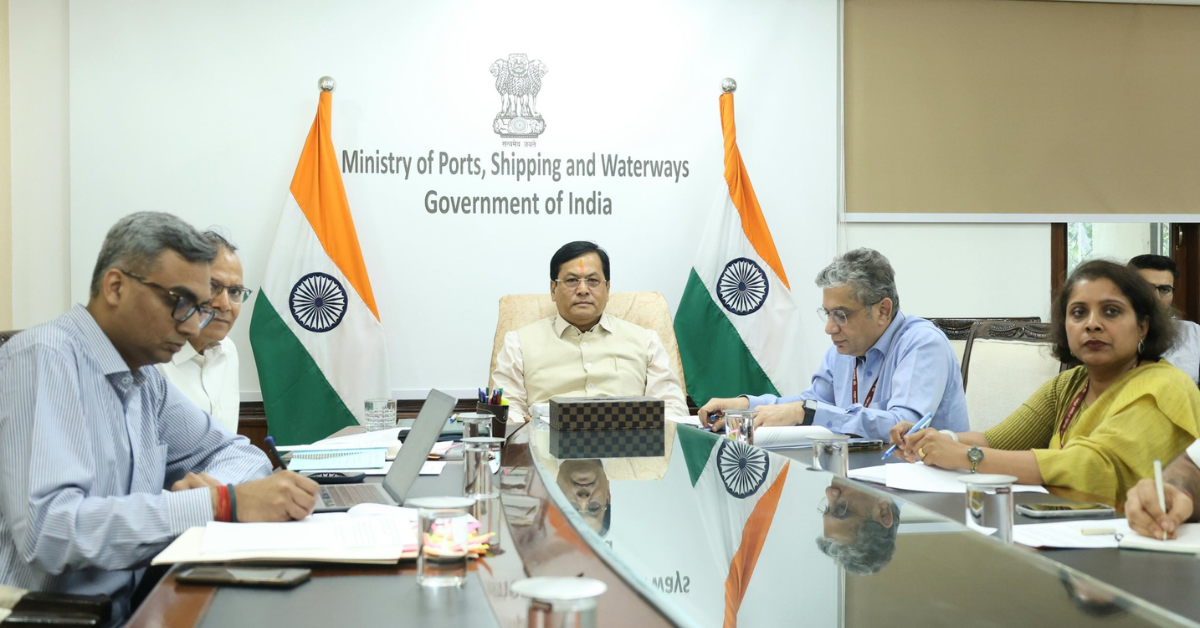
The development came out of discussions between Union Minister for Ports, Shipping and Waterways Sarbananda Sonowal and European Commissioner for Environment, Water Resilience and a Competitive Circular Economy Jessika Roswall, who reviewed the ongoing audit and approval process for Indian yards seeking EU recognition.
Over 30 Yards in the Pipeline for EU Recognition
According to Sonowal, more than 30 Indian ship recycling yards have applied for EU recognition, with six currently undergoing compliance and approval procedures. Three facilities have now cleared all required steps and are eligible to apply for formal inclusion under the EU framework.
“Under the dynamic leadership of Prime Minister Shri Narendra Modi, India has emerged as the world’s leading ship recycling nation and is steadily strengthening its position as a global hub for safe, environmentally sustainable and responsible ship recycling,” Sonowal said.
India’s Global Ship Recycling Share Rises to 35.4%
Data from the UN Conference on Trade and Development (UNCTAD) shows India’s share of global ship recycling rose from 30.1% in 2024 to 35.4% in 2025. The country recycled 2.99 million gross tons (GT) of ships in 2025, a nearly 60% jump from 1.86 million GT in 2024.
Sonowal said the government is facilitating the listing of Indian yards through a transparent process of audits, inspections and regulatory compliance, with facilities investing significantly in infrastructure and operational upgrades to meet international standards.
Worker Welfare and Environmental Safeguards in Focus
Sonowal noted that Indian ship recycling facilities are backed by strong environmental and worker welfare infrastructure, including:
- Effluent treatment plants
- Scientific waste management systems
- Multi-speciality healthcare facilities supported by the Red Cross Society
- Dedicated housing for workers
He added that the government carries out both periodic and unannounced inspections to maintain high standards of environmental compliance, worker safety and operational transparency.
USD 8 Billion Push and a 16,000-Ship Recycling Target
Outlining India’s long-term roadmap, Sonowal said the country aims to recycle nearly 16,000 ships over the next decade, backed by a financial commitment of USD 8 billion to support growth in the shipbuilding and ship recycling sectors. He said a larger pool of internationally recognised Indian recycling yards would boost the global circular economy while generating employment and strengthening maritime sustainability.
EU Proposes Joint Working Group, Autumn Session Ahead
Commissioner Roswall welcomed the progress made so far and proposed setting up a Joint Working Group (JWG), comprising representatives from India’s Ministry of Environment and other relevant ministries and organisations, to coordinate the next phase of the process.
She underlined the importance of unannounced inspections in ensuring compliance, transparency and accountability, and noted that the matter would be taken up with EU member states during the autumn session before any final decision is made. Roswall also expressed willingness to visit Indian ship recycling facilities once the consultation and assessment process concludes, adding that the EU’s approach remains aligned with the India-EU Free Trade Agreement discussions and the Hong Kong International Convention for the Safe and Environmentally Sound Recycling of Ships.
What This Means for India’s Maritime Sector
The talks reflect a growing strategic partnership between India and the EU on sustainable maritime practices. Recognition of compliant Indian facilities under the EU framework is expected to expand global recycling capacity, raise environmental and safety benchmarks, and support responsible end-of-life ship management — reinforcing more resilient and sustainable global maritime supply chains.
 Join our WhatsApp channel for more updates:
 Subscribe to our YouTube channel for more updates: