


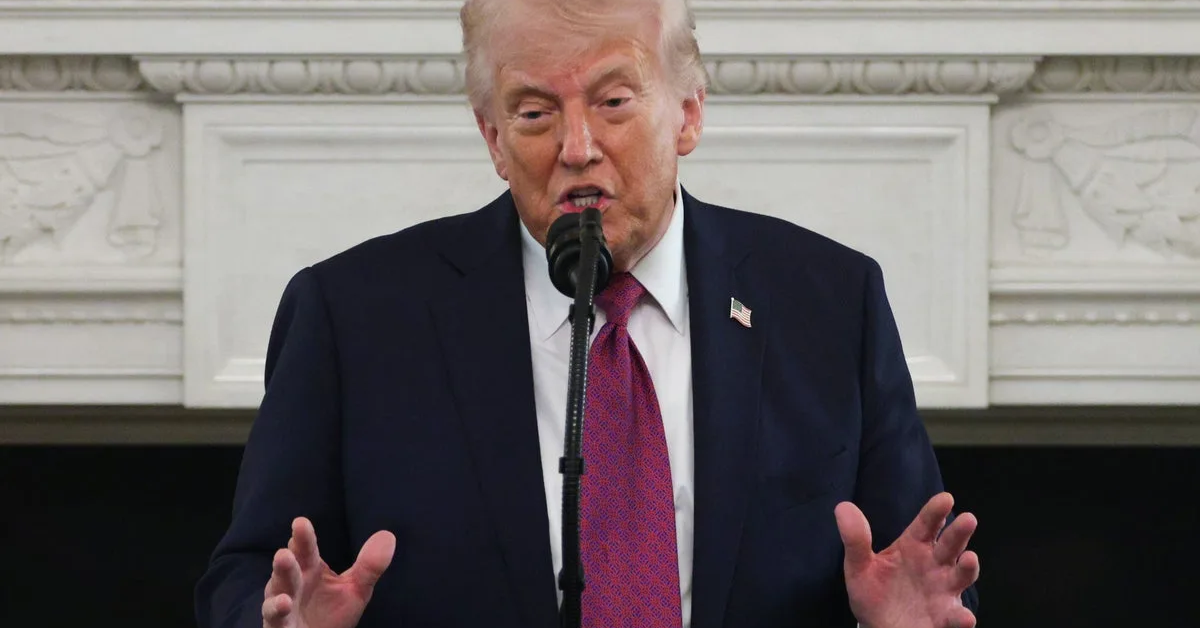

US President Donald Trump and his national security team have reportedly rejected Iran’s latest diplomatic proposal for reopening the Strait of Hormuz, viewing a key condition in Tehran’s offer as a critical flaw that cannot be accepted. Iranian Foreign Minister Abbas Araghchi, who arrived in Moscow for talks with President Putin on Monday before continuing to engage mediators in Oman and Pakistan, presented a phased diplomatic approach: Iran would reopen Hormuz in exchange for the US lifting its blockade on Iranian ports and ending hostilities, with negotiations on Iran’s nuclear programme deferred to a later stage. Trump has firmly rejected this sequencing, insisting that Iran’s nuclear programme must be addressed as part of any comprehensive settlement — not postponed as a concession for reopening the waterway.
The rejection is significant because it removes the most straightforward diplomatic off-ramp that had been circulating in back-channel discussions over the past fortnight. Iran’s calculation — that a Hormuz reopening offer is commercially valuable enough to Washington that Trump would accept deferring the nuclear question — has not held. Washington’s position appears to be that reopening Hormuz without resolving the nuclear programme would simply remove the commercial pressure that gives the US leverage over Iran’s nuclear ambitions, while leaving Tehran with both an intact nuclear programme and a reopened export corridor.
The Diplomatic Triangle: Moscow, Muscat, Islamabad
The rejection of the phased proposal leaves the diplomatic landscape fragmented across three active mediation tracks. Russia — Iran’s primary strategic patron — is being engaged by Araghchi in Moscow, with Moscow attempting to broker a framework acceptable to both Tehran and Washington. Oman has been providing the most direct US-Iran back-channel communication, given its longstanding role as a quiet intermediary between the two governments. Pakistan, which hosted the collapsed Islamabad talks on April 12, remains engaged as a facilitator. Each track has produced some movement — including the Oman-Iran April 4 discussions and the Araghchi Moscow visit — but none has produced a breakthrough formula that resolves the nuclear-versus-Hormuz sequencing dispute that is now the central sticking point.
As long as the diplomatic impasse holds, global LNG supply remains structurally disrupted, war-risk insurance premiums remain elevated, and the commercial shipping industry operates in a state of managed crisis rather than normal operations.
 Join our WhatsApp channel for more updates:
 Subscribe to our YouTube channel for more updates: