
Summary
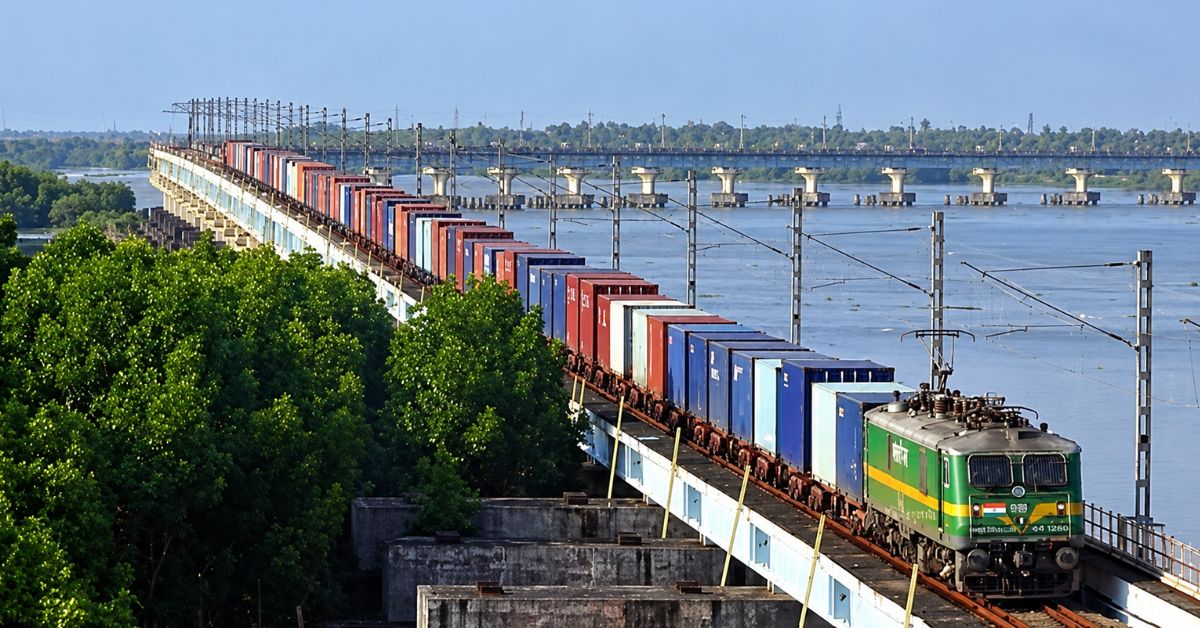
Rail freight activity at Vallarpadam’s International Container Transshipment Terminal is recovering, with services operating since May and outward loading now beginning. BPCL has moved four full rakes of bitumen consignments, opening an opportunity to improve return cargo utilisation on a rail corridor that has remained underused for years.
Outward loading adds a new dimension
Vallarpadam rail cargo operations have taken a step forward with the commencement of outward container loading, strengthening efforts to attract freight to the terminal’s railway connection.
Bharat Petroleum Corporation Limited recently loaded four full rakes carrying bitumen consignments. Previously, the available operation was limited to inward container movement, with containers returning empty.
Container Corporation of India has resumed freight services, and at least two rakes a month have operated since May. Officials also reported receiving car units by rail for export, with discussions continuing over establishing regular movement through Cochin.
The developments represent an early recovery in activity rather than evidence of a large-scale shift from road to rail.
An established corridor awaits fuller use
The railway connection was built as part of the infrastructure supporting Vallarpadam’s container terminal.
The 8.86-kilometre route connects Edappally with the terminal and includes a 4.62-kilometre bridge across Kochi’s backwaters. Rail Vikas Nigam Limited implemented the project, with central funding provided through the shipping ministry.
A trial locomotive movement took place in March 2010, ahead of the terminal’s opening in February 2011.
The line was designed specifically for goods traffic, providing a direct connection between the terminal and the wider railway network. Its route passes through the Vaduthala area and island stretches before reaching Vallarpadam.
That infrastructure established the physical capability for rail-based container movement. Building sufficient and consistent cargo demand has remained a separate commercial challenge.
Underutilisation has been a longstanding concern
Earlier assessments also identified the gap between the corridor’s strategic purpose and its actual use.
In 2025, the rail link was described as significantly underutilised, despite its intended role in connecting inland container depots with the maritime terminal.
Road transport remained attractive because of its flexibility, speed and ability to provide last-mile delivery. These advantages help explain why dedicated port infrastructure does not automatically translate into regular freight trains.
The latest outward loading therefore addresses an important operational issue: creating opportunities to carry paying cargo in both directions. Better use of return capacity could strengthen the economics of the service, although no quantified savings have been announced.
Domestic cargo offers another market
Freight operators are seeking cargo from Kerala’s manufacturing clusters, including plywood and furniture businesses around Perumbavoor.
Domestic return services are being offered to several inland markets, while industry representatives have highlighted dependable international vessel connectivity as another factor influencing port choice.
For manufacturers, the relevant comparison is the complete journey from factory to customer. Rail pricing must be assessed alongside collection, terminal handling, delivery arrangements and transit time.
Regular cargo commitments would help operators plan services. Conversely, predictable departures could make it easier for businesses to organise dispatches around production schedules.
Shipping connections support the wider proposition
An earlier development in September added another element to Cochin’s connectivity.
DP World’s terminal began receiving the MGR IFR service, a fortnightly rotation linking Cochin and Nhava Sheva with Fujairah in the UAE, Sohar in Oman and Aden in Yemen.
The service uses MV Marsa Virgo and MV Marsa Zenith, each offering capacity exceeding 500 TEUs. The inaugural call by Marsa Virgo involved handling more than 1,000 TEUs.
The connection expands the range of markets accessible through the terminal. It also illustrates why inland rail development and maritime services need to be considered together: exporters require a workable inland journey as well as suitable onward sailings.
Consistency will determine commercial progress
The immediate significance of outward loading is that the corridor can serve a broader cargo proposition than inward movement alone.
For shippers, sustained adoption will depend on reliable schedules, competitive total costs and straightforward handling arrangements.
For the terminal and freight operators, the task is to convert initial movements into repeat business. The existing infrastructure provides a foundation; balanced cargo flows and dependable services will determine how effectively it is used.
FAQs
What is the latest development at Vallarpadam?
Outward container loading has begun, with BPCL moving four full rakes of bitumen consignments.
How frequently are trains operating?
At least two rakes a month have operated since May, according to the reported update.
Where does the rail corridor run?
The 8.86-kilometre connection links Edappally with Vallarpadam’s container terminal.
Why does outward loading matter?
It creates opportunities to carry cargo on return journeys that previously involved empty containers.
Does this establish a regular high-volume service?
The movements indicate improving utilisation, but sustained volumes will depend on continuing customer demand and service reliability.
 Join our WhatsApp channel for more updates:
 Subscribe to our YouTube channel for more updates: