


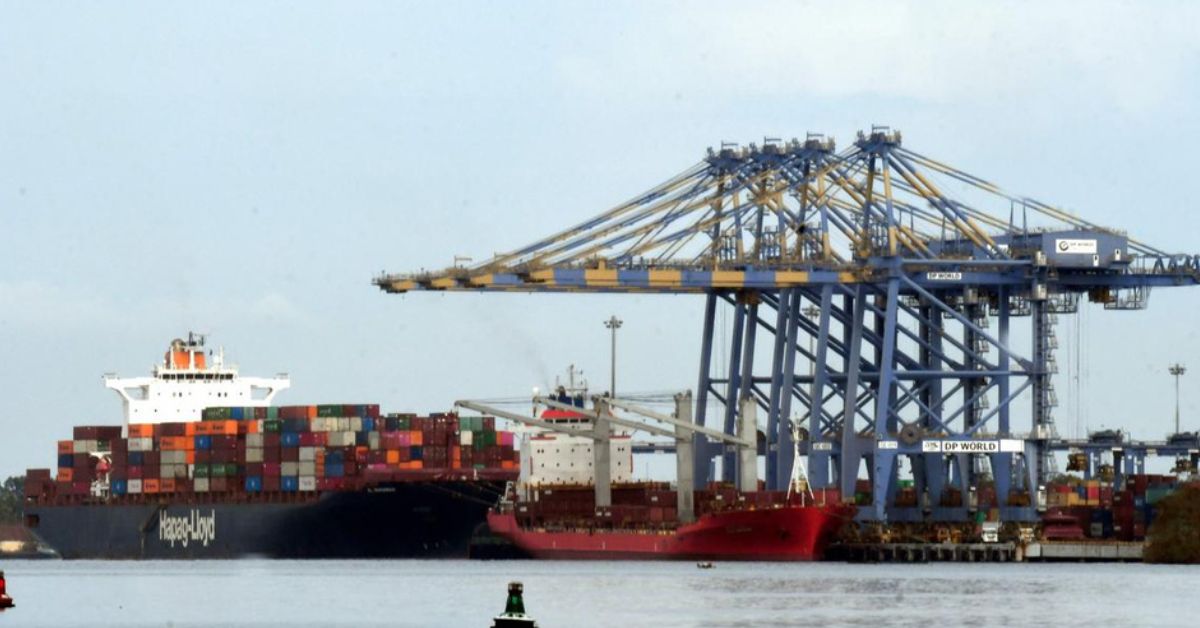

Container movement at Kochi’s Vallarpadam International Container Transhipment Terminal (ICTT) was scheduled to resume on 23 November after truck drivers ended a nearly two-week scanner boycott. The decision followed talks with authorities over health concerns linked to mandatory scanning of import containers at the DP World-operated terminal.
The breakthrough follows mounting pressure from traders facing delayed deliveries and additional charges. Before the settlement, the Cochin Chamber of Commerce and Industry (CCCI) reported that 1,810 containers had accumulated at the terminal, including refrigerated containers carrying perishable cargo.
Why did drivers boycott container scanning?
The protest began on 9 November against the requirement to scan all arriving import containers. Drivers alleged that repeated trips through the scanning facility were associated with headaches, nausea and other health complaints.
Trade unions sought a scientific assessment and alternative arrangements, including mobile scanners or conveyor systems. They also proposed scanning containers before loading them onto trucks.
The dispute arose during the Central Board of Indirect Taxes and Customs’ rollout of non-intrusive inspection systems. Kochi was among five ports conducting pilot trials involving the scanning of all import containers. The wider programme envisages phased deployment of advanced imaging and artificial intelligence to strengthen cargo inspection at major ports.
What was agreed to end the protest?
Talks on 21 November brought together Ernakulam MP Hibi Eden, District Collector G. Priyanka, legislators, Customs, police, DP World and trade union representatives.
According to the district administration, workers agreed to return on Monday after authorities committed to examining their concerns. A public demonstration of the scanning process was scheduled for the same day.
A medical team will examine approximately 3,000 workers and submit its findings within three months. The state government will also seek a study of alternative arrangements, including conveyor belts.
The administration said earlier inquiries by the District Medical Officer and an advocate commissioner had found no cause for concern. The reported symptoms therefore remain workers’ allegations, rather than an established finding of radiation-related harm.
How has the disruption affected importers?
Refrigerated cargo created particular concerns because containers required continued power supply while awaiting evacuation. Traders requested waivers of detention, demurrage and storage charges arising during the disruption.
The All Kerala Face Veneer Traders Association warned that a prolonged stoppage could expose its members to additional liabilities of US$1 million. This was an estimate of potential exposure, not a confirmed loss.
Shipping lines and importers had also indicated that continued disruption could force them to consider alternatives such as Thoothukudi in Tamil Nadu. The CCCI warned that cargo diversion could affect Kochi’s competitiveness and the wider regional logistics sector. The reports did not establish that such diversions had already taken place.
How were authorities addressing the container backlog?
Before the settlement, the district administration had moved to arrange alternative evacuation capacity. At a meeting on 20 November, the Collector directed container freight station operators and the terminal operator to organise trucks and drivers, with police assistance for cargo movement.
The proposed approach involved moving stranded imports in phases. Industry representatives also highlighted a related export risk: delays in unloading and returning import containers could constrain the availability of empty equipment for outbound shipments.
These concerns extended the disruption beyond import delivery schedules to exporters, customs brokers and transport operators. The agreement to end the boycott provides a basis for restarting movement, although the announced return-to-work schedule does not establish that the accumulated backlog has been cleared.
 Join our WhatsApp channel for more updates:
 Subscribe to our YouTube channel for more updates: