




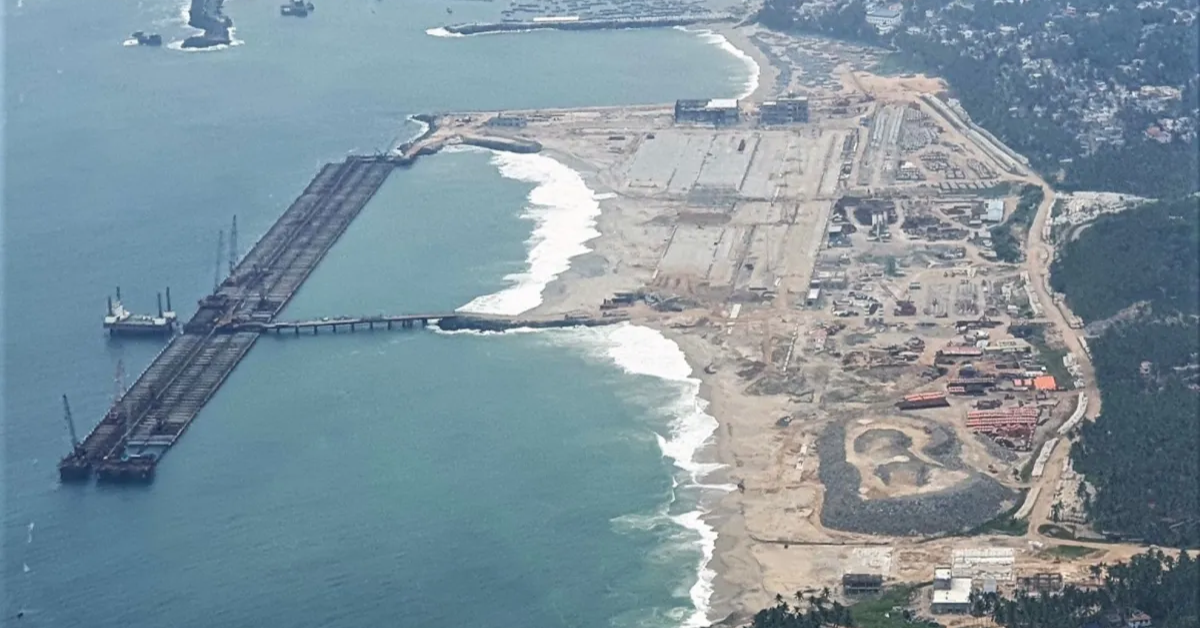

Vizhinjam International Seaport is poised to begin export-import gateway cargo operations in the second week of May 2026 — a landmark step that will transform the port from a dedicated transshipment hub into a full-service container port handling direct cargo for Kerala’s importers and exporters. The port has secured a critical safety clearance from the Atomic Energy Regulatory Board following a recent site inspection, enabling it to handle containerised cargo in compliance with India’s nuclear safety regulations. The final approval from the customs department is now awaited, with officials expecting it within a week.
Both Adani Vizhinjam Port Pvt Ltd and Vizhinjam International Seaport Ltd have completed the preparatory work required for gateway operations, citing strong and growing demand from exporters and importers in Kerala and southern India for direct cargo movement through Vizhinjam rather than the more expensive routing through Colombo, JNPA, or Chennai. The AERB clearance had been one of the final pending approvals needed to commence EXIM operations, and its receipt signals that the port’s commissioning process for direct cargo is in its closing stages.
From Transshipment to Gateway: What Changes
Vizhinjam’s first full financial year of transshipment operations produced 1.296 million TEUs — a globally significant performance entirely driven by MSC mainline vessel calls. Gateway cargo operations add a fundamentally different dimension: instead of transhipping cargo between large mainline vessels and smaller feeder ships, the port will now handle import containers arriving directly for Kerala-based consignees and export containers from Kerala-based shippers. This gives the port a direct economic connection to the state’s trade ecosystem — including seafood, spices, cashews, garments, and electronic goods on the export side, and machinery, chemicals, consumer goods, and raw materials on the import side.
The timing of the gateway launch — during the Hormuz crisis — is commercially significant. With Gulf-routed shipping severely disrupted, exporters in Kerala and southern India are urgently seeking alternative direct port access that reduces their dependence on transhipment via disrupted Gulf hubs. Vizhinjam’s direct mainline vessel connections, its Colombo-competitive transit times to Europe and Asia, and its now-imminent gateway status make it a commercially attractive proposition for exporters looking to diversify their port and routing options during this period of acute disruption.
 Join our WhatsApp channel for more updates:
 Subscribe to our YouTube channel for more updates: