




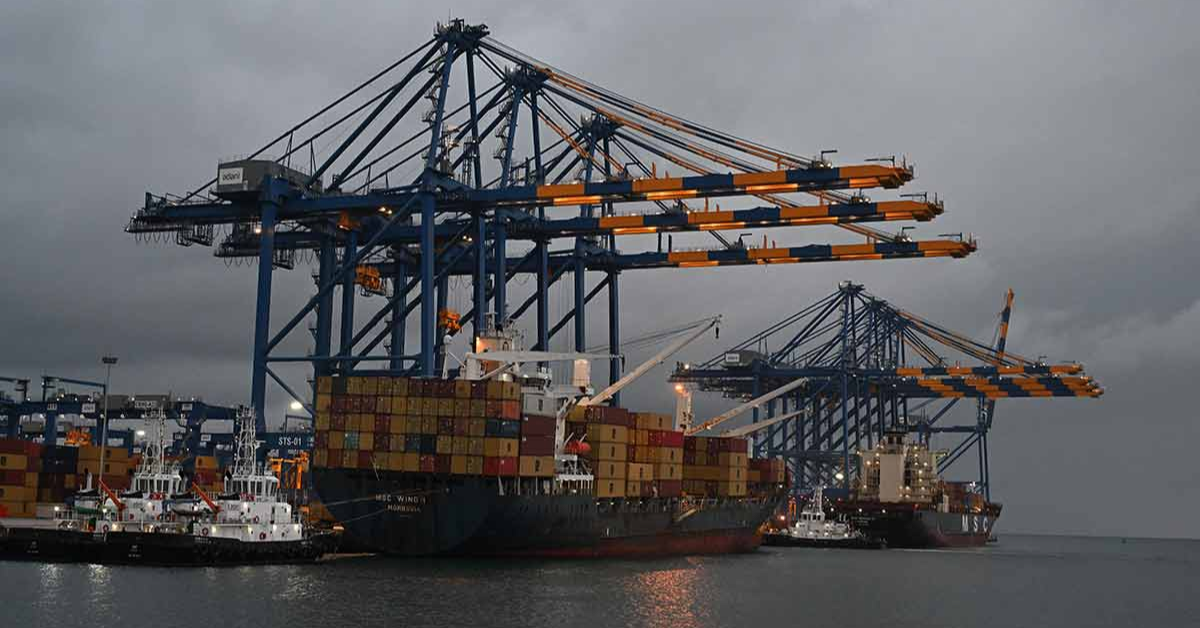

Vizhinjam International Seaport has delivered one of the most decisive competitive displacements in Indian port history, with transshipment volumes at DP World’s Vallarpadam International Container Transshipment Terminal in Kochi falling by nearly 50 per cent in FY 2025-26 as shipping lines — led overwhelmingly by MSC — redirected their Kerala-region transshipment business to Vizhinjam’s deeper draft, more modern infrastructure, and mainline vessel-capable berths.
Vallarpadam ICTT, which DP World has operated since 2011 and which was designed as India’s first dedicated transshipment terminal, had been the primary recipient of Indian cargo transhipped via Sri Lanka’s Colombo hub and was positioned as the enabler of India capturing transshipment business it was losing to foreign ports. In the year that Vizhinjam reached 1.296 million TEUs — its first full financial year — Vallarpadam’s transshipment business was halved. The shift marks a fundamental restructuring of Kerala’s competitive port geography, with the state transitioning from having one transshipment terminal of moderate performance to having one world-class mainline hub that is directly cannibalising the trade its predecessor was supposed to capture.
Why Vizhinjam Is Ahead
The competitive divergence between Vizhinjam and Vallarpadam comes down to three structural advantages that Vizhinjam holds: natural deep draft of over 20 metres accommodating the world’s largest ULCVs without the dredging limitations that constrain Vallarpadam; a mainline-on location directly on the East-West shipping lane that gives MSC a natural port call rather than a deviation; and the exclusive MSC partnership that delivers committed mainline vessel throughput with the schedule reliability and volume density that transshipment economics require.
For DP World, the Vallarpadam volume decline is a significant commercial setback at a terminal that the company has invested substantially in over 15 years. The operator has been expanding its India footprint through the SSL Krishna acquisition, the Nhava Sheva Indira Dock O&M contract, and other deals — suggesting the strategic response is portfolio diversification rather than a doubling-down on Vallarpadam’s transshipment business in competition with Vizhinjam’s structural advantages. For the Indian port sector, the Vizhinjam-Vallarpadam dynamic is a demonstration that greenfield infrastructure investment at the right location with the right commercial partnerships can create a winner-takes-most outcome in a market where geography and vessel economics are decisive.
 Join our WhatsApp channel for more updates:
 Subscribe to our YouTube channel for more updates: