




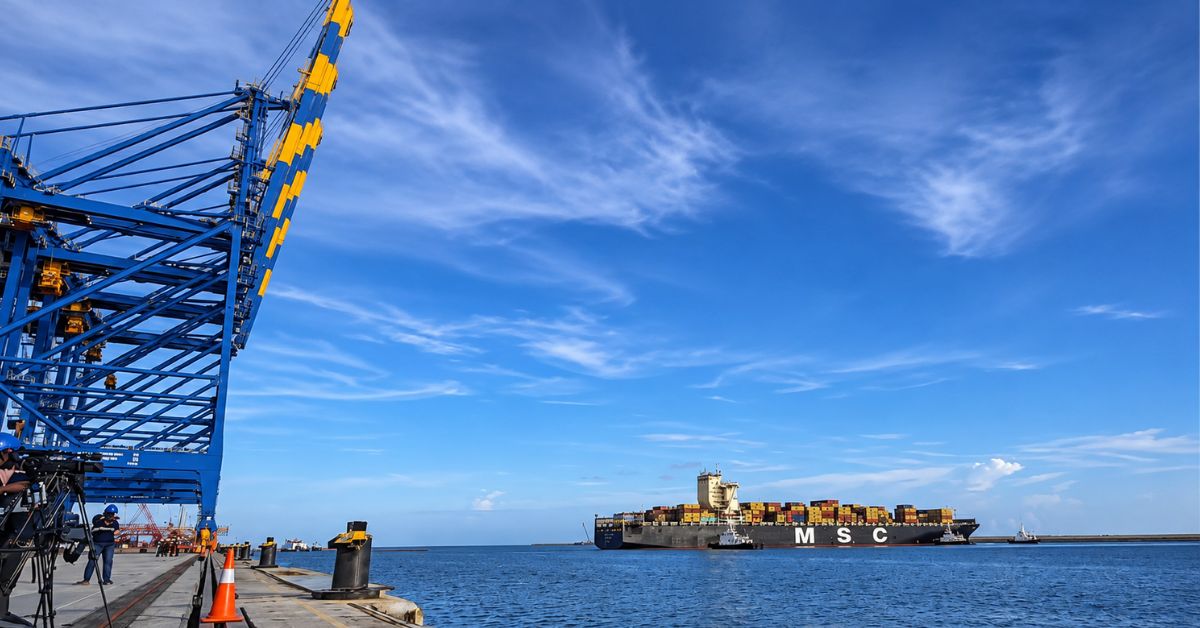

Vizhinjam International Seaport received its first import container on 31 October 2026, opening a new route for businesses to bring overseas cargo directly into Kerala through the port. The shipment arrived aboard MSC Sabrina III from Ningbo, China, marking an expansion beyond Vizhinjam’s established container transshipment operations.
Vizhinjam International Seaport Limited (VISL) Managing Director Jeromic George flagged off the truck carrying the container out of the port. The consignment was booked by Thiruvananthapuram-based BSG Logistics and Ship Chandlers Private Limited for the city’s Altair Group.
What did Vizhinjam’s first import shipment contain?
The container carried engineered building boards used in construction as an alternative to conventional plywood.
Its arrival establishes an operational example of cargo being discharged at Vizhinjam, cleared through customs and moved by road to the local market. For importers, this adds a gateway option alongside the port’s role in transferring containers between vessels.
Port authorities said direct import handling could reduce dependence on other ports and lower the time and transport costs involved in bringing goods into Kerala. No quantified savings for the inaugural shipment were disclosed.
How does gateway cargo differ from transshipment?
Transshipment involves transferring containers between ships as part of a wider maritime journey. Gateway imports, by contrast, enter the domestic market through the receiving port after the required customs procedures.
The first import container therefore represents a different commercial activity from the international containers already moving across Vizhinjam’s quay.
The port’s official website records the commencement of direct export-import (EXIM) operations in August 2026. The October shipment is the first reported import container, rather than the initial authorisation or launch of the broader EXIM service.
What could direct imports mean for local logistics?
According to port authorities, handling imports locally could retain more cargo-handling and logistics revenue within Kerala.
They also identified potential employment opportunities in customs brokerage, freight forwarding, road transport, warehousing and associated port services, particularly in Thiruvananthapuram and neighbouring southern districts. These are anticipated benefits as gateway activity develops, rather than employment outcomes established by the first consignment.
For logistics providers, gateway cargo creates requirements beyond ship-to-ship transfers. Containers must connect with customs processes, inland transport and delivery arrangements, making coordination between the terminal, intermediaries and cargo owners central to the service.
How has Vizhinjam developed since commercial operations began?
Vizhinjam’s first phase commenced commercial operations on 3 December 2024, with a designed annual handling capacity of one million twenty-foot equivalent units (TEUs), according to the Ministry of Ports, Shipping and Waterways.
The project is being developed through a public-private partnership between the Kerala government and Adani Vizhinjam Port Private Limited. VISL represents the state government in the project.
A supplementary concession agreement signed in November 2024 brought the subsequent development phases together into a single capacity expansion programme, with completion targeted for December 2028.
The port is situated approximately 10 nautical miles from the international east–west shipping corridor, giving it proximity to services linking Asian markets with the Middle East and Europe.
What does the import milestone establish?
The shipment demonstrates Vizhinjam’s ability to serve a local importer through a completed gateway cargo movement. It adds a domestic trade function to infrastructure developed primarily around transshipment.
The immediate significance is operational: a Kerala business has used Vizhinjam to receive overseas goods and move the container out of the terminal. Sustained gateway growth will depend on repeat cargo bookings and coordinated inland delivery services.
 Join our WhatsApp channel for more updates:
 Subscribe to our YouTube channel for more updates:




