





Summary
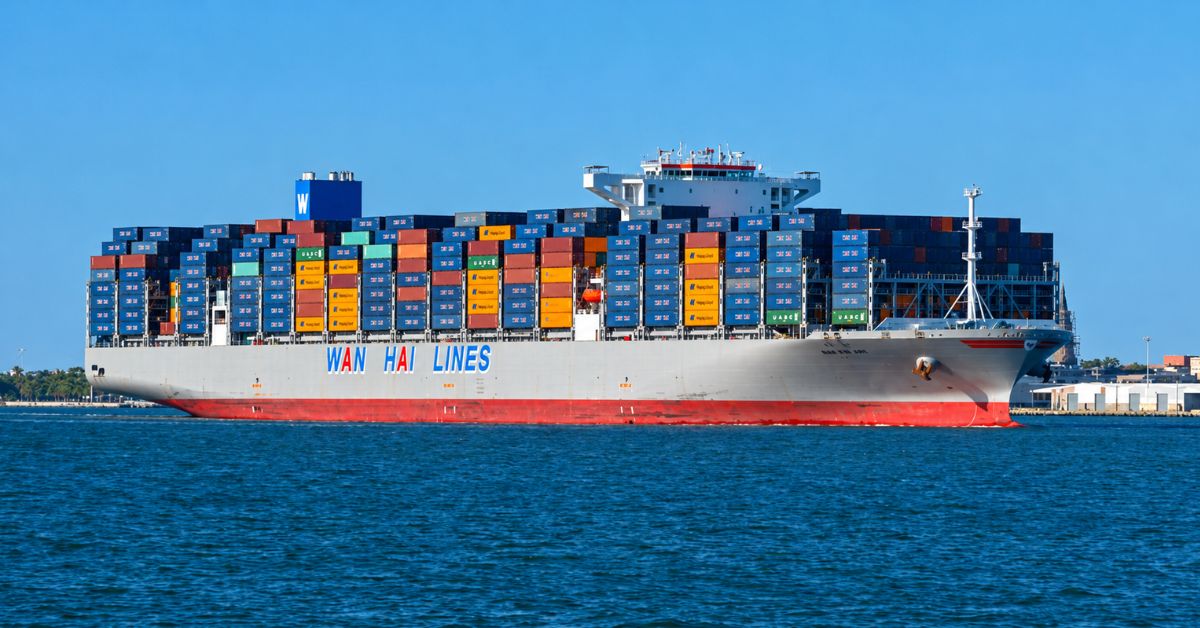
Wan Hai Lines plans to introduce its CI8 container service in late November 2026, linking Haiphong and South China with Mundra and Nhava Sheva through Malaysia. The loop will deploy 2,800–3,000 TEU vessels, adding another direct shipping option between Asian manufacturing centres and India’s western gateways.
New loop scheduled for late November
The Wan Hai CI8 service will connect Vietnam, South China, Malaysia and West India as the carrier expands its regional network.
Named China India Service 8, the loop will operate on a 35-day round-trip cycle.
The announced port rotation is:
Haiphong → Qinzhou → Nansha → Shekou → Port Klang Northport → Mundra → Nhava Sheva → Port Klang Northport → Haiphong.
Port Klang Northport appears on both legs, while Mundra precedes Nhava Sheva in the Indian sequence. The launch remains scheduled for late November; the announcement does not mean sailings have already begun.
Direct calls broaden routing choices
For shippers, the proposed rotation offers a single-service connection between the listed Asian ports and two major Indian container gateways.
A direct service can include intermediate port calls. Its practical distinction is that cargo can remain on the same service between its origin and destination, subject to the carrier’s booking arrangements.
The commercial value will depend on the published sailing schedule, port-pair transit times, equipment availability and inland connections. Exporters and importers will assess those factors alongside freight rates when comparing the loop with existing alternatives.
For freight forwarders, another service option can also provide greater flexibility when matching shipment readiness with vessel departures. Actual benefits will become clearer once the detailed operating schedule is available.
Nhava Sheva enters the rotation amid cargo growth
The new connection comes against a background of rising container throughput at Jawaharlal Nehru Port Authority, commonly known in shipping schedules as Nhava Sheva.
JNPA handled 4,661,517 TEUs between April and September 2026, an increase of 17.61% over the corresponding period a year earlier.
September throughput reached 834,697 TEUs, up 28.63% year on year and exceeding the previous monthly record established in August.
These figures provide context for the scale of activity at one of CI8’s Indian destinations. They represent port-wide volumes across services and terminals, rather than cargo attributable to Wan Hai’s forthcoming loop.
They also underline the importance of coordinating additional ocean connections with terminal handling and inland movement. More shipping options create value for customers when cargo can move efficiently through the wider logistics chain.
Mundra develops supporting container infrastructure
Mundra’s container ecosystem is also undergoing changes relevant to shipping lines and their customers.
In September 2026, Adani Ports and Special Economic Zone announced plans for a dedicated empty-container yard with integrated warehousing at Mundra.
The proposed operation covers storage, maintenance, inspection and movement of empty boxes to exporters and container freight stations. APSEZ estimated annual empty-container handling at Mundra at approximately 1.6 million TEUs.
The initiative is intended to bring equipment-related activities closer together within the port’s special economic zone and improve coordination between shipping lines, terminal operators, transporters and Customs.
This is a separate infrastructure development, rather than a facility announced specifically for CI8. Nevertheless, empty-container management is an important supporting function for export services: vessel space alone cannot meet shipment requirements unless suitable boxes are available at the required location.
Commercial focus shifts to service execution
For manufacturers and traders, the decision to use a new loop involves the complete journey from factory to consignee.
Cargo cut-off times, documentation, container positioning and road or rail access can influence whether a particular sailing fits a shipment. Forwarders will also need to compare the sequence of calls with customers’ delivery commitments.
The same considerations apply to inbound cargo, where arrival planning must align with Customs clearance and onward distribution.
CI8’s launch will therefore add a routing choice whose performance can be assessed through actual operations. Schedule consistency, cargo handling and the quality of inland coordination will determine how effectively that connection serves businesses trading between the participating markets.
FAQs
When will CI8 begin?
The planned launch is late November 2026.
Which Indian ports will it call?
Mundra and Nhava Sheva.
What vessel sizes are planned?
Ships of 2,800–3,000 TEU capacity.
How long is the round-trip cycle?
The announced cycle is 35 days.
Does “direct service” mean non-stop?
No. The rotation includes intermediate port calls.
 Join our WhatsApp channel for more updates:
 Subscribe to our YouTube channel for more updates:




