




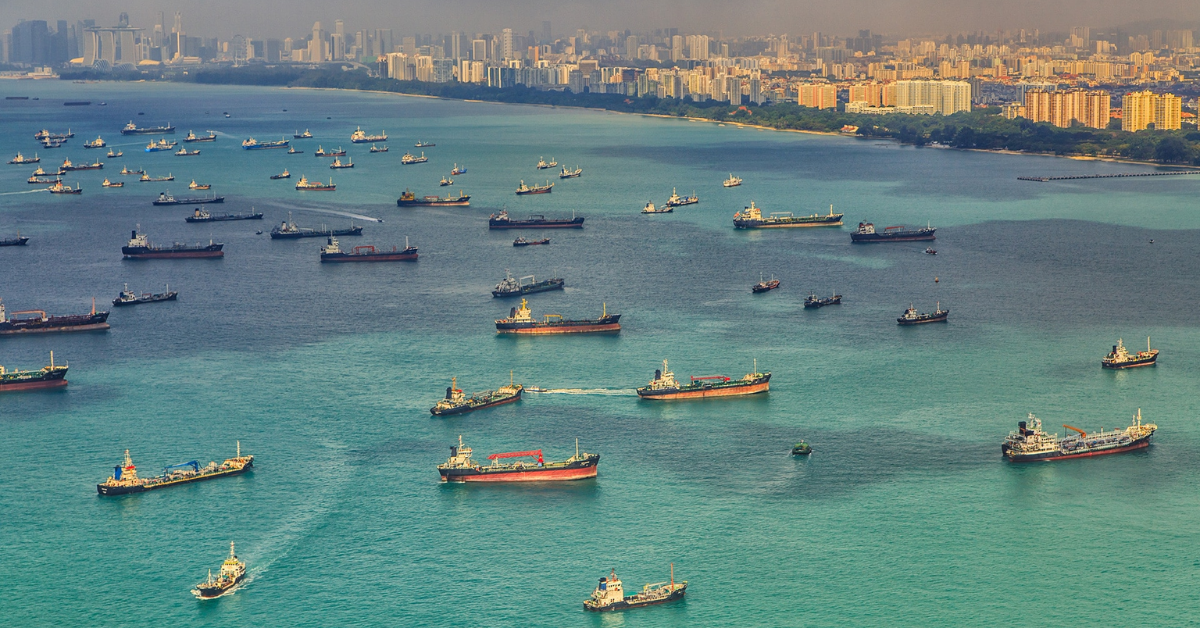

Nearly 3.4 million containers are stuck in queues from Shanghai to Rotterdam, with India’s Nhava Sheva among the worst affected
Container shipping is heading into the peak summer season with almost 11 per cent of the world’s box ship fleet sitting at anchor waiting for a berth, the worst port congestion the industry has recorded in four years, according to consultancy Linerlytica. Roughly 3.4 million teu of vessel capacity is currently tied up in queues across Asia and Europe, a bottleneck severe enough that carriers are preparing another round of rate increases for July even as underlying demand growth remains moderate.
The congestion is most acute in Shanghai, the world’s busiest container port, where strong demand for solar panel exports combined with an early peak season has pushed vessel waiting times to three days and dwell times to three to four days for imports and exports respectively, according to logistics provider NNR Global Logistics. Singapore, the second-busiest port, is reporting “sub-optimal” schedule reliability, while in Taiwan, congestion at the Taipei and Keelung terminals has worsened as exporters rush shipments to beat the expiry of a 10 per cent US tariff deadline on July 24. NNR describes cargo space as “extremely limited,” with vessel waiting times extending to between three and seven days across the region.
India’s ports have not been spared. Ligi Logistics, a Mumbai-based freight forwarder, reported that space availability is becoming increasingly constrained across several of the country’s export corridors, with congestion at Nhava Sheva, India’s largest container port, continuing to worsen amid vessel bunching, rail delays, trucking shortages and yard density pressure. The firm said schedule reliability at the port remains below normal industry standards, forcing exporters to build additional buffers into shipment planning, while carriers are increasingly issuing spot quotations with short validity periods to manage the volatility.
In Europe, Antwerp is still working through an accumulated backlog of vessels and boxes, while Hamburg faces separate infrastructure constraints: the Kohlbrand Bridge bottleneck is affecting hinterland transportation, and rail access to the Altenwerder Container Terminal remains suspended. A heatwave in Rotterdam has compounded matters, triggering temporary terminal stoppages and productivity losses expected to cause further short-term delays and schedule disruptions.
Compounding the congestion, Maersk’s decision to downsize its NE3/AE3 Asia-North Europe service by 5,000 teu of weekly capacity has tightened an already strained trade lane. Linerlytica noted that capacity through July could be squeezed further by ad hoc blank sailings, even as carriers publicly commit to running full schedules for the month. The Shanghai Containerised Freight Index’s Shanghai-North Europe component rose 3 per cent week-on-week to $3,158 per teu in early July, part of what Linerlytica called the strongest rate ascent since the Red Sea diversions began at the end of 2023, with carriers now targeting increases as high as $5,000 per 40-foot container on some routes.
For Indian exporters, the combination of Nhava Sheva congestion, tight vessel space and looming rate hikes creates a difficult planning environment heading into the second half of the year, particularly for sectors such as textiles, engineering goods and pharmaceuticals that depend on predictable transit schedules to Europe and the US. Industry bodies have called for faster rail evacuation and expanded yard capacity at India’s major gateway ports as a partial offset, though most logistics providers expect the current congestion cycle to persist through the peak season before easing toward the final quarter of the year.
 Join our WhatsApp channel for more updates:
 Subscribe to our YouTube channel for more updates: