




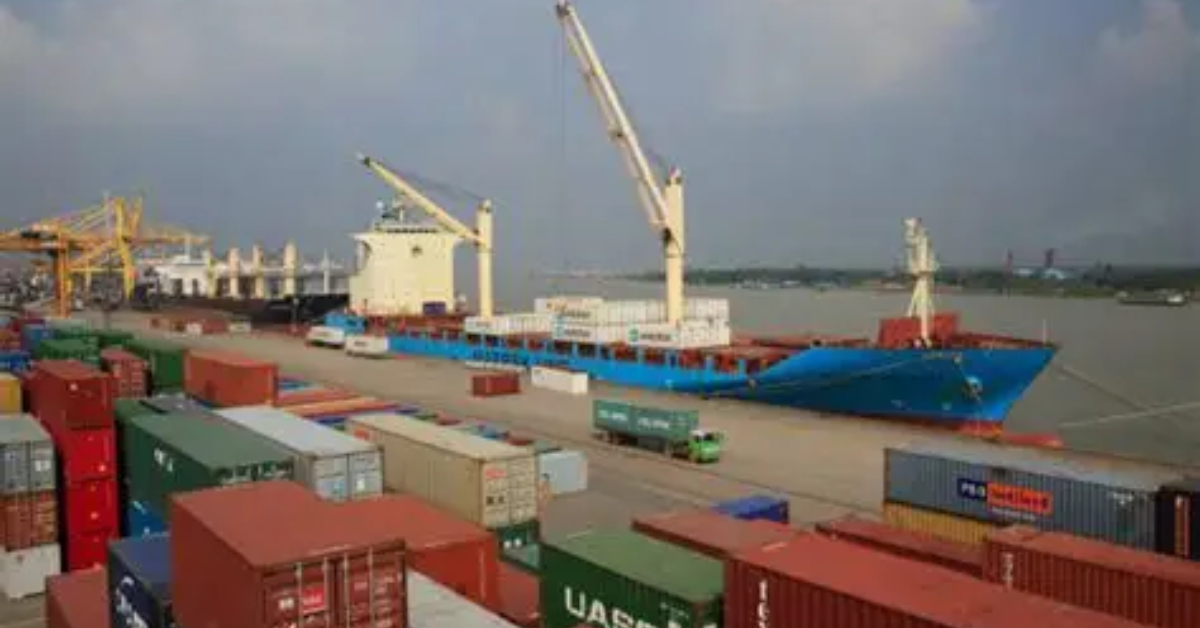

The World Shipping Council (WSC) has formally asked the Chittagong Port Authority (CPA) to abolish its long-standing practice of forcing departing vessels to load unmanifested empty containers at short notice. The council says the requirement jeopardises vessel safety and violates international regulatory compliance, exposing carriers to potential sanctions.
In its recent communication to the CPA leadership, WSC stresses that the measure was introduced as an emergency response to severe port congestion in the mid-2000s but has continued long after those conditions eased. The organisation argues that retaining this temporary measure as a routine operational requirement is no longer justified in the current environment.
Legal and regulatory concerns
WSC points out that the continued forced loading of empty containers conflicts with the Chittagong Port Authority Act, 2022, under which empty containers are treated as cargo. The council reiterates that the ship’s master retains final authority over loading decisions and must be able to refuse cargo that cannot be safely or compliantly stowed.
The practice has also raised concerns around mandatory sanctions screening and international compliance procedures, which typically require all cargo to be properly manifested before loading. WSC notes that last-minute instructions to load additional containers make it difficult for carriers to complete necessary checks, increasing exposure to regulatory and financial risk.
Operational risks and SOLAS implications
According to WSC, the late addition of unmanifested empty containers disrupts pre-approved stowage plans and vessel stability calculations required under the International Convention for the Safety of Life at Sea (SOLAS). This can undermine navigational safety and complicate operational planning, particularly for liner vessels running tight schedules.
The council further cautions that containers declared “empty” may still contain dunnage, chemical residues or damaged equipment, leading to potential discrepancies in weight and condition. Such discrepancies can increase liability risks for shipmasters and owners if not properly declared and factored into stability and safety assessments.
Industry discussions on a new framework
Recent exchanges between CPA officials and representatives of the Bangladesh Shipping Agents Association (BSAA) have underlined the need for a clear, standardised and enforceable port-wide framework for handling empty containers. Stakeholders say ad hoc instructions to load empties at short notice should be replaced with transparent procedures that protect carrier operations while addressing yard congestion.
While port authorities have highlighted ongoing challenges in managing empty container build-ups in the yard, industry bodies and WSC argue that solutions should focus on better planning and allocation rather than forced loading. Proposals discussed include advance planning systems, predictable allocation of empties to outbound vessels, and collaborative mechanisms between CPA, BSAA and carriers to support safe, compliant and efficient port operations
 Join our WhatsApp channel for more updates:
 Subscribe to our YouTube channel for more updates: