



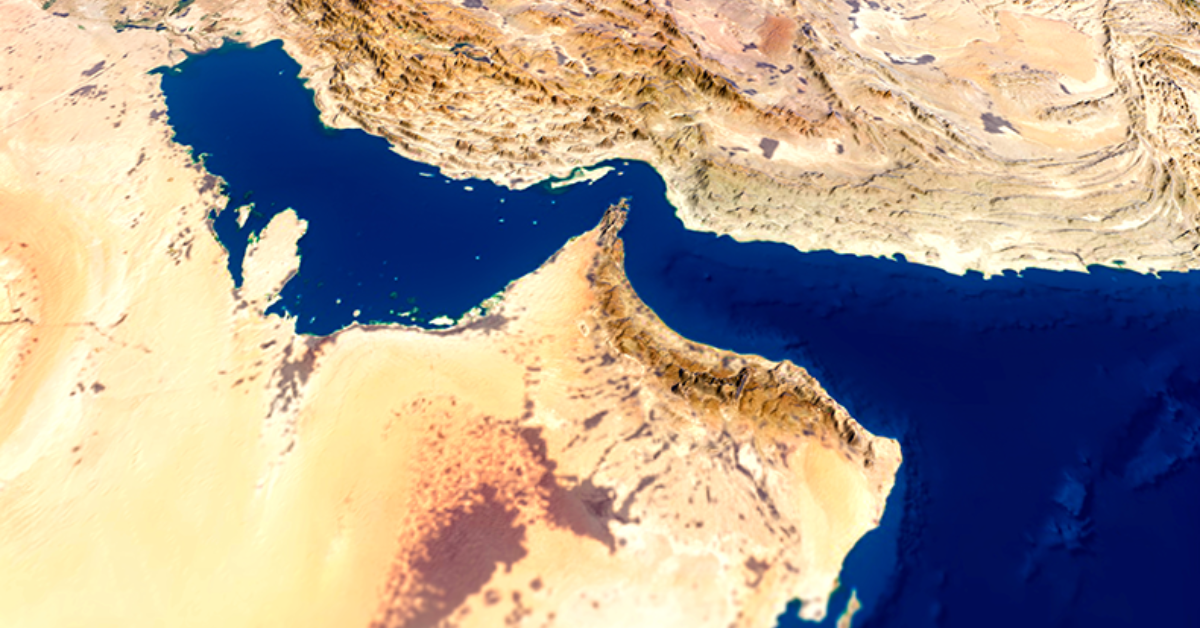

An LNG carrier owned by a unit of Abu Dhabi National Oil Company has likely completed the first outbound voyage through the Strait of Hormuz since the Middle East conflict began in late February — in what would be the most significant breakthrough in global energy shipping in nine weeks. The vessel Mubaraz loaded cargo at Das Island in the Persian Gulf in early March, then remained idle inside the Gulf as the US-Israel military campaign against Iran and the resulting Hormuz crisis made transit impossible. Ship-tracking data shows the tanker ceased transmitting AIS signals around March 31 and subsequently reappeared on April 27 west of India, sailing southward past the country’s southern tip. The vessel is currently indicating a destination in China with an estimated arrival around May 15.
The reappearance of the Mubaraz west of India, after weeks of AIS darkness inside the Gulf, strongly suggests it transited the Strait of Hormuz — the only viable exit route from the Persian Gulf to open ocean. The absence of AIS transmission during the transit period is consistent with the IRGC’s known practice of requiring vessels to switch off transponders as a condition of transit clearance, a practice that has been documented across several Indian, Chinese, and Gulf-flag vessels that have successfully exited the strait in recent weeks. While the Mubaraz transit has not been formally confirmed by ADNOC or Iranian authorities, the tracking data is regarded by maritime intelligence analysts as reliable evidence of a successful outbound LNG passage.
Why This Matters: The First LNG Since February 28
No loaded LNG tanker has been confirmed to have transited the Strait of Hormuz since the crisis began on February 28. Qatar’s Al Daayen and Rasheeda aborted their first exit attempt on April 6. The Mubaraz — if confirmed — would represent the first successful LNG transit by any vessel since the conflict began, and specifically the first successful transit by an ADNOC-associated vessel. This matters because ADNOC operates the UAE’s LNG export facility at Das Island, and any signal that UAE LNG can again exit via Hormuz — however cautiously and under whatever IRGC conditions — would represent a tentative opening of the energy export corridor that global markets have been desperately waiting for.
For India specifically, the Mubaraz development offers cautious encouragement. India’s Petronet LNG has been unable to receive Qatari and Emirati LNG supplies since late February, forcing a 10-20 per cent industrial gas consumption cut and a record 2.5 million tonne urea emergency import procurement. A functional, even limited, Hormuz transit corridor for LNG tankers — with the IRGC’s tolling mechanism as a cost but not a complete barrier — would begin to ease the supply pressure that has cascaded through India’s gas, fertiliser, and manufacturing sectors over the past two months.
 Join our WhatsApp channel for more updates:
 Subscribe to our YouTube channel for more updates: