



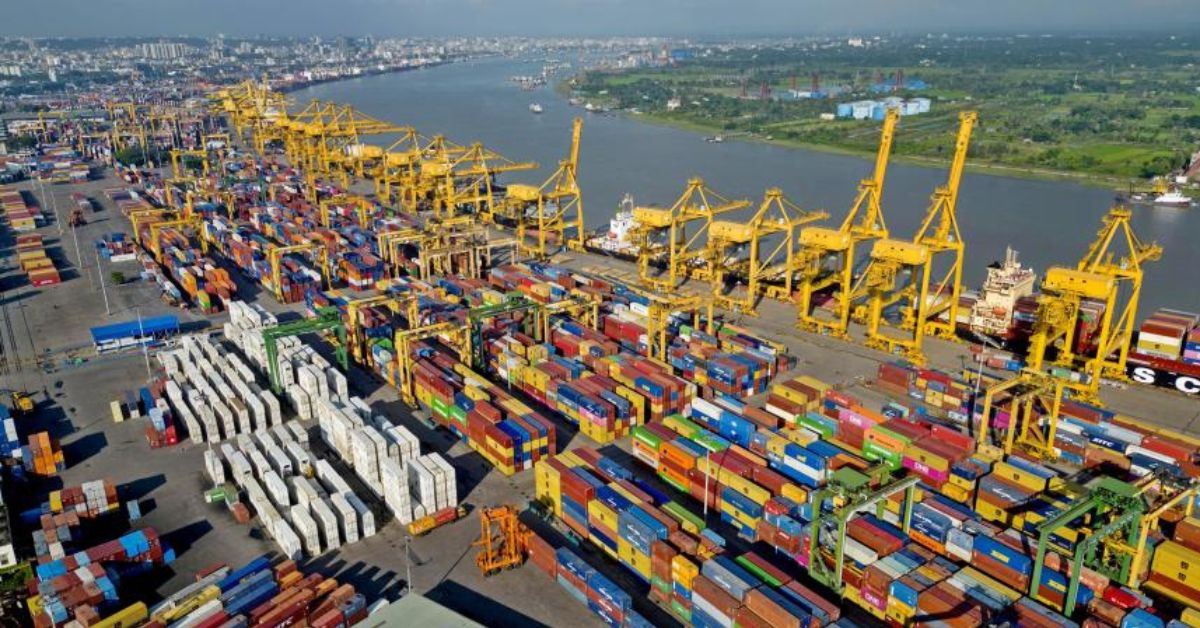

Import container dwell time at Bangladesh’s principal seaport has increased despite a series of customs digitization and procedural simplification measures, highlighting persistent inefficiencies in the country’s trade logistics chain.
How much has container dwell time increased at Chattogram Port?
According to the World Bank’s Logistics Performance Indicators, the average container import dwell time at Chattogram Port rose from 7.8 days in 2023 to 8.3 days in 2024. Bangladesh Customs’ Time Release Study 2022 had earlier estimated average container clearance time at around 11 days, and customs officials say dwell time remained above 11 days through 2025, indicating that digitalization alone has not resolved the bottleneck.
Why is customs clearance taking longer than expected?
Chattogram Customs House has urged importers to submit the bill of entry within 10 hours of cargo arrival, but officials say many importers take more than a week to file declarations, delaying assessment and clearance procedures. A senior customs official said the biggest bottleneck lies in bill of entry submission, noting that the Customs Act mandates clearance within five days but does not clarify whether the countdown starts from cargo arrival or bill of entry submission, an ambiguity that has yet to be addressed through detailed implementation rules.
How does vessel waiting time compare to global standards?
World Bank data shows container ships at Chattogram spend about 50 percent of their time waiting at anchor, significantly higher than the global average of roughly one-third of vessel time in port. World Bank Division Director for Bangladesh and Bhutan Jean Pesme said Bangladesh’s logistics costs remain among the highest globally at 15.6 percent of GDP, with congestion at Chattogram, which handles over 80 percent of the country’s trade, continuing to undermine competitiveness and investment.
What infrastructure investments are underway to address the issue?
The World Bank is supporting a USD 650 million investment in the Bay Terminal, expected to add deep-sea capacity, accommodate larger vessels and reduce transport delays, generating estimated savings of about USD 1 million per day. The Bank is also backing port digitisation, customs modernisation and institutional reform efforts at Chattogram.
What role do importers and shipping agents play in the delays?
Industry representatives point to documentation delays as a key factor. ABM Shamsul Arefine Khan of Incepta Pharmaceuticals said shipping agents often do not accept scanned documents, forcing importers to wait for original paperwork from overseas suppliers before filing bills of entry.
What long-term measures are experts recommending?
Former AmCham President Syed Ershad Ahmed called for accelerated Bay Terminal development, relocation of Kamalapur Inland Container Depot to Dhirasram, and modern warehousing and cold-chain infrastructure at major ports and airports. Policy Exchange Bangladesh Chairman Dr M Masrur Reaz warned that import volumes have outpaced port capacity, urging additional infrastructure, round-the-clock operations and globally competitive terminal management to prevent dwell times from rising further.
 Join our WhatsApp channel for more updates:
 Subscribe to our YouTube channel for more updates: