





Summary
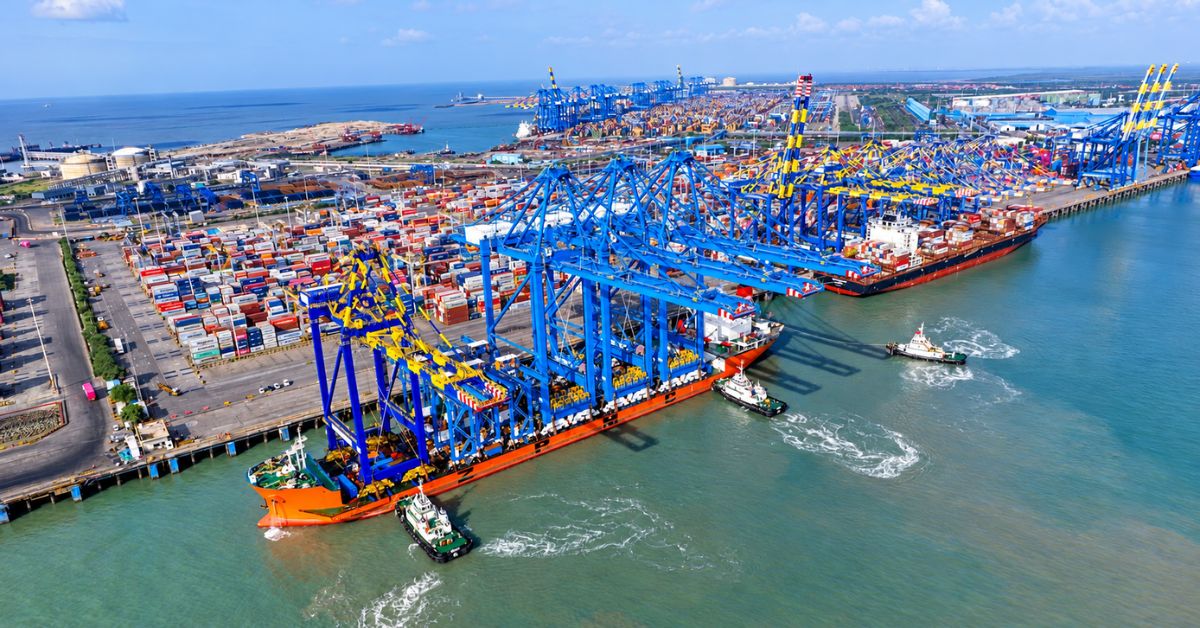
Deendayal Port Authority is considering using an oil jetty to load bagged rice as around 70 vessels await berths at Kandla. Alongside immediate operational measures, the authority has submitted a ₹47,000-crore waterfront development proposal, highlighting the need to address both current congestion and longer-term capacity constraints.
Rice exports increase pressure on berths
Deendayal Port congestion has intensified as rice exporters switch from containers to conventional vessels, increasing demand for break-bulk handling.
Chairman Sushil Kumar Singh said higher container freight rates to the Middle East had encouraged the change. Some ships face waits of 20–25 days.
The immediate response includes adapting a liquid-cargo jetty for rice trucks and using barges to load vessels at mooring points. These measures would provide alternatives to conventional dry-cargo berths.
Waterfront proposal follows immediate measures
The authority has proposed developing six kilometres of waterfront outside Kandla Creek in four phases, with an estimated overall investment of ₹47,000 crore.
The first phase, estimated at ₹6,400 crore, would involve a trestle and berth for bulk and break-bulk cargo under an engineering, procurement and construction model.
The proposal has been submitted to the shipping ministry; it represents planned development rather than an approved construction programme.
Congestion changes the economics of cargo movement
The situation illustrates a commercial trade-off for exporters: savings on one part of the transport chain can create additional costs elsewhere.
Moving bagged cargo through conventional ships involves different loading arrangements from containerised transport. Vessel schedules, labour availability, cargo assembly and loading sequences all influence the overall cost.
For cargo owners, the relevant comparison is therefore the complete journey, including inland movement, port handling, vessel waiting and delivery commitments.
A lower freight quotation alone does not establish the cheapest end-to-end option. Equally, a longer wait may remain commercially acceptable where other savings outweigh the additional expense.
The practical challenge is to give exporters dependable choices while improving the flow of cargo through existing facilities.
Earlier connectivity approval addresses the landside
Kandla’s infrastructure programme also includes a separate road connectivity project approved earlier this year.
On April 3, 2026, the government announced approval of ₹132.51 crore for a road overbridge at level crossing LC-235 at Deendayal Port.
Western Railway was undertaking construction on a deposit basis. The project forms part of the Sagarmala programme and aligns with the PM Gati Shakti approach to coordinated infrastructure development.
Its purpose is to remove a road–rail crossing bottleneck and improve the movement of port-bound cargo. Upon completion, the bridge is expected to support faster evacuation and more continuous traffic flows.
This investment addresses a different constraint from vessel berthing. Both matter: additional waterfront handling capacity requires sufficient road and rail access to prevent congestion accumulating elsewhere in the logistics chain.
Tuna-Tekra adds a separate container dimension
Another established development is DP World’s planned mega-container terminal at Tuna-Tekra, near the existing port.
The concession announced in 2023 envisaged annual capacity of 2.19 million TEUs, backed by approximately $510 million in investment.
The terminal design includes a 1,100-metre berth capable of accommodating vessels carrying more than 18,000 TEUs, with provision for further berth extension.
The concession follows a build-operate-transfer structure for 30 years, with an option for another 20 years. The original announcement identified 2027 as the completion year.
Its hinterland connections are intended to serve northern, western and central India through road, rail and dedicated freight corridor networks.
The container terminal is a distinct project from the newly proposed bulk and break-bulk waterfront development. Their different cargo markets and handling requirements are important when assessing how future investment could influence port capacity.
Implementation must connect ships, storage and transport
The immediate test is whether operational changes can release usable capacity without disrupting other cargo streams.
Over the longer term, the quality of planning will matter as much as the scale of investment. Berths, storage, truck circulation and rail evacuation must work together to sustain higher throughput.
For shipping companies and exporters, the most useful outcomes would be shorter and more predictable waiting times, reliable loading schedules and clearer visibility of cargo readiness.
The proposed expansion offers a route towards addressing structural constraints. Its commercial value will ultimately depend on approvals, delivery and how effectively the new facilities connect with the wider supply chain.
FAQs
Why are rice shipments contributing to congestion?
A shift from containers to bagged break-bulk shipments has increased demand for conventional cargo-handling facilities.
What immediate measure is being considered?
Adapting an oil jetty to support rice loading.
Is the ₹47,000-crore expansion approved?
It has been proposed to the ministry; the report does not establish final approval.
What is the planned capacity of the Tuna-Tekra container terminal?
Its announced design capacity is 2.19 million TEUs annually.
How would the road overbridge help?
It is intended to remove a level-crossing bottleneck and improve landside cargo movement.
 Join our WhatsApp channel for more updates:
 Subscribe to our YouTube channel for more updates:



