



Indian Railways and the Central Warehousing Corporation (CWC) are exploring coordinated freight services linking Gujarat with Punjab and Haryana, with a focus on matching agricultural shipments with industrial and imported cargo on return journeys.
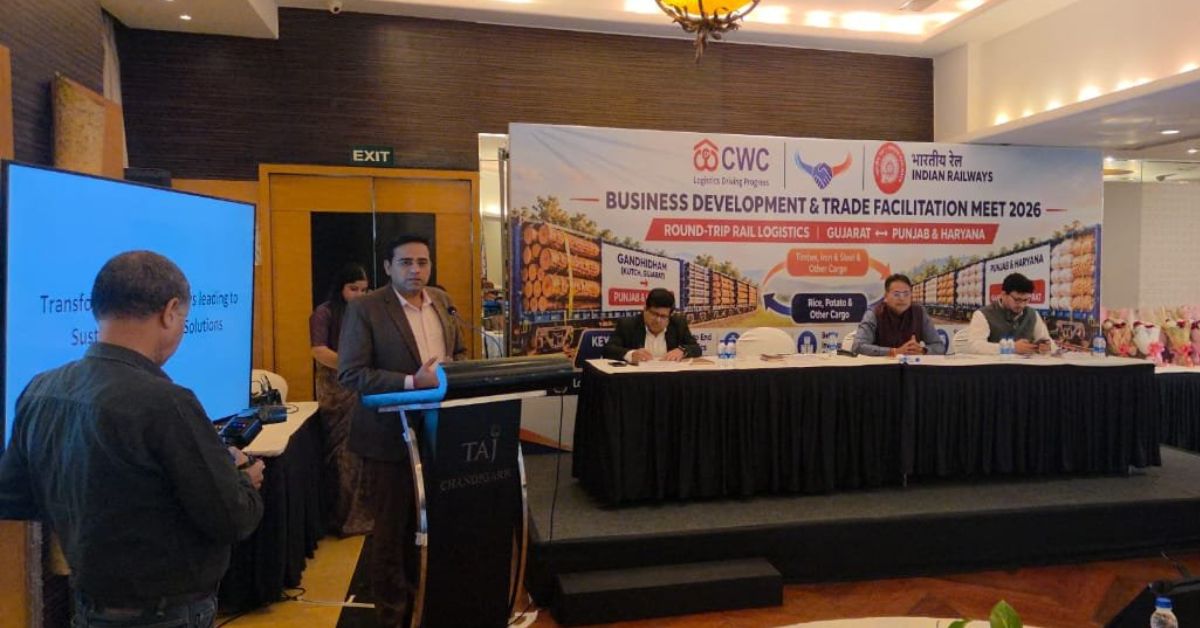
The Ahmedabad, Ambala and Firozpur railway divisions jointly organised a trade meeting with CWC in Chandigarh on 20 November 2026. Farmers, rice millers, traders, manufacturers, exporters and logistics providers participated in discussions on cargo demand and transport requirements.
The initiative seeks to develop commercially viable two-way movements between northern India’s production centers and Gujarat’s industrial and port network, including Gandhidham, Kandla and Mundra. It remains a trade-development exercise, with no new scheduled train service announced in the available account.
Which cargo flows are being targeted?
Ahmedabad Divisional Railway Manager Ved Prakash proposed pairing rice, potatoes and other agricultural produce moving from Punjab and Haryana towards Gujarat with return loads of timber, salt, fertilisers, industrial products and imported commodities.
Historical figures presented at the meeting showed that approximately 33.4 lakh tonnes of iron and steel and 2.2 lakh tonnes of timber and wood products moved from Gandhidham towards Punjab and Haryana between April 2022 and March 2024.
Rice movements from Punjab and Haryana towards Kutch totalled around 60.3 lakh tonnes, including 38.7 lakh tonnes originating from Karnal. Seasonal potato traffic from the two northern states towards Mehsana was estimated to offer potential of 70,000 tonnes. These figures describe past movements and assessed opportunities, rather than new bookings.
How would the logistics arrangement work?
The discussions focused on connecting railway transport with storage, cargo aggregation, handling and first- and last-mile delivery.
Businesses were encouraged to identify requirements extending beyond station-to-station movement, including collection from farms, factories, rice mills and warehouses, followed by delivery to buyers, ports or final markets.
Participants also discussed packaging, freight terminals and financing. Bringing these functions together is intended to make rail freight accessible to businesses whose shipments require coordination across several stages of the supply chain.
What role would CWC play?
CWC’s regional offices in Chandigarh, Panchkula, Ahmedabad and Jaipur participated in organising the event alongside the railway divisions.
In its account of the meeting, CWC highlighted services including scientific storage, pest control, fumigation, handling and warehouse receipt-based financing. The corporation positioned these capabilities as part of its expansion beyond conventional warehousing into integrated logistics.
The objective is to convert identified cargo potential into regular rail traffic, reduce empty running and develop continuing commercial relationships between cargo owners and service providers. The meeting also brought rice and timber businesses together with agricultural firms and industrial customers to examine complementary freight demand.
How does this fit wider rail freight development?
The effort reflects the wider emphasis on locating freight-handling facilities closer to production and consumption centres.
Under the Gati Shakti Multi-Modal Cargo Terminal policy, terminal locations are selected according to industrial demand, cargo potential, railway infrastructure and the surrounding logistics market. The Ministry of Railways has said the policy supports facilities such as warehouses, silos, cold storage and other logistics services alongside rail connectivity.
Such facilities are intended to improve loading and unloading, wagon turnaround and access for industrial and agricultural customers. They provide the infrastructure context for trade-led initiatives such as the Gujarat–Punjab–Haryana discussions.
For the proposed freight links, the next commercial task is to translate commodity demand and seasonal requirements into workable transport arrangements. Participants’ discussions on cargo-specific solutions, handling and delivery requirements will be important to establishing regular services.
 Join our WhatsApp channel for more updates:
 Subscribe to our YouTube channel for more updates: