



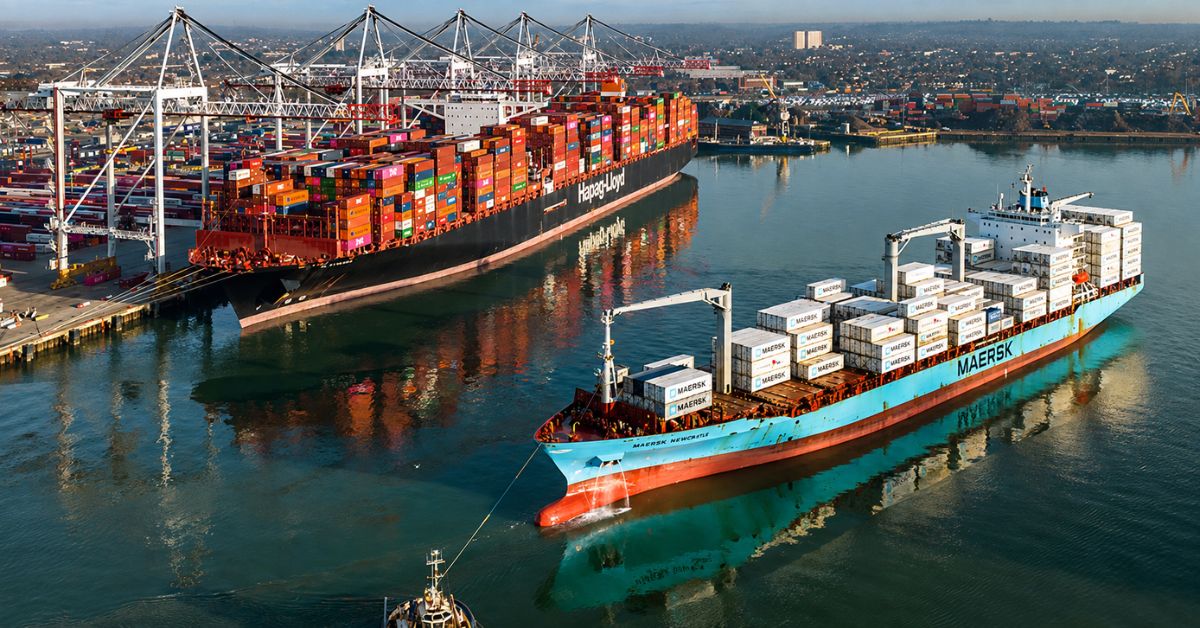

Maersk and Hapag-Lloyd both posted stronger-than-expected second-quarter results, but the heads of the two shipping giants warned that congestion at ports and constrained trucking, road and rail capacity are creating bottlenecks that could drive delivery delays and higher freight rates through the rest of 2026.
How resilient has shipping demand been despite geopolitical turmoil?
Maersk CEO Vincent Clerc said there has been incredible resilience of demand and of the broader economy, which has kept volumes moving virtually unabated despite the war in Iran and the impact of US tariffs. Hapag-Lloyd CEO Rolf Habben Jansen described shipping volumes as remarkably strong, noting that the balance of supply and demand has proven far more reasonable than most had anticipated.
Where are the bottlenecks emerging?
Both executives said congestion and disruption are appearing across multiple geographies, from ports to inland transportation networks. Habben Jansen pointed specifically to Asian hubs such as Shanghai, where ports are struggling to keep pace with demand and causing delays. Clerc described landside infrastructure as stretched to the maximum and underinvested, stressing that the problem extends well beyond terminals alone to trucking, rail and road capacity.
How did Maersk’s second-quarter results perform?
Maersk reported preliminary underlying EBITDA of $3 billion for the April-June quarter, comfortably ahead of the $2.04 billion analysts had expected. Revenue jumped 20 percent year-on-year to $15.8 billion, with EBIT rising to $1.6 billion from $845 million and net income reaching $1.3 billion. Freight rates were the key driver, climbing 22 percent to $2,746 per 40-foot container, powering a 23 percent jump in ocean freight revenue to $10.5 billion. Following the results, Maersk shares rose 7 percent in morning European trade after the company raised its 2026 earnings guidance for the second time this year, now expecting underlying EBITDA of $10.5 billion to $12.5 billion, up from an earlier $8 billion to $10 billion range, based on projected global container market volume growth of around 4 percent for the full year.
How did Hapag-Lloyd’s results compare?
Hapag-Lloyd’s recovery from a weaker first quarter was less dramatic but followed a similar trajectory, with revenue rising 11 percent to $5.8 billion, net income of $83 million and EBIT of $176 million. Average freight rates climbed 9 percent year-on-year. The company had already raised its 2026 earnings forecast in July, though it cautioned that the outlook remains exposed to considerable uncertainty given unpredictable freight rates and the ongoing Middle East conflict, having absorbed roughly $600 million in headwinds during the quarter linked to the disruption.
What is driving the imbalance in trade flows?
Clerc said strong, broad-based demand from the Far East since 2024 has resulted in significantly more unbalanced trade flows, with growing gaps between head-haul and back-haul volumes adding further strain to already stretched capacity. He said Maersk currently routes around a third of its normal traffic through the Suez Canal or Red Sea, covering four of its 13 services, and while conditions exist for a fuller return to Suez in 2026, the carrier is moving gradually to avoid overwhelming already-congested terminals.
What does this mean for freight rates and shippers going forward?
Clerc said the industry should expect rate events to occur much more frequently as further bottlenecks emerge across the supply chain, adding that forecasting exactly when these pressures will surface remains difficult. With both carriers pointing to a structural rather than temporary shift in market conditions, retailers and shippers face a combination of strong cargo demand, rising freight rates and logistics infrastructure increasingly struggling to keep pace through the remainder of 2026.
 Join our WhatsApp channel for more updates:
 Subscribe to our YouTube channel for more updates: