



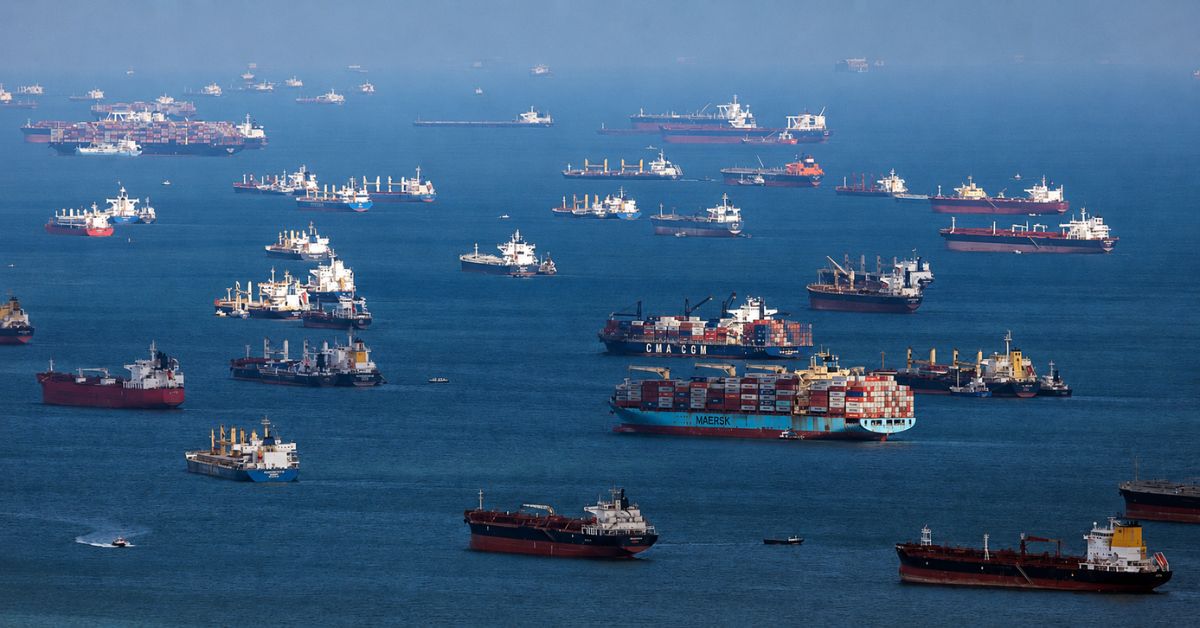

The volume of container capacity stranded due to port congestion has reached a new record high, according to analytics firm Linerlytica. Mounting delays in China and Asia and persistent delays in Europe are resulting in a shortage of vessels and capacity and contributing to increases in freight rates.
Linerlytica calculated that the volume of container capacity delayed due to congestion reached 4.31 million TEU this week, surpassing the prior peak of 4 million TEU reached in 2022 during the surge in container volumes after the COVID-19 pandemic. However, with carriers continuing to introduce new ships and delay retirements, the container sector has grown overall over the past four years. In 2022, the stranded capacity represented 15.7% of the sector’s capacity, versus 12.6% currently, despite the increase in total TEU capacity stranded.
Consultancy Sea-Intelligence noted in its monthly reports that schedule reliability and the length of port delays had stabilised in the industry in recent months. Its data shows that only about two-thirds of container vessels are on schedule, with the average delay put at above five days.
Recent typhoons that moved through Asia and impacted operations at China’s major ports have contributed to the increases in stranded volumes and delays. Linerlytica reports there is currently more than 1.5 million TEU capacity at anchor off Shanghai, alongside large volumes waiting at Singapore, Busan, Colombo and several Chinese ports. Mumbai currently has the highest ratio of queue to berth.
The industry was already operating with little excess capacity even before the delays began to build. Linerlytica calculates that there are 55 ships, out of a fleet of over 5,400 active vessels, idle, representing 0.5% of the total fleet and a capacity of just 164,000 TEU, resulting in a shortage of vessels.
The shortages and lack of capacity have, however, been financially positive for the industry. Linerlytica points to freight rates that are 156% higher since the start of the Iran war, noting it has also contributed to a firming of charter rates for container vessel owners.
Another concern is the potential for backlogs and waiting time to build at the Panama Canal as it reduces both the number of daily transits and the maximum draft for vessels. During the last round of restrictions, container vessels were forced to offload portions of cargo and ship boxes across the Isthmus by train to comply with draft restrictions. The Panama Canal Authority said it would give preference to large container ships with the largest container volumes, but delays are still expected to build going into the fall season due to an emerging drought from El Niño in the Pacific.
Vessels diverting around Africa and away from the Suez Canal and Red Sea have also been impacting capacity due to longer transit times. Linerlytica believes this is one of the reasons driving Maersk to restore routes to the Red Sea corridor. Maersk and Hapag-Lloyd announced they would be moving some routes under the Gemini Cooperation back to the Suez Canal and Red Sea, and MSC has also advised customers it would begin shifting some routes back to the corridor. Suez Canal officials have highlighted that the shift can reduce transit times by up to 14 days and save on fuel costs.
Chinese port operators have worked to quickly restore operations after the storms, which should release some stranded capacity alongside the continuing introduction of new ships. The forecast, however, is that congestion will continue to be a challenge and contribute to stranded volumes. Carriers, including Maersk, revised their financial outlooks for 2026, moving to more positive forecasts based on strong freight rates and near-term market expectations.
 Join our WhatsApp channel for more updates:
 Subscribe to our YouTube channel for more updates: